

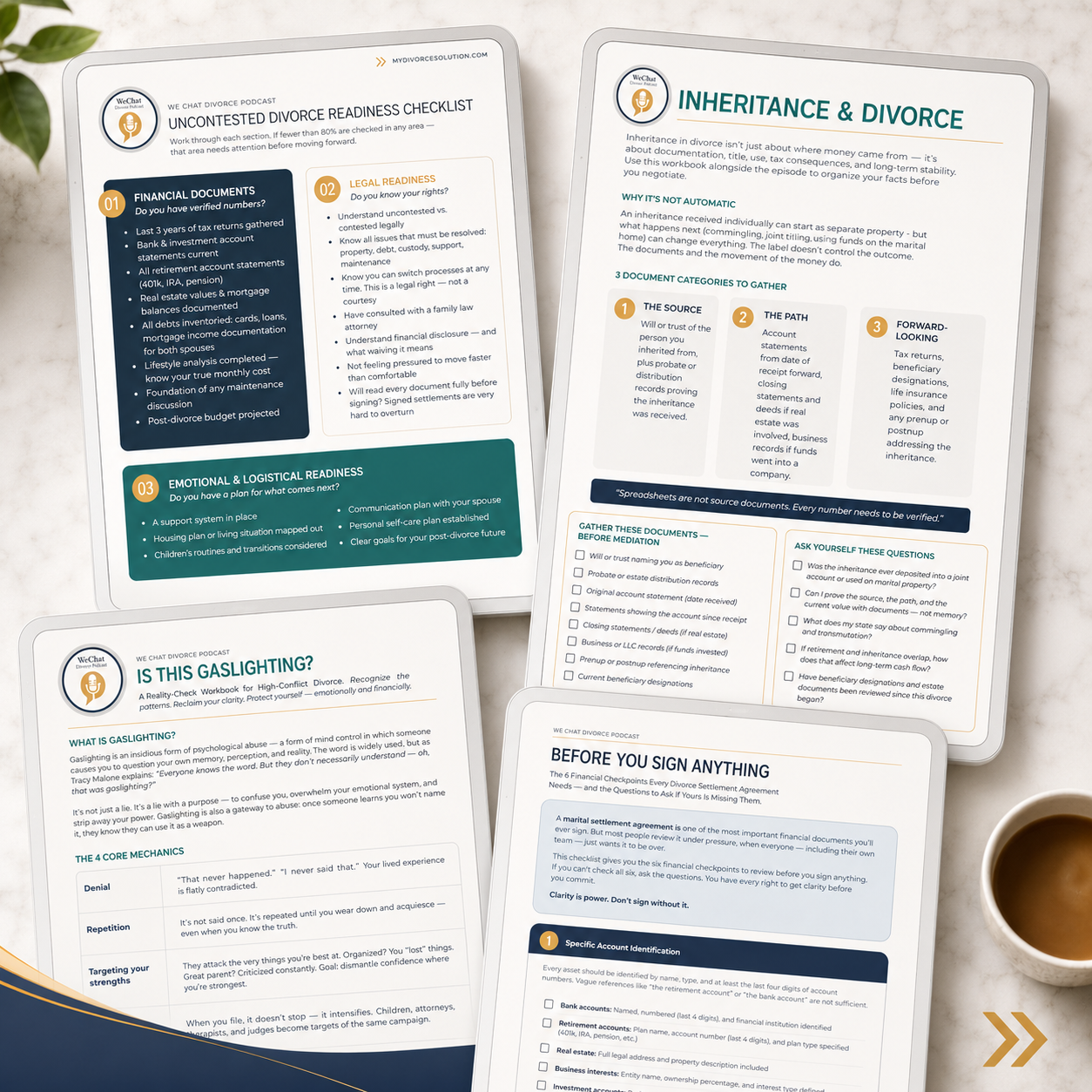
Download The Mediation Readiness Checklist
Download The Mediation Readiness Checklist — Six things to know before you walk into that room.
By submitting this form, you agree to receive communications from My Divorce Solution. Your information is confidential and protected.
Divorce Mediation, Settlement Conferences, and Court Hearings: How to Walk In Prepared
If you’ve searched “what to bring to divorce mediation” or “how does divorce mediation work,” you’re already asking better questions than most people going through this process.
But here’s what almost no one talks about: mediation is not where financial clarity gets created. It’s where the absence of financial clarity gets exposed — and that exposure, under deadline pressure, is where the most expensive divorce mistakes happen.
This episode of Divorce Explored is about what mediation and settlement conferences actually are, what you actually need before you walk in, and why preparation — not the mediation itself — is what determines your outcome.
Divorce Mediation, Settlement Conferences, and Court-Ordered Hearings: What’s the Difference?
Most people use these terms interchangeably. They’re not the same, and the differences matter.
- Voluntary mediation is a process you and your spouse choose. You work with a neutral third party — the mediator — to resolve the issues in your divorce: property division, debt, support, parenting schedules, retirement accounts, real estate, business interests, and future financial obligations. The mediator doesn’t represent either spouse. Their job is to facilitate discussion and guide both parties toward possible agreements.
- Attorney-recommended mediation is common before contested hearings. Your attorney believes mediation offers a better path than litigation and recommends it as a strategic step.
- Court-mandated mediation or a settlement conference is required by the court before a case proceeds to trial. A settlement conference may involve a hearing officer or judicial officer. You may not have chosen to be there. You may not feel ready. But the court date is on the calendar regardless.
The critical point that applies to all three: the mediator, judge, or conference officer can only work with the information brought into the room. It is not their job to find errors in your financial picture, flag missing assets, or verify that the numbers you’re working from are accurate. They presume that verification has already happened.