

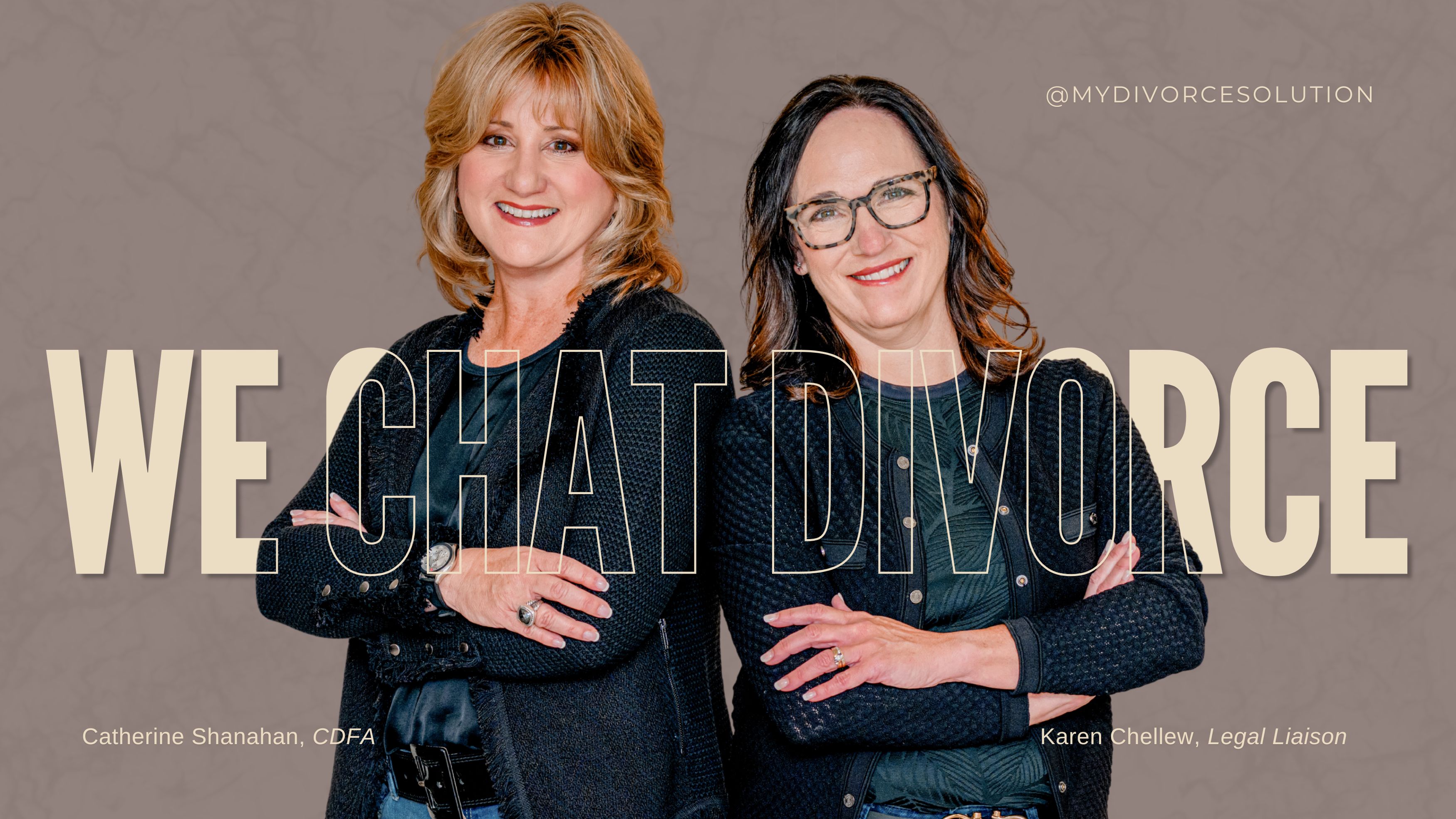

Welcome to We Chat Divorce! In this episode, Karen Chellew and Catherine Shanahan are joined by special guests Jamie Berger and Sarah Jacobs, co-founders of Jacobs Berger, LLC, a boutique divorce and family law firm in Morristown, New Jersey. Together, they discuss the four key things you should know before hiring a divorce attorney and how the legal process can better support divorcing families.
What You’ll Learn in This Episode:
- The Importance of Practicality in Legal Representation – How tailored, client-focused approaches can reduce stress and improve outcomes.
- The Value of a Strategic Partnership – Why it’s critical to work with an attorney who listens and collaborates to achieve your goals.
- Understanding the Role of a Consultation Retainer – How consultation retainers provide ongoing guidance without requiring full litigation representation.
- The Power of Collaboration with Other Professionals – From financial experts to mental health professionals, learn how integrating various specialists into your divorce process can create more sustainable and effective solutions.
Key Insights:
- Every divorce is unique, and your legal strategy should reflect your specific needs and goals.
- Rushing into decisions can lead to costly mistakes; taking time to prepare and get informed is crucial.
- Having a lawyer who respects and values your input fosters better communication and outcomes.
Connect with Jamie and Sarah:
Website: jacobsberger.com
Facebook: @JacobsBergerLLC
Instagram: @JacobsBergerLLC
Contact Us: Send your questions and comments to WeChat@ck11.net
About My Divorce Solution
We Chat Divorce is produced by My Divorce Solution (MDS) — a financial divorce preparation company dedicated to helping individuals navigate divorce with clarity, confidence, and a strategic financial plan. Founded by Karen Chellew, Legal Liaison, and Catherine Shanahan, Certified Divorce Financial Analyst (CDFA), MDS was created to solve one of the most common and costly mistakes in divorce: entering the legal process without fully understanding your financial picture.
Divorce is not just a legal event — it is a financial transition that can shape your long-term security. Through the MDS Divorce Financial Portrait™, clients receive expert financial analysis, organized financial disclosures, and scenario planning to understand how different settlement decisions impact their future. This financial preparation often reduces legal fees, shortens the divorce process, and helps individuals negotiate from a position of knowledge rather than fear.
If you are considering divorce or already in the process, you can begin by taking the Free Divorce Financial Assessment to better understand your options. You can also join the MDS Community for expert guidance, educational resources, and live Q&A events designed to help you move from uncertainty to clarity.
At My Divorce Solution, the mission is simple: replace fear with knowledge so you can make informed, confident financial decisions during divorce.
Episode Transcript
0:01
Welcome to WeChat Divorce, hosted by Karen Chellew, Legal Liaison and Catherine Shanahan, CDFA.
Each episode we sit down with divorce professionals and industry experts to provide insights and frank discussions about real people, real situations, and real divorce to help you achieve your best life post divorce.
0:39
Welcome to.
WeChat divorce.
Catherine and I are happy to welcome attorneys Jamie Berger and Sarah Jacobs to our podcast today.
Welcome.
Thank you so much for being here.
Thank you for having us.
Thank you.
You’re welcome.
This may be the first time though, that I mean, Catherine and I are always dual host on the podcast, but this may be the first time, Catherine, that we’ve had dual guests, you think?
1:05
Yeah, it’ll be great.
We’ll all talk over each other every moment that we can.
Look, it’ll, it’ll be like our office every single day.
That makes perfect sense.
That’s just so.
True, Jamie and I have gotten used to just raising the voice to get heard.
Yeah, exactly.
That works.
1:21
So all right, well, let’s get started.
In this podcast, we’re going to talk about four things you should know before hiring a divorce attorney.
And when we met Jamie and Sarah, we had these conversations.
And we are thrilled that divorce attorneys like Jamie and Sarah are are expanding the divorce world to accommodate the needs of divorcing families.
1:45
But first, let me take a couple minutes to introduce Jamie and Sarah.
Sarah and Jamie are the Co founders of Jacobs Burger LLC, a boutique divorce and family law firm in Morristown, NJ.
In an effort to reform how divorced clients view the role of their attorney, Sarah and Jamie founded a firm that helps de stress the divorce process by by empowering divorcing families to transport chaos and circumstances into choices and change that work for them.
2:15
So I am so excited, like I said, to be having this conversation because, you know, every client needs a really good divorce attorney to help them navigate because I, I feel like there’s just so many unknowns in the.
Divorce world, there really are, you know, we, we say all the time, no, no day is the same for us.
2:37
No2 cases are the same, No2 clients are the same.
And so it really, you know, there’s, there’s a lot of unknown and a lot of a lot of fear that comes with the process and a lot of uncertainty.
And so that’s one of the things that we really focus on trying to have conversations with clients that that, you know, we’re speaking their language and they understand.
2:59
And we can kind of, we can take some of that anxiety and worry and stress away by just speaking to them in, in a, in a way that they can, you know, digest what we’re saying and understand.
You know, Sarah and Jamie, I really believe it would benefit our audience to hear your stories about how you came to be doing the good work and you know how what happened for you to realize this need in the divorce community.
3:26
Can you Share your story about how that all evolved?
Well, Jamie and I actually like to tell this story of a lot because we actually met as adversaries.
We both worked for other law firms in New Jersey, larger firms, if you will, that had matrimonial departments or, or matrimonial focus.
3:47
And Jamie worked for one partner and I worked for another.
And both the partners had a case.
And in true fashion, when you know, you got to that level, the associates got assigned the hotly contested but little desired case that was going on.
4:03
And so Jamie and I showed up to all the mediations and Jamie and I showed up to all the phone calls and all the court appearances and we did our jobs.
We were, you know, fiercely protective of our clients and protective of their litigation strategy, but also sort of practical in the way that we approach the case.
4:20
Like this family needed a resolution.
They were burning resources that they didn’t quite have that they needed.
They had young kids.
And, you know, we tried to pick a mediator that would work with them.
And, and as difficult as the case was, the relationship that Jamie and I had was not difficult.
And that was something that we talked about frequently about how it was an aberration sort of at that point, which was to have people who were very well versed and very interested in what they were doing, but not who could be civil to each other and be practical.
4:54
And look at the case and say, where does this need to go?
Even if we don’t have the same position, how do we get to a reasonable conclusion at the end and have the clients feel good about it, walk it as good as one can in a diverse situation.
Walking away from it Like, OK, that came to the crux when it needed to and now it’s over and we don’t have to go with it anymore.
5:11
And we stayed friends and we both went in slightly different, different directions.
At that point.
I opened my own firm.
Jamie was doing some work with her family business at that point.
And so when it came time to for my firm to change a little bit at that point and for Jamie to come back to the practice of law on a full time basis, we’re like, hey, want to do this thing together.
5:31
And at that point, we had another partner that that left to niche for practice in a different area.
And Jamie and I were like, OK, after all of this time, what did we learn from working together?
But also what did we learn from watching all the stuff that we didn’t like in the larger firms and the practice of law and the way that things came before us and, and we sort of gave ourselves the the mantra of how are we going to do it differently?
5:55
And that’s sort of how we have ended up here.
And we will be celebrating our 10 year anniversary in 2025 of us being a firm and, and we’ve, you know, we have really seen the benefits of, you know, just the style of practice and something that we feel like was missing from the legal, you know, family law community around us.
6:18
And so it, it has been, it’s been really exciting to grow and to help people.
And, you know, the, the more you know, we add people to our team, the more you know, people that we can ultimately help.
And so it’s just been, it’s been a really exciting 10 years.
6:33
And we, we are just coming off of a 2 day business planning session.
So we’ve spent a lot of time talking about our practice and you know where it’s going.
So that’s that’s all really exciting stuff.
That’s very exciting and congratulations to the two of you because this is a burnout industry for sure.
6:52
But I call me crazy, but really what I want this podcast to be about, and maybe we’re just going to have to get on ’cause I don’t want to throw everybody into a tizzy here, but I really want to talk about what you 2 talked about.
What did we not like about that for those firms not to call the firms out in particular because I’m sure it’s about the whole process in general and what you did to change what where you see that changes.
7:14
So maybe it’s a follow up because I know we’re talking about, we have a different topic tonight, but that really interests me.
Yeah, yeah.
No, I, I really think it falls right into four things you should know because, you know, divorcing people don’t know what goes on behind the doors right of a law firm.
7:33
They don’t know the back end of a law firm and what you experienced as attorneys and, and family law, from my perspective, can often be like why I call it the wild, Wild West.
It’s just it’s it’s it’s a crazy area and I think it’s because it has to encompass so many areas of law.
7:53
So I love Catherine’s question, you know, what did you not like?
And then how did that translate over into your niche of this consultation retainer I.
So I think, sorry, see, we’ll interrupt each other all the time.
That’s perfect, I.
8:10
Think for me.
I think for me that probably the largest take away coming out of a a big firm was the lack of crack practicality, right?
So there’s there’s the law, there’s what a judge will do, there’s what a court will do.
8:28
There’s the, you know, the rubrics in which we can decide a case based on what will happen in a courtroom.
But then there’s there’s the practical side.
How do you how do you impact the family most?
How do you how do you provide a benefit to your clients?
8:45
How do you, you know, being understanding what their goals, their objectives are, You know, that that piece of it was really missing for me.
And when I, you know, I remember as a young associate sitting in consults and just like, like sitting there watching an attorney talk at somebody versus listen to them and watching an attorney get, you know, well, this is what you’re going to do.
9:10
And I’m going to road map this for you and you’re going to follow all these steps.
We’ll, we’ll, maybe those steps don’t work for that person.
So like, how do you, you know, how do you, how do you come at this a little bit differently?
And so it’s something I think very particular to our initial consultations or, or we call them strategic planning sessions with clients, but that’s what they are.
9:28
They’re strategic, You know, what are, what, what is the end objective?
And how do we get you there and kind of understanding, you know, the, the different ways that we can practically approach a case.
And for me, that was the, that was the real miss, you know, and it, it just was as many clients as we can get in the door and as many clients as we can get out the door and in, in this amount of time, like they’re just you, you miss that kind of connection with the client and understanding how you can really help someone.
9:58
Oh my God, Jamie, you just need a you just hit a nail on the head for me.
That gets me going.
We could be a whole nother podcast and you said it’s talking at how attorneys talk at somebody instead of talking with them.
And I can’t tell you but Karen can.
The days I get so pissed off when I’m actually on a call and I hear this happening and the client sits there like, well, wait a minute.
10:19
They feel so submissive to them because they don’t realize that they’re actually paying this person who’s actually talking in a demeaning way to them who’s supposed to be representing them, which is terrible.
So I’m glad that you picked that up as one of your first things that you were uncomfortable with and you believe needs to be changed, because it does.
10:38
It really does need to be changed.
I think from my perspective, and it’s a shade of what Jamie said, but it was a little bit of a different like variation.
It’s sort of how we stumbled up upon a lot of the way that we practice too was the adaptability, right?
Like, and, and Jamie sort of said it like push the clients in, push the clients out, push them in, in this sort of like, I don’t like to use the word assembly line ’cause I think everybody is still a person in, in this process.
11:02
But in, in the assuming you use the rubric of divorce, right?
Like these are your options here.
But the firm wasn’t necessarily adaptable to a changing relationship with the client because the client’s needs change, right?
Like a lot of times a client will come into you and they’ll they’ll ask a lot of questions because they need to understand what the process looks like or how the process works, but they’re not ready to be in the process.
11:26
They want to have conversations with their spouse.
They want to do their homework first.
They want to like start things up, but they’re floundering and they don’t have any understanding of where it is or they’ve been through the process already.
They’re all divorced.
They know there’s going to be post judgment litigation.
11:42
And they want to know how do I stop myself from shooting myself in the foot on, you know, for the next two years if I need this change or I need to protect that change?
Like I don’t understand where I ended up.
I know what my numbers look like.
I know what the paper says, but I don’t know how to act now that all this is done so that I’m not running afoul or creating a mess for myself the next go around with this same, you know, ex-spouse or the same Co parent.
12:11
So I think, you know, and it was sort of like, yeah, hi, welcome, goodbye.
See you later and come back to us if you have litigation problems.
And Jamie and I sort of said like people need us before, they need us after.
Sometimes they need us during not to be writing letters and filing motions, but to be educating them and giving them support.
12:32
And so a lot of it for us was like, how can we best serve a client’s needs when the client doesn’t fit the we’re starting now, we’re ending here and that’s all there is to it Box.
And I think, you know, listening to them was half of the battle, as Jamie said, and then providing them with sort of like more customized, even if you can’t, if you don’t say the law is customized per SE, but your your representation of them can be customized to what their actual needs are in the moment so that they’re not either with or without in any given point.
13:09
Yeah.
I am so glad that you all are doing this because we do experience, our clients experience when you know, they get their portrait and they’re ready to go to council or mediation or whatever it is and there’s no nod towards the work they’ve already done.
13:30
To your point, there’s no nod to where they are in the process or what their goals are.
That’s OK.
We’re filing and then we’re going to send out discovery and then we’re going to go to a pre trial or mediation first to your point.
13:47
And then the client has already spent another $60,000 in that process.
That is just how they process divorces at that particular law firm.
So, you know, the fact that you all step back a little bit and ask questions because, you know, sometimes people want to put out a proposal first or they want to mediate, or they know that, you know, they need support right away or whatever the IT may be.
14:15
And for someone to listen to them and say, you know, the fastest way to that point is X, even though you may be skipping over some of these things.
And I’m sure you disclaim all of that for them as well.
Well, Sarah also brings up a really good point that Karen, you know, these cases where we see them that they rush them to an agreement at the end.
14:38
And quite frankly, attorneys are lazy.
I hate to say this, maybe not the two of you, but we read these agreements sometimes and I don’t know legally, but financially the language in there.
But then they so when we go back with questions, just have your attorney clarify this or is this legally really protecting you?
14:53
The attorneys sometimes are just over it with these clients.
You know, they’ve made enough on them.
They make them feel like and they don’t want to answer this stuff.
They’ll, you know, they just postpone, postpone and you know, even though you paid me 100 grand, you still owe me 6 grand.
I’m not going to respond until you pay me the six grand.
15:09
It’s crazy you guys, what we see here all the time.
So I’m glad that your firm is set up to combat that or to alleviate that because it’s really important that you understand what your agreement is actually reading and that if it is protecting you.
15:25
And I like that your mindset shift is to let’s talk through this all with you all so that you have a clear understanding of the meaning of it because it’s not happening out there.
It’s really not.
And I, I, I think there are particular, you know, and, and Sarah and I sit in with, with different, you know, potential clients and we have these conversations and there, there are cues to us sometimes like, oh, is this case, you know, should we be quoting them a, you know, for a full litigation retainer?
15:55
Or is this something where they’re not really ready yet?
Like, so that’s, that’s an opportunity for us to take a step back and say, OK, this might be a situation where a consultation retainer is appropriate.
Or to your point, Catherine, where, you know, they come to us after the fact and we have these agreements and some of them are not artfully written and there are holes in them.
16:16
And so we have to do some of the OK, this is a situation where we’re going to have to try to re look at this down the road.
We’re going to have to put some steps in place now for you to do that.
So let’s talk about how you’re communicating.
16:31
Let’s talk about, you know, how you’re responding to your your ex spouses communication.
Let’s talk about, you know, things that we can do to help set you up so that if we have to go in on any kind of application to modify or, or to amend or, or just to, you know, upend an agreement for any reason, because it needs to be, then then we’re setting them up properly with that consultation where they have access to real time information that can help them to assist in that process down the road.
17:03
And so those are those are some examples of things that we’ll look for, you know, is this the right situation for a consultation retainer?
Because not everyone is, you know, not every case, you know, it’s really particular things that we look for.
For me in particular, you know, in those initial conversations, it’s, you know, are you really ready to make, you know, and maybe you’re not.
17:25
And maybe you just need information and maybe you just need, you know, somebody to answer your questions when you need them answered and, and not feel like you’re in this void where you’re not getting anything that you need.
And so, you know, those are just some of the examples of times that we’ll, we’ll say, OK, this is this is a good situation where we can use this.
17:48
Yeah, it’s really important.
So let’s talk about the consultation retainer.
How does that work?
And you know, how does it play into a divorce?
Whether you haven’t started one or you’re in the middle of one and things aren’t going well, how would that apply in a particular situation?
18:08
What?
What is it?
We really look at it at like that old school game show where it’s like you have a phone, a friend, right?
We’re not out there, we’re not playing for you.
Our name isn’t on everything.
We’re not litigating for you in that manner.
We are a manner of supportive information that you can reasonably rely on in order to help you in the path that you’re on right now.
18:33
So a lot of one of the things that Jamie and I often talk about it when when we’re in these consultations with clients is is assume that you have a meeting with a client where you’re talking about what your current status is, what the plan could look like, homework that you should be doing, options you can avail yourself of.
18:51
And now rather than having to schedule fourteen of those over the next six months to a year, you’ve put us on retainer to sort of continue to do this with you, answer these questions, give you some information, facts, change.
Is it time to reassess the situation?
19:08
We’re available to you in that manner on a more extended basis.
And I know Karen, you sort of said like we caveat that with that, you know on a regular basis and we do, we let them know that we can only provide them with advice and information based on the universe of facts or documents that they are giving to us in the moment.
19:30
We haven’t conducted discovery.
We aren’t communicating with the other side.
We don’t have all of the information necessarily available to us.
So we’re operating within sort of a certain lane, but it’s only in that clients often, as long as they understand what they’re getting into, feel really comfortable with.
19:48
And I think that you know, I had, I use this example regularly because it’s one of my favorite ones because it’s post divorce client entered into an agreement where he’s paying alimony for an unreasonably long period of time and an unreasonably high level.
20:06
Any application for modification of that would have failed during the course of his post judgment.
Like era, if you will, because he was making more in his later years and he was making at the time that he entered into the horse agreement.
But his, his agreement didn’t specify what happened when he retired, right.
20:22
And there were some changes in the law in New Jersey, etcetera, etcetera.
And he came to me about, I don’t know, maybe like 3 1/2, four years before this became a viable issue and said, is there anything I can do?
And I’m like, for the love of God, no.
20:38
And then, you know, six months later, is there anything I can do?
Same conversation.
Still no, like, this is where we’re at.
But then he worked for like a biotech company and it was private equity.
And there were rumors that he was going to get bought out.
And he’s like, what happens if I get bought out and I have all this other income?
20:56
And then I was like, can you actually retire because you’re at that age?
And he’s like, I could do that.
Yeah, you could.
And you could structure your deal and then your future income.
And so these are the conversations that we started having.
And he’s like, I don’t have to file a motion.
21:12
You might not.
You might be able to negotiate with her directly because there’s some check marks in your agreement.
And so the conversation, the light bulb went off and now he’s like, that is, if I negotiate this deal, how does that affect my, my chances of being successful in the future?
And so he would have negotiated this whole other package with his employer.
21:31
It would have shot him in the foot for cessation of his alimony versus being able to structure it in a way where he accomplished two things.
Like he retired, he was able to stop paying alimony and now he can go on and sort of consult in his post retirement years because he he’s not capable of being retired without it, it dragging out his financial obligation.
21:52
And then that those are the particular circumstances I like to talk about because it’s after the fact, right?
And nobody sat with him and explained to him and granted, his lawyer at the time couldn’t project 14 years or 15 years or 16 years later, like this would be the set of circumstances.
But nobody said to him, here’s what you have to consider at the time that you’re eligible for this.
22:11
Don’t breathe in the wrong direction before you talk to somebody.
It was like, OK, you’re divorced here at the term.
See you later.
Let me know if you have a change of circumstances.
What is the change under circumstances mean, right?
Like so I think it’s these type of clients that I find this kind of situation is marketable in because they didn’t need litigation in the moment.
22:29
They just needed some information and some advice to be able to make smart life decisions so that they didn’t do one thing under one set of assumptions.
And they turn around and be like, great, now I’m ready to do this.
And you’re like, yeah, that didn’t go well.
Let’s let’s start over.
Yeah.
22:45
Yeah, it reminds me of when we do our portrait and we want to ask a spouse to participate before, say file.
Like, why are you running to file?
And they get these ugly language that you have to put in that you’re being sued and all that stuff.
Given them the opportunity to come to the table and start providing some data.
Because the more data we collect, the less expensive it is for your attorneys to have to go through anything that we get.
23:05
So it’s the same type of thing.
Plan it out, get prepared.
We always talk about being prepared in this process.
And then I wish I could send you someone that called yesterday, they did a DYI divorce.
She took no spout child support because he didn’t want to have the kids.
23:20
Now he wants to have the kids to get child support.
He doesn’t work.
And so I have to send her to an attorney.
Obviously that’s not what we do.
But she’s not in your state, unfortunately, because that’s the exact conversation that she needs, Sarah, that you’re just talking about.
And so many people need that.
23:37
So many of our clients come to us because they say no matter what, we do not want attorneys.
Right.
They they.
They bristle at the thought of an attorney, but our approach is look, get set up, understand your finances, know your budget, know your marital estate, know what you want and the financial impact of that.
23:59
And then and so when there’s attorneys like you that we can say, go see Sarah and Jamie because they’ll talk you through what you know and you don’t know or what further steps can be available to you.
Because even if you have a good financial settlement, you still need that protection and enforcement language.
24:19
You need, you know, a professional attorney to under score what that means for you legally.
And what happens if you know, if anything happens, what, what, what is that?
What happens if you know, the agreements aren’t agree executed?
24:34
It’s really what I’m trying to say.
Here.
Yeah, yeah.
So you know that that’s great because short of that, they’re going to go to an attorney, they’re going to start the process all over again because that’s what they do at that law firm or at most law firms, right?
24:50
OK.
So we’re going to start.
We’re going to start all over again.
So I really love that you have this space where they can say this is where I’ve been, this is where I want to go, how can you help me?
And you talk them through the various scenarios.
Well, you know, you’re looking to be lawyers.
25:06
You’re not looking do you know that’s what your profession is and that’s what what you’re looking to do.
You’re not looking to start this contentious battle with them.
You’re looking to apply with the law as to what they’re thinking and what they’re not thinking, which is why these I never recommended DYI and this person yesterday was a perfect example.
25:23
I couldn’t she sent me the thing and I said, listen, you got to go talk to lawyer.
But you know, nobody is applying the law to those things and they’re afraid to go to lawyers because they think they’re going to be, as you said, talk down to or talked at and by Karen saying, you know, reinitiate all this angst where your approach is, let’s just talk through legally your protection here and what and forward thinking what would keep you out of court in the future.
25:51
And that’s what they need.
That’s what people need.
That’s what families need.
I, I think, I think we should all start with the assumption that lawyers know the law, right?
So like if you’re, you’re going to a lawyer, just because you need somebody to educate you on the law, all lawyers can educate you on the law.
26:08
That’s not, you know, that’s not where you actually, in my opinion, you get the benefit of having a an attorney.
An attorney should be a strategic partner with their client.
And so, and we view it that way.
So like we are, we are, we are, we’re going to tell you sometimes things that you may not like to hear, but you know, we’re, we’re certainly not, you know, yes, ladies all the time.
26:32
And unfortunately sometimes we have to be the bearer of bad news.
But it’s, but it’s the manner in which you have that conversation with a client because they already know you’re on their team.
So for us also, you know, in terms of what you guys do, having prepared clients is great.
DIY divorce for lawyers is scary.
26:49
You know, I was like, you know, someone, I hear this every once in a while in a constant.
Well, do you think I, I need an attorney?
And I’m, and I say to them somewhat glibly, like you’re asking an attorney, if you need an attorney, like my answer is yes, it’s always going to be yes.
But, but it’s, you know, but even even from, you know, having a consult, you know, a consultation retainer with an attorney, if you’re going to proceed with the process on your own, you at least have information.
27:17
Again, to Sarah’s point earlier, it’s within the confines of what we know and the facts that we have, but there’s a level up of information versus really going at it on your own.
That’s a, it’s a scary, scary concept for attorneys.
27:33
And I also, you know, but I, but I can, and I can take off my attorney hat and understand it from, from the client’s point of view.
We get a bad rap sometimes.
And you, you know, you, you go to an attorney who doesn’t approach you with the respect and care that, that you need to be approached, especially in this process.
27:53
It’s, it’s going to, it’s going to turn people off.
So there’s, there’s a, there is a, a manner in which you you really should speak to somebody going through this process that that makes them feel.
We always say you need it.
You definitely need a lawyer, but at what capacity do you need that lawyer?
28:09
That’s the question, right?
And to have a lawyer who will really give you the hard facts, truth, and even if it’s not good truth, you know not what they want to hear, That’s what you need.
And the process would be much smoother if you knew the capacity to which your attorney is working for you.
Yeah, I think there’s something to being empowered in that process, right?
28:28
A lot of people, to Jamies Point, a lot of people who are in the DIY space are like, yeah, A, you cost too much and B, we don’t need that, right?
We agree on things.
OK, sure you do today without the level of detail, you know, whatever.
Great.
I hope you do and I hope you continue to.
28:46
But in the off chance that you don’t, it might be good to have a little bit of information to know how to negotiate.
But you know, I even with, even with clients that we have on a full representation routine or I had a conversation with one yesterday, like what do you want?
I can tell you 7 different things that you should do in this moment that I think are the right thing to do.
29:07
Every one of them means that we’re litigating more and it’s going to cost you more.
You have told me 100% you don’t want to do that.
So I don’t know, you’re in a tight spot here because you don’t want to do anything different, but you want it to stop.
That’s, that’s not a factual outcome here, right?
29:25
And so like, I think a lot of DIY clients can’t face that, that if they don’t have somebody who’s like a sounding board or at least like providing a level of reason to, to them saying all paths lead to one place, how do you want to go on that path?
29:40
Like they just choose and walk and they wonder how they ended up where they are.
And you’re like, you had no, no information along the way.
You just pick today and pick tomorrow.
Pick Dance Day and now you got a basket full of stuff you didn’t want.
So it’s so true, you know, I say we do, you know, a lot of people feel so empowered to your to your point when they have their division scenarios when they work with us or they’ve come to a financial agreement and they say, oh, we’re just going to finish this up by ourselves.
30:13
It makes me go crazy and I’ll just say, OK, whatever document you believe you’re going to file with the court, I recommend, highly recommend that you take that to an attorney and have the conversation.
Because I know you all are going to look at that and give them an entire list of where they’re risking their legal protections and enforcement by doing that.
30:38
And it’s better if they have that, you know that conversation with you before they do that filing because you know it can backfire for sure.
Well, I’m a perfect example of that and how MD’s was created.
You know, I went through my divorce and I, it was not about financials.
30:54
I have a financial planner.
My ex was a financial planner.
I ran all the finances.
So I knew it all and I got a really good agreement.
However, I was back in court, gosh, maybe nine years later, I forget how many years it was because my actual decree did not protect an enforceable portion of that.
31:12
But what do I know?
I’m just a financial at that time.
So, you know, not having an agreement to support that financial decision that you think is sounding logical to you right now could be logical.
But if your agreement doesn’t protect you, you could still end up in the courtroom.
I won in the court.
31:29
I won in the courtroom, but it’s still I shouldn’t have been there.
It’s.
Crazy to me how many times like you read an agreement and they’re like, OK, you’re going to get alimony of X amount a month or child support of Y about a month.
Well, I’ve had to change the circumstances and you’re looking at the agreement and you’re looking through the agreement.
You’re like, it doesn’t say what any of this is based on.
31:45
So how do you know what the circumstances were to say how it has changed?
And they’re like, what are you talking about?
Doesn’t say what your income was.
Doesn’t say what what the overnight parenting time was like.
There’s nothing in this agreement to give a third party reader the understanding of what the change would look like.
So how are you convincing a court that something has changed?
32:03
I needed that.
Cool, cool.
OK, deep breath.
Let’s start again.
Like, yeah, sure you need that.
How do we?
Fix it.
That’s so.
Good.
Yeah.
And that’s so.
True.
You know, there’s, there’s two sides.
And and on that note, then let’s talk about the professionals that people should hire or should consult with when going through a divorce.
32:26
Take that.
Yeah, of course.
Obviously a lawyer, because again, asking a lawyer if they be a lawyer, but you know, financial professionals, you know, to, to my point earlier, like having a prepared client for us is like a Gold Star because they, they understand the, they understand the, the budget, they understand the, the impact of certain financial decisions that are being made during their divorce.
32:54
They understand, you know, it’s my our job to kind of educate that on, on what to expect in terms of support, child support, alimony, but but it all fits, you know, fits within a plan that they’ve already gone through with somebody.
33:09
So financial professionals for me are, you know, especially in cases, you know, where there’s, there’s, you know, high net worth, where there’s businesses.
Those are people that are really key in helping clients navigate the process.
Mental health professionals are typically are, you know, a really good resource for somebody going through a stressful divorce.
33:33
I ask clients a lot, you know, do you have somebody that you can talk to?
Because this will get challenging at different times.
And you don’t want to rely on your lawyer to be your mental health professional because you’re overpaying for a service that we’re not qualified to do.
So, you know, make sure that you have that support.
33:52
So for me those two are the are the big, the big two for me in terms of other professionals that that I want to kind of see worked into the process.
I mean, I assume tax strategists are sort of bucketed in with your financial professionals.
They’re not obviously always the same, but it’s, it’s two sides of a similar coin.
34:10
But for me, it’s also mortgage lenders.
Like let’s talk to those people.
Find out what you qualify for, find out what you don’t qualify for, find out what your projected home expenses will look like if you’re buying or if you’re refinancing.
Or if you can assume that changes the landscape for a lot of people when you’re talking about like do we sell, do we buy out?
34:29
Do we do a lot of things with house.
And I also think that they if depending on what their situation, a career counselor, because they have no idea what they’re, what they’re, what they’re capable of doing if they’re not currently working and what advancements have been made in their various fields or things that they could be qualified for that might be a little bit more adaptable to their life circumstances now.
34:51
And so really just having even if it’s not for today, but it’s something for next year that they’re going to work into their plan.
And so the decisions they make today are going to be to support something that they want to move towards in the future.
Then they’re not trying to figure it out.
35:08
You know, once they’ve made choices that don’t necessarily align, like if they can at least look a year ahead, maybe scary, but it’s a good projection point for them so that they have something to focus on like in the future.
Well, I’m glad you bring all of that up because it’s exactly what we do with the portrait because there’s, so you know, you’re listening to this right now and I know this is overwhelming.
35:28
And So what our portrait does is it prepares you one for you because we agree with the attorney and I love the consultation agreement.
I think that’s fantastic.
But also all those professionals you mentioned and more, we know that there’s more, they’re all things to consider, but it’s like when what’s the timing of it all?
35:46
And if you’re going through it, you feel like you have to do everything now and you spend money all over the place.
So with us, when we’re going through it, we we see what that need is.
And then if we are strategically aligned with their attorney, that what their strategy is and what, what’s the purpose of hiring like the human resource evaluator, right?
36:04
Like, and when would that be used?
And would it be outdated if they did it now?
So you know, that’s when you spend multiple times on the same professionals.
So our process get you prepared so your portrait tells you all those considerations.
And then when we meet with the attorney, if there’s anything to be added to that, we add it so everybody’s on the same page and you stay focused on just what’s known and not so much what’s unknown.
36:25
That’s awesome.
Yeah, I I agree.
Because I think, you know, to your point, like people feel like they need to rush into it and do everything all at once.
And and that may not be the right course of action.
Like it’s it’s really building that plan for people.
OK, This is, this is the next best step you can take.
36:44
And you know, and, and, and then we’ll stop there and we’ll, we’ll have a conversation about what is the next best step after that for you to take.
So.
It’s awesome.
We could talk about this for hours, I’m sure.
I know I’m, I’m all like like I could go on and on and on and on cuz you know, cuz we have super journeys.
37:02
So you guys can say things that I can’t say, which is fantastic.
I could just bring them out here.
So I I’m a heavy.
I know I I love these conversations.
Yeah, it’s really good.
So, Sarah and Jamie, how can our listeners and viewers find you and learn more about you?
37:19
Sarah’s great at this, I suck at it, so I will let her take it.
OK, Sarah.
Well, starting with the obvious, you can find our website www.jacobsburger, that’s BERGE r.com.
We have a Facebook page at Jacobsburger LLC.
37:35
Our Instagram is the same Google.
You will find there’s a lot out there we’ve, you know, done a fair number of articles and a fair number of blogs on, you know, what we think to be the tactical important stuff that people want to know and not necessarily the legal stuff that they want to snooze through.
37:52
So along the lines of what we’ve talked about today.
So all that’s out there for consumption, and we appreciate you giving us the opportunity to provide some of that insight to your listeners so that more people can be helped whether they’re in New Jersey or not.
Excellent.
So this concludes this episode on 4 Things You should Know before hiring a divorce attorney.
38:12
We should.
Say thank you more or more, more and more.
I think we talked about a lot today.
Right, I did 4 + 4 ^2.
Thank you Sarah and Jamie for a great conversation.
Thank you for having us.
Yeah.
Thank you so much for having us.
We really appreciate the opportunity to talk about something that we are obviously very passionate about and we got the same vibe from you guys that, you know, you were very passionate about what you do for your clients.
38:36
So we like that synergy.
Agreed.
Thanks for joining us on another episode of WeChat Divorce.
We hope this episode was informative and supportive on your divorce journey.
If you're looking for more support for navigating divorce with confidence and clarity, head over to azure-emu-499854.hostingersite.com/ for more podcast episodes, divorce events, and resources for your divorce.
39:03
We’ll see you back here for our next episode.
Disclaimer:
The information provided in this podcast is for educational and informational purposes only and should not be considered financial or legal advice. Please consult with professionals in the relevant fields for personalized guidance.
The WeChat Divorce podcast (hereinafter referred to as the “WCD”) represents the opinions of Catherine Shanahan, Karen Chellew, and their guests to the show. WCD should not be considered professional or legal advice. The content here is for informational purposes only. Views and opinions expressed on WCD are our own and do not represent that of our places of work.
WCD should not be used in any legal capacity whatsoever. Listeners should contact their attorney to obtain advice with respect to any particular legal matter. No listener should act or refrain from acting on the basis of information on WCD without first seeking legal advice from counsel in the relevant jurisdiction. No guarantee is given regarding the accuracy of any statements or opinions made on WCD.
Unless specifically stated otherwise, Catherine Shanahan and Karen Chellew do not endorse, approve, recommend, or certify any information, product, process, service, or organization presented or mentioned on WCD, and information from this podcast should not be referenced in any way to imply such approval or endorsement. The third-party materials or content of any third-party site referenced on WCD do not necessarily reflect the opinions, standards or policies of Catherine Shanahan or Karen Chellew.
WCD, CATHERINE SHANAHAN, AND KAREN CHELLEW EXPRESSLY DISCLAIM ANY AND ALL LIABILITY OR RESPONSIBILITY FOR ANY DIRECT, INDIRECT, INCIDENTAL, SPECIAL, CONSEQUENTIAL, OR OTHER DAMAGES ARISING OUT OF ANY INDIVIDUAL’S USE OF, REFERENCE TO, RELIANCE ON, OR INABILITY TO USE, THIS PODCAST OR THE INFORMATION PRESENTED IN THIS PODCAST.
If you would like to obtain a typed transcript of this podcast episode, please email us at hello@mydivorcesolution.com. Please be sure to include the episode name in the transcript email request. Thank you!