

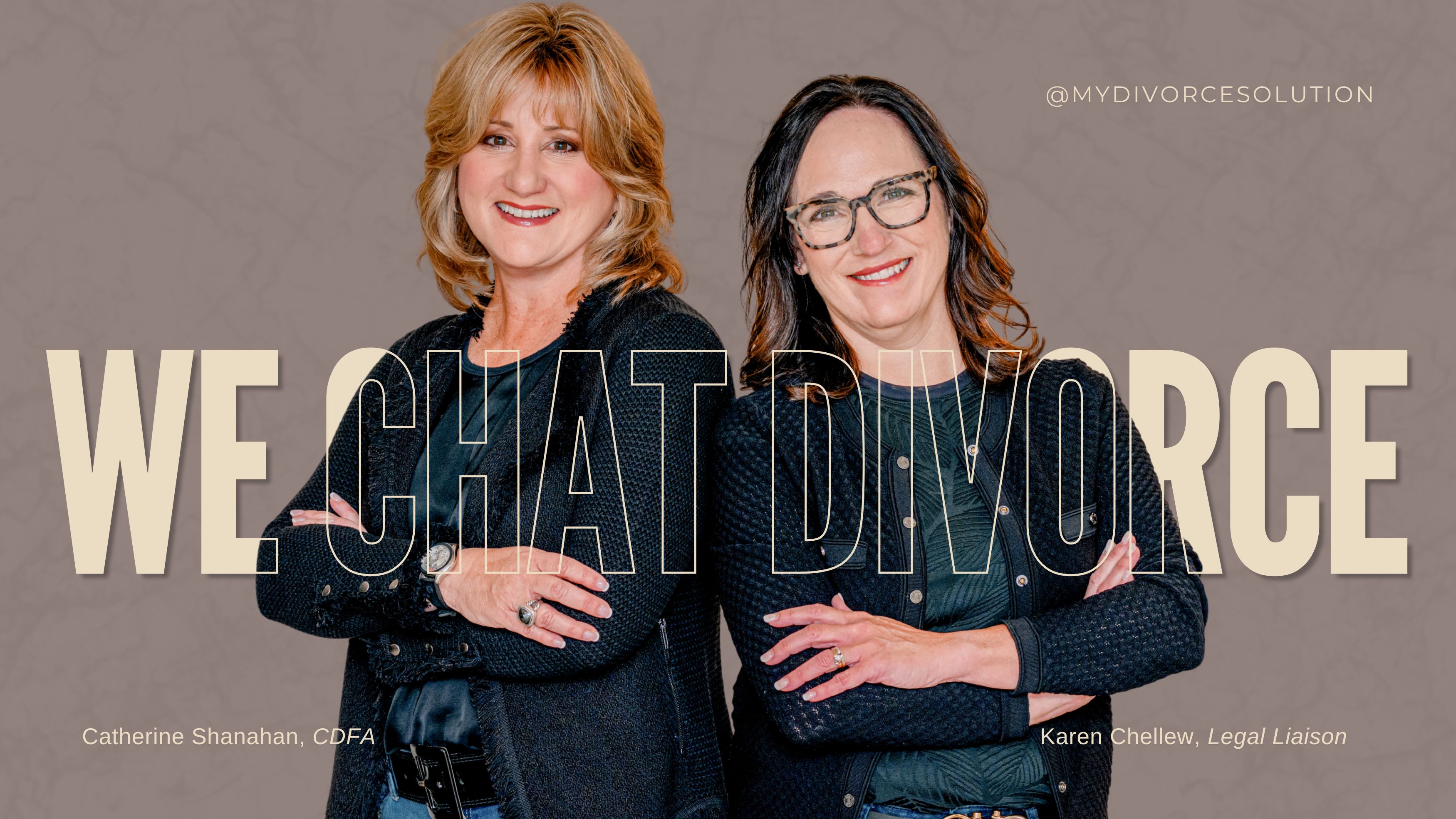

In this episode of Divorce Explored, Karen and Catherine dive into a timely AARP article, “Financial Checklist for Remarrying After 50.” Together, they unpack the essential financial considerations and emotional conversations you should have before saying “I do” again—whether you’re 50 or not.
Drawing from their personal experiences and professional expertise, they explore topics like:
- Exchanging financial information with your future spouse
- Navigating conversations about children, alimony, and financial expectations
- Reviewing estate plans, wills, and medical powers of attorney
- Understanding Social Security and survivor benefits
- The importance of prenups—and how to reframe them as planning for a healthy marriage
Key Takeaway: Love is powerful—but protecting your financial future is essential. Open, honest conversations about money, expectations, and boundaries before remarrying can set the foundation for a healthier, stronger relationship.
Mentioned in this Episode:
- AARP’s Financial Checklist for Remarrying After 50
- The value of prenups at any age
- Why revisiting estate planning documents is critical
- Social Security considerations when remarrying later in life
If you’re considering remarriage or blending families, this episode is for you. Prepare with clarity, not clouded by emotion. And remember, when it comes to marriage and finances, knowledge is power.
Have a topic you’d like us to explore? Email us at WeChat@ck11.net
Resources Mentioned
About My Divorce Solution
We Chat Divorce is produced by My Divorce Solution (MDS) — a financial divorce preparation company dedicated to helping individuals navigate divorce with clarity, confidence, and a strategic financial plan. Founded by Karen Chellew, Legal Liaison, and Catherine Shanahan, Certified Divorce Financial Analyst (CDFA), MDS was created to solve one of the most common and costly mistakes in divorce: entering the legal process without fully understanding your financial picture.
Divorce is not just a legal event — it is a financial transition that can shape your long-term security. Through the MDS Divorce Financial Portrait™, clients receive expert financial analysis, organized financial disclosures, and scenario planning to understand how different settlement decisions impact their future. This financial preparation often reduces legal fees, shortens the divorce process, and helps individuals negotiate from a position of knowledge rather than fear.
If you are considering divorce or already in the process, you can begin by taking the Free Divorce Financial Assessment to better understand your options. You can also join the MDS Community for expert guidance, educational resources, and live Q&A events designed to help you move from uncertainty to clarity.
At My Divorce Solution, the mission is simple: replace fear with knowledge so you can make informed, confident financial decisions during divorce.
Episode Transcript
0:01
Welcome to WeChat Divorce, hosted by Karen Chalou, Legal Liaison and Catherine Shanahan, CDFA.
Each episode we sit down with divorce professionals and industry experts to provide insights and frank discussions about real people, real situations, and real divorce to help you achieve your best life post divorce.
0:39
Welcome to WeChat Divorce, brought to you by My Divorce Solution and hosted by myself, Karen Shalou, Legal Liaison, and Catherine Shanahan, Divorce Financial Specialist and CDFA.
On these special explainer episodes, we answered the top questions about divorce, giving you confidence and clarity.
0:57
We often run across articles that spark a need for us to elaborate on.
And today, we’re going to unpack an article that AARP published titled Financial Checklist for Remarrying After 50.
But before we get started, AARP, Karen, did you sign up for AARP yet?
1:16
I did a long time ago, believe it or not.
No, you are a lot older than me, but I don’t think I signed up for it.
I think I got annoyed.
They sent me so much information that I just kind of pushed it aside.
There’s so much good information, there’s so many good resources and savings.
1:37
I’ve I’ve used their resources a lot, yeah.
I remember it’s just making me recall and this, sorry, this has nothing to do with what we’re going to talk about.
But I remember my mom getting AARP and 1st she was like, oh, I, I’m not old enough to have that.
And then when she saw the discounts that you get from movies to restaurants to everything, she was like, Oh my God, I love AARP.
1:59
My God.
Well I love AARP because we even mentioned as a resource at one point.
But true.
So I signed up quickly, I’m gonna say 7 or 8 years ago because my spouse is retired and he said I’m not signing up.
2:18
Heck, I will.
So yeah, we get the magazines.
It’s pretty good information honestly.
Yeah, that’s great.
All right, so let’s dive into this checklist for remarrying after 50.
OK, so divorce is challenging.
We all know that and many people sign up for a second go around of marriage after divorce.
2:37
Both you and I have done that.
If you’re divorced or divorcing and thinking of new relationships or remarrying, this article that we’re going to be talking about states that you’ll likely also need an updated estate plan, knowledge of your Social Security benefits, and possibly a prenup before you head down the aisle.
2:55
That’s because later in life, remarriages often come with much to manage as we all know, excluding including ex spouses, adult kids, aging parents, and expectations based on past relationships.
OK, that sounds like I’m not doing it a third time.
3:12
You.
Know I was thinking the same thing.
And it’s true divorce rates, believe it or not, the second time around are over 60%.
Third time around they’re over 70%.
And it’s probably because a lot of this stuff on this checklist is not.
3:28
Addressed.
I agree, and a lot of it frankly is not even addressed the first time around.
Being real here, right?
Yeah, The first thing on this checklist is, I think, I don’t know if it’s the first thing, they don’t number it, but I found it interesting and a good place to start it.
3:46
You know, they say exchange information.
I totally agree that you should exchange information, but it’s so uncomfortable for people to ask questions.
You know, I knew that when I went into went into it the second time around.
And although it was a short marriage, I was just kind of nonchalant thinking you have your stuff, I have my stuff.
4:07
Do we really need to exchange the information?
And it probably was the biggest mistake, one of the biggest mistakes that I made.
You should exchange information.
It it kind of sets out that level playing field.
And I know, Karen, you were shocked that I did not do that because I do this every day, all day with people.
4:24
Yeah, well, you know, it is what it is.
No judgement, right?
But it’s helpful if you do.
And I also feel a lot of people when they’re going through the divorce process, hence why the title of our this particular podcast.
4:40
If you’re thinking of remarrying while divorcing, I feel like a lot of people hop in the ring of talking about their finances during the divorce process with people they may be dating.
Oh my gosh, is that what?
You mean when you said you’re thinking about remarrying while you’re divorcing?
5:00
Yes, so many people do that.
Yeah, there’s a time and a place.
So I think some sometimes that line may get blurred, but you can set yourself up to be, I don’t know, but maybe compromised in the dating relationship if you’re sharing financial information too early.
5:19
So this is in the context of remarrying.
You’ve dated, you’re talking about getting married, right?
So just want to make that really clear.
Why is it so hard for people to exchange that information and and if it is so hard, are are we talking about a lack of trust here that you should note as a big red flag?
5:38
I don’t know, I think some people are just more focused on it may be reigniting a relationship and thinking that they didn’t feel that that could ever happen for them, especially as you get older.
And so why bring a complicating factor in?
5:55
I was fairly young when I got remarried, so I was talking about it all day long.
This is how it’s going to work because I wanted my autonomy in our in the next financial relationship.
But I think, you know, it just depends on where you are emotionally when you’re getting remarried, especially if you’re older.
6:16
Yeah.
And also if you’re, I felt like I was just financially independent and secure, so I didn’t really need to share any information because what he had really wasn’t going to affect me.
It was my mindset.
But if you’re like me and you’re out there thinking you’re financially independent and it wouldn’t affect you, it really does affect you while you’re married because expectations are not set and things change.
6:40
And there goes that divide that begins.
And then it’s even harder to ask for the documentation or the sharing of the documentation because you’re a little why?
Why at this point, right?
Or why are they not sharing?
Which then again causes this divide that’s hard to come back.
6:57
Could be hard to come back from.
Yeah.
And whether or not the two of you or I’m not speaking to you, but everybody, the two of you would be unilaterally financially independent, these conversations are still just as important that you agree or you disagree to that right.
7:15
Yeah, because another thing on their checklist was share money related emotions and expectations.
How do you do that if you don’t know what each other had has has, right?
Exactly.
And in that context, there’s all there’s always in every relationship or in my lifetime, my experience up until now, in every relationship, there’s a saver and a spender.
7:39
I’m the spender in my marriage relationship.
I am a saver in our business relationship.
I was going to say, wait a minute, are we talking about you personally because you are not the spender in our business?
Relationship and I’m making the observation that you could, you could find yourself in different roles in different relationships, acknowledging what role you play in that relationship.
8:02
I think it’s really important.
Oh yeah, owning it too.
You know, it’s OK if you are the spender or the sharer, but what are your boundaries and what are the expectations from your spouse at that point?
But I also, you know, we talked about this when it says the share money related emotions and expectations.
You know, let’s talk about the people with younger stepchildren.
8:21
You know, in my first marriage, I knew what his agreement read.
I knew what he agreed to in that divorce settlement, so I could not get mad that he had to pay this support number or he had to do certain things with the kids.
8:36
Because I went into that knowing that by reading the divorce decree, I probably knew it better than he did because actually I did want to make sure that his kids were covered.
But I think that’s a hard thing to do.
So when you marry someone that has children, you know, you should expect that their children come first and foremost, right?
8:53
And then eventually, like I had kids with him, so I had a juggling act, but I could never really get mad that there was a child support number because it was in the agreement.
I went in knowing that maybe I was young and didn’t understand all of it.
And you know it.
9:08
It can be a hard thing to digest as you’re aging.
But I would suggest that you it’s not about the financial documents all the time.
Read the parenting plan of young kids that are involved.
Read what your spouse has agreed to so that you don’t fight with your new spouse about something that was pre agreed to because you can go in knowing and you should know that and and and ultimately it’s for the benefit of the kids who is always our who we advocate for the most.
9:38
Yeah, I so agree.
And conversely, and this was specific to my situation, in my second marriage, I had the two children.
So when we’re rewriting our wills and then we had a child of our own, who gets what?
9:54
What are the ages and you have to be able to be in a place of neutrality, I guess, or understanding that, I don’t know, maybe some children need more than the other, especially if you have a younger child or whatever.
10:12
There could be a lot of extenuating circumstances, but I found myself needing to set aside my attachment to my natural kids or my kids from my prior marriage from just understanding that every child may need something if we would have passed away in that moment.
10:33
So it wasn’t anything personal to my kid, my first kids.
It was just how do we family plan in this new environment?
And it was really helpful.
And then we just set a date to revisit the will, which we did.
And, you know, everything was equally balanced, but there are times to have those important conversations, and it’s really hard sometimes to keep personal emotions out of it.
11:01
And I think you were saying the same thing.
Yeah, I was.
But I had, it’s interesting because I had the opposite viewpoint.
You know, those were all your biological children.
Mine were my biological and my stepchildren, right, Though they were ages 5 and under when we got married.
11:16
So I I did them like my children.
There’s still a difference at that.
Point.
But, you know, we have to remember that kids come first.
That agreement was set in place first, you know, so it, it’s a tough conversation and there’s a lot to consider.
And, you know, it all boils down to finances at the end of the day, no matter what anyone says.
11:36
So get that plan together.
And like you did, you readjusted as your youngest got older.
So that’s fair and that works for you and your family.
But it’s hard when you marry into someone that has other children.
And even when it comes to alimony, you know, I can even remember, Oh my gosh, you have to pay alimony.
11:53
Why is she not working?
Those thoughts?
Everybody has those.
We hear it when we go through financial portraits now, especially when a woman has to pay alimony.
But when a man has to pay alimony, either way, it doesn’t matter.
But if you’re going into your second marriage or your third marriage, you should know that that alimony commitment is in there.
12:11
So you can’t get angry about it if you know it’s there.
It’s it’s an interesting conversation and can be very tough because money talk is always tough.
But I do think that you should share your money related emotions and your expectations.
Yeah, agreed.
12:28
And it plays a role that you can’t really anticipate, but you will benefit from it later in your relationship for sure.
Gosh, we can have a whole podcast on this, you know?
OK, next one is run the numbers.
12:44
You know that’s an.
Interesting one most of the time, yeah, that’s what we do here, right?
But, you know, it’s interesting for second time marriages and third time marriages because we’re older in age.
You know, Social Security has an impact on that.
You know, this is not a divorce negotiation.
13:00
It’s IRS rules that you can have, if you’re married 10 years or later, you can receive half of what your spouse is receiving or yours, which is the larger, the 2.
Or if you’ve been married three times for more than 10 years, you can look at all, it’s 10 or 14.
I’m pretty sure it’s 10.
13:16
We’ll just have to double check that.
But you can look at all of half and take the larger.
You can’t have all of them.
You just pick the larger than two.
But another thing is if you’re under the age of 6059, you have to know that you will give up disability Social Security if you’re not disability.
13:34
What is it?
When if spouse dies survivor benefits.
Thank.
Thank you, Catherine for.
You’re welcome.
I know if I look at you long enough, it’ll come to you.
Yeah.
Survivor benefits.
If you get married before age 60, you’re going to give up survivor benefits of a prior spouse.
13:52
So it’s a lot to consider.
You should consider all these numbers and how it affects you moving forward.
Agreed.
And you know, I’m going to, this is a good time for us to add in here people who are while divorcing or coming through the MD’s financial portrait process.
14:07
We call it the MD’s method.
All of these considerations are built out for you.
You’re not walking into your new life without knowing.
You’re walking into your new independent life, whether you’re remarrying or staying single, with full knowledge of what that all means to you and what you should consider and who you should talk to.
14:27
So anyone who’s gone through our process has that benefit.
But if you don’t have that benefit, these are certainly some things to consider.
OK, next, revisit your estate planning documents.
We kind of covered this already.
14:44
You may need to visit and revisit multiple times.
Which includes your will.
Make sure you update your will.
And yeah, make sure you have copies of each other’s will just so you’re all again on the same page.
15:00
You’re all in an understanding of what’s going to happen because if you pass away, it’s your built will that’s talking.
It’s not you.
You no longer can advocate for your children or whoever, however you wanted to see things play out.
So make sure you have a really good updated will and everyone is clear on that.
Yeah.
And speaking with an estate planning attorney can be a very helpful exercise because it does provide an environment where, first of all, you’re hearing some information about death, right, that you definitely have to address, but also things that you may not think about that need to be addressed as well.
15:37
And you know, another one of those things is that medical power of attorney, you know, would you be assigning over a new to your new spouse this medical power of attorney or what are your options?
What are their responsibilities?
What would your responsibilities be?
A lot of ground to cover.
15:53
And if you have someone who’s in that space of just explaining to you, then it it’s it’s an easier process to go through.
You know, it’s interesting.
A conversation came up the other day with a client and it was about cemetery plots and she had one with her first spouse.
16:12
So if she passed away, you know, would she go where her that plot was already paid for or would the new spouse not agree to that and put them somewhere else?
One of the kids were in charge of that and they wanted their parents to be together.
I thought, well, that is definitely something to consider when you have those plots and I don’t, you know, a lot of people have them.
16:32
So it’s another conversation that should be had.
So everybody’s in understanding of what’s going to happen.
Yeah, that’s a good one.
So is this next one.
Yeah, I know, this is the one that gets me every time.
Consider a prenup agreement.
I should have done that the second time around, you know, again, because we’re financial and that’s what we do all day every day.
16:55
It’s just a way to go back to what we said earlier, what this article even said earlier, you know, talk about the what was it?
Talk about the emotions or how did they word that share money related emotions and expectations.
That’s what a prenup actually is.
17:10
It has nothing to do with divorce.
It is what are we expecting and what would we want to happen if we were to get a divorce?
Why couldn’t we get to have that?
It could open up so many conversations that you all have the same understanding.
And you know, for me, it’s all about knowing the expectations and a prenup does that.
17:28
You don’t, you know, come, we have so many people that come to us now for prenups because we do the financial piece.
We’re not the attorneys.
But then you take your financial agreement and understanding you’re able to have this hard conversation, then you just take that to an attorney to draft for you and go over the legal components of it.
Right.
17:44
But yeah, you should have, if you’re getting married second or third time pre, don’t look at a prenup as a negative thing.
It’s actually a very positive space to have really good conversations for a healthy relationship.
Yeah, you can reframe your mindset.
Typically, maybe for older people, younger people are more open minded, it seems from our experience.
18:05
But you know, the word prenup equates to planning for divorce.
Frankly, it’s planning to stay married, right, Because it’s setting everything in place so that there’s no issues other than someone going to an attorney to say, is a prenup valid?
18:23
That’s usually an attorney consultation where you know that it’s pretty easy to under score there.
But I think when people change their mindset about the value and the benefit of a prenup it, it can be the foundation of a very healthy financial relationship.
18:44
Yeah, I totally agree.
So lastly, you should seek the advice of some pros, right?
I think during this conversation, Karen, we talked about so many experts that can help you talk through this and go through this so that you don’t have to do this by yourself.
Right attorneys, the state planning attorneys, accountants, financial planners.
19:04
It’s good to be in the know whether you’re getting divorced or whether you’re remarrying.
It’s the same exercise for sure.
Yeah, so the take away of this article by AARP and our discussion of it, it’s a great article and we’re in agreement with it.
19:20
But just know that don’t let love cloud your way of making bad financial decisions.
And you know what?
To have a healthier relationship and getting married the second or third time after your, I don’t know if this was after age 50 or it doesn’t really matter, whenever that is, if you can have this hard conversation about money, expectations, boundaries, anything before you get married, I promise you this is something I could promise you will have a healthier relationship.
19:50
Because if you can’t have this conversation, how will you discuss harder things that happen in life?
And if you cannot have this conversation before you get married, should you really be getting remarried to that person?
Because is there a trust problem or just a problem that’s going to arise?
Right after you get married, probably.
20:09
So if you need more information, don’t hesitate to reach out to us.
Don’t hesitate to put a comment, or if you want us to continue the conversation, we’re happy to do that.
Stay tuned for future episodes as we continue to unravel the fascinating world of finance and divorce.
20:25
Remember, knowledge is power, and if you have a topic that you would like for us to discuss, please e-mail us at hello at ck11.net.
Disclaimer The information provided in this podcast is for educational and informational purposes only and should not be considered as financial or legal advice.
20:44
Please consult with professionals in the relevant fields for personalized guidance.
Thanks for joining us on another episode of WeChat Divorce.
We hope this episode was informative and supportive on your divorce journey.
If you're looking for more support for navigating divorce with confidence and clarity, head over to azure-emu-499854.hostingersite.com/ for more podcast episodes, divorce events, and resources for your divorce.
21:12
We’ll see you back here for our next episode.