

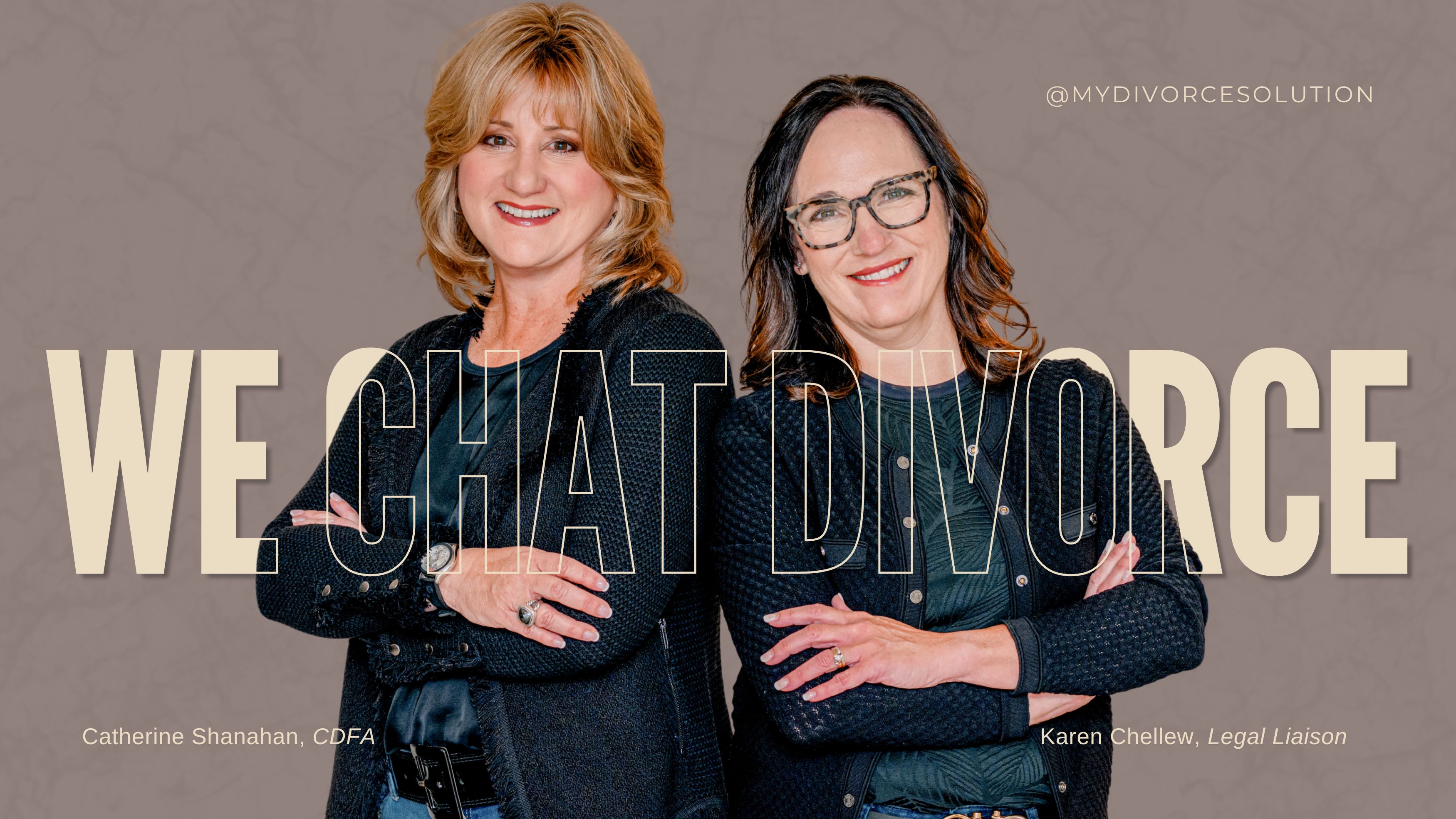

Watch this episode of We Chat Divorce (and more) on YouTube
Watch this episode of We Chat Divorce (and more) on YouTube
Before You Sign: What Divorce Financial Clarity Really Looks Like
The house is often the largest financial asset in a marriage. It is also the one people are most likely to make fast, emotional decisions about during divorce.
Someone wants stability. Someone wants out. Someone wants to keep the home for the children. Someone wants to buy something new before the divorce is final. And almost everyone assumes they understand what they own, what they owe, and what their rights are.
Most of the time, that assumption is wrong in at least one important way.
Before you list, refinance, buy something new, or sign anything related to real estate during divorce — here are four things you need to understand.
1. The Note, the Mortgage, and the Deed Are Three Different Things
Most people call all of it “the mortgage.” But when you buy a home with financing, three separate documents are involved — and each one means something different when divorce begins.
The Promissory Note is your personal promise to repay the lender. It outlines the loan amount, interest rate, payment terms, and what happens if payments stop. If your name is on the note, you have agreed to be personally responsible for that debt. That does not change because you moved out. It does not change because your divorce agreement says your spouse will handle the payments. A divorce decree is an agreement between spouses — it is not an agreement with your lender. If payments stop and your name is on the note, your credit is at risk.
The Mortgage or Deed of Trust secures the loan using the property as collateral. It protects the lender. It determines what happens if the note is not paid. It does not determine who owns the property. It does not determine whether the property is marital or separate. It tells you what the lender can do if payments stop — and that is important to understand before you walk away from a property you are still legally tied to.
The Deed is the ownership document. It determines who legally owns the property. And this is where confusion most often creates real risk.
You can be on the note but not on the deed. You can be on the deed but not on the note. You can believe you own the home because you live there and make payments — and still have a more complicated ownership picture than you realize.
We have seen deeds where a parent was listed as a co-owner and the couple had no idea. We have seen inherited property where a trust involving third parties was tied to the deed, and what our client believed they had established as a marital interest was not clear in the documents at all. We have seen a HELOC in default for twenty years that no one — including the family law attorneys — had identified. Each of those situations required a real estate attorney to resolve before any negotiation could responsibly take place.
The financial questions that matter are simple: Is your name tied to a debt you no longer control? Do you actually own what you think you own? And does everyone at the table know the answers?
2. Being on a Document Does Not Determine Marital or Separate Property
Just because your name is — or is not — on the deed or the note does not automatically determine how the property is classified in divorce.
Marital property is generally property acquired during the marriage. Separate property is property owned before marriage, inherited, or gifted to one spouse individually. But the line between them is not always clean.
If separate property increased in value during the marriage and marital funds were used to maintain or improve it — renovations paid from a joint account, a mortgage serviced with marital income — that appreciation may have a marital component. If separate funds were mixed with marital funds to purchase a property, that commingling changes the analysis. If a parent contributed to the down payment or is listed on the title, the picture becomes more complicated still.
We worked with a client whose spouse purchased a home using an inheritance before the marriage and then loaned money from that property to the marital estate. On the surface it looked straightforward. When we pulled the deed and traced the transactions — including a trust involving other third parties — the questions multiplied. What our client thought they had established as a marital interest was not clear in the documents. A real estate attorney had to sort it out before any negotiation could begin.
The point is not that every property situation is this complicated. The point is that you cannot assume you know how a property will be classified until someone has actually looked at the documents.
3. Selling the Home During Divorce Has More Risk Than People Expect
Once both spouses agree to sell, the assumption is usually that the hard part is over. It is not.
Listing agreements establish terms and give authority to list, reduce price, approve repairs, and make decisions about the sale. If both spouses are sellers, who has authority to make unilateral decisions? Who approves price reductions? Who decides on staging or renovations? If one spouse signs a listing agreement without the other, or if the agreement is vague about how decisions get made, you may find yourself in a dispute mid-sale at exactly the wrong moment.
If you are not on the deed, your situation is even more exposed. Your spouse may be able to list the home without your consent. You may have a marital interest in the equity — but you cannot sign the conveyance documents. You have negotiating leverage without legal control, which is a difficult position to be in.
Proceeds need a plan before closing, not after. Where are the sale proceeds going? Into a joint account? Escrowed? Into an IOLTA held by an attorney? Is there a written agreement about how they will be divided? A verbal promise that proceeds will be split later is not enforceable protection. We have seen situations where one spouse spent proceeds before the divorce was finalized. We have seen states where assets are divided at the date of divorce, and a premature sale created complications no one anticipated.
Hidden encumbrances are more common than people expect. Liens, defaulted HELOCs, undisclosed debts tied to the property — these can surface at closing or during title review and derail a sale that both parties thought was straightforward.
4. Selling Is Not Always the Only Option
When both spouses want out of the marital home, selling feels like the obvious path. But there are alternatives worth understanding before committing.
Renting during separation provides flexibility. It avoids premature asset division. It prevents either spouse from making impulsive decisions with marital funds while the divorce is still pending.
Exclusive use of the marital home — where one spouse stays and the other leaves — can be formalized through a temporary court order or a negotiated agreement. This is often the most practical path when children are involved and stability matters.
Co-ownership after divorce is occasionally the right answer, particularly when the market is unfavorable or when a low interest rate makes the property significantly more valuable to hold. But it requires a written agreement that covers exit strategy, defined financial responsibilities, maintenance decisions, and a clear refinance or sale timeline. Co-ownership without a written framework creates exactly the kind of ongoing conflict divorce was supposed to resolve.
If you are considering buying something new before your divorce is final — using retirement funds, life insurance, or other marital assets — understand that a clause your realtor adds to a purchase contract does not protect your spouse’s interest in those funds. Purchasing new property during divorce using marital assets is a financial decision that belongs in the middle of your divorce negotiations, not around them.
The Questions to Ask Before Any Real Estate Decision
Before you sell, refinance, buy, or sign anything related to real estate during divorce, these are the questions that matter:
- Am I personally liable for this debt?
- Do I legally own this property — and how much of it is marital?
- Do I have control over payments?
- Is my credit exposed?
- Is my equity protected?
- Are there any liens, encumbrances, or third-party interests I haven’t accounted for?
If you do not know the answers, the next step is not signing something. It is gathering documents — the deed, the note, the mortgage or deed of trust, recent statements, tax records, and any relevant trust or business records — and getting the right professionals to review them.
We tell our clients: we do not give legal advice. We give you really good questions and the documents to support them, so you can get the best legal advice possible. Real estate situations in divorce often involve family law attorneys, real estate attorneys, and financial analysts working together. None of those situations we described earlier had been identified by the family law attorney — that is not their job. Financial analysis is.
Clarity Before You Commit
The house is emotional. It represents stability, identity, and in many cases, the life you built. That is exactly why it is the asset people most often make reactive decisions about in divorce.
Before you negotiate the real estate, understand your financial picture. Know what you own. Know what you owe. Know what is marital and what is separate. Know what the long-term impact of each option looks like.
Assumptions in divorce are expensive. Clarity is protective.
About My Divorce Solution
We Chat Divorce is produced by My Divorce Solution (MDS) — a financial divorce preparation company dedicated to helping individuals navigate divorce with clarity, confidence, and a strategic financial plan. Founded by Karen Chellew, Legal Liaison, and Catherine Shanahan, Certified Divorce Financial Analyst (CDFA), MDS was created to solve one of the most common and costly mistakes in divorce: entering the legal process without fully understanding your financial picture.

Divorce is not just a legal event — it is a financial transition that can shape your long-term security. Through the MDS Divorce Financial Portrait™, clients receive expert financial analysis, organized financial disclosures, and scenario planning to understand how different settlement decisions impact their future. This financial preparation often reduces legal fees, shortens the divorce process, and helps individuals negotiate from a position of knowledge rather than fear.
If you are considering divorce or already in the process, you can begin by taking the Free Divorce Financial Assessment to better understand your options. You can also join the MDS Community for expert guidance, educational resources, and live Q&A events designed to help you move from uncertainty to clarity.
At My Divorce Solution, the mission is simple: replace fear with knowledge so you can make informed, confident financial decisions during divorce.
Disclaimer
The We Chat Divorce podcast (hereinafter referred to as the “WCD”) represents the opinions of Catherine Shanahan, Karen Chellew, and their guests to the show. WCD should not be considered professional or legal advice. The content here is for informational purposes only. Views and opinions expressed on WCD are our own and do not represent that of our places of work.
WCD should not be used in any legal capacity whatsoever. Listeners should contact their attorney to obtain advice with respect to any particular legal matter. No listener should act or refrain from acting on the basis of information on WCD without first seeking legal advice from counsel in the relevant jurisdiction. No guarantee is given regarding the accuracy of any statements or opinions made on WCD.
Unless specifically stated otherwise, Catherine Shanahan and Karen Chellew do not endorse, approve, recommend, or certify any information, product, process, service, or organization presented or mentioned on WCD, and information from this podcast should not be referenced in any way to imply such approval or endorsement. The third-party materials or content of any third-party site referenced on WCD do not necessarily reflect the opinions, standards or policies of Catherine Shanahan or Karen Chellew.
WCD, CATHERINE SHANAHAN, AND KAREN CHELLEW EXPRESSLY DISCLAIM ANY AND ALL LIABILITY OR RESPONSIBILITY FOR ANY DIRECT, INDIRECT, INCIDENTAL, SPECIAL, CONSEQUENTIAL, OR OTHER DAMAGES ARISING OUT OF ANY INDIVIDUAL’S USE OF, REFERENCE TO, RELIANCE ON, OR INABILITY TO USE, THIS PODCAST OR THE INFORMATION PRESENTED IN THIS PODCAST.