

The Divorce Clarity Guide: What to Know Before You Decide
When you’re considering or navigating divorce, one question can sit underneath almost every other concern: Will I be okay financially? Answering it takes more than knowing an account balance or reviewing a proposed settlement. You need to understand what you own, what you owe, what your life costs, and how different choices could affect your future.
To mark 10 years of My Divorce Solution, co-founders Karen Chellew and Catherine Shanahan created The Divorce Clarity Guide: What to Know Before You Decide. This free resource brings together three perspectives: 10 mistakes, 10 insights, and 10 steps to help you approach financial decisions with greater understanding.
In a companion three-part We Chat Divorce series, Karen and Catherine explore each section through practical examples, professional experience, and lessons from their own divorces.
PART 1: 10 Costly Divorce Mistakes to Avoid
PART 2: 10 Insights for Better Divorce Financial Decisions
PART 3: 10 Steps to Financial Clarity in Divorce
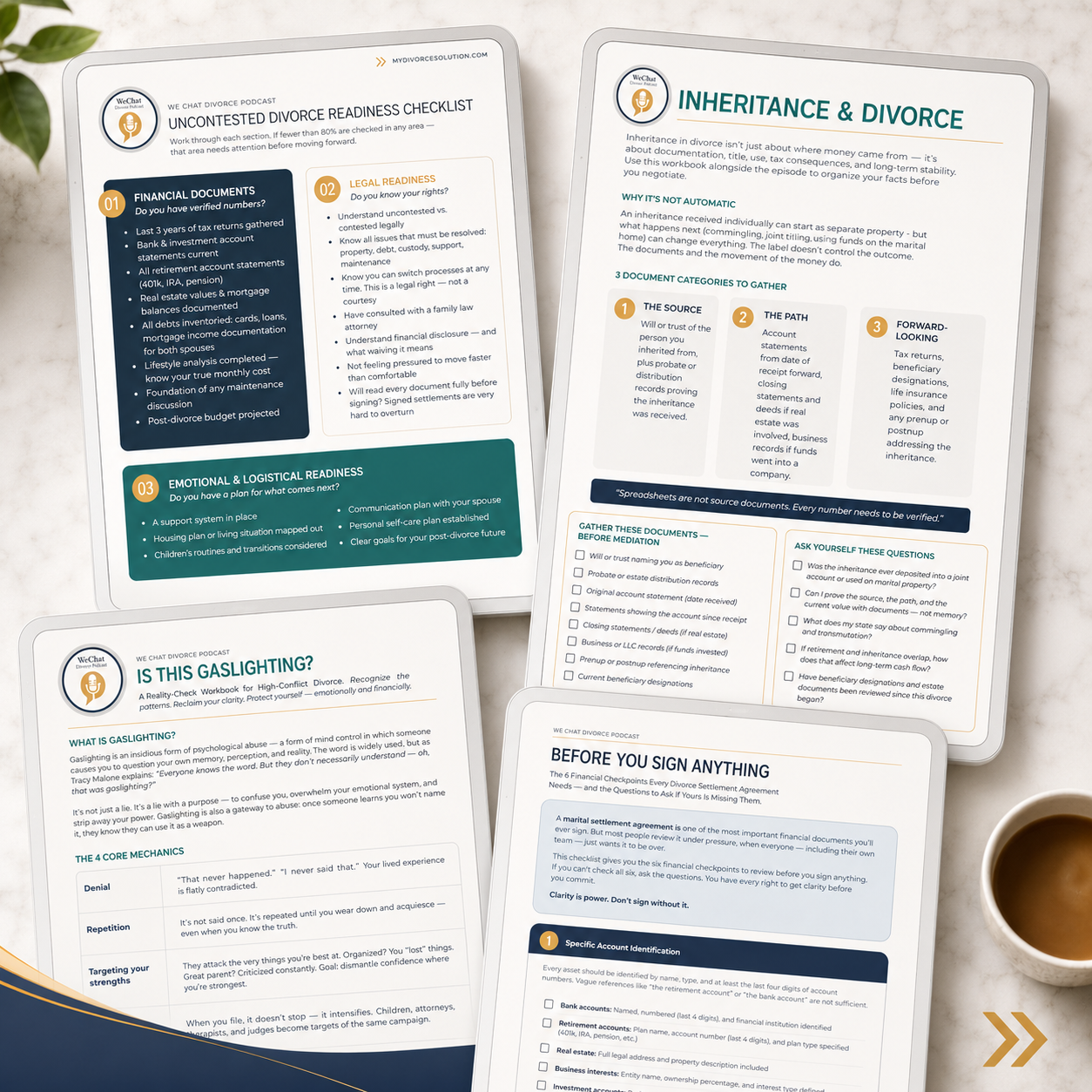
Download the Divorce clarity guide
Download your free Divorce Clarity Guide for 10 mistakes to avoid, 10 insights to consider, and 10 steps toward informed financial decisions.
By submitting this form, you agree to receive communications from My Divorce Solution. Your information is confidential and protected.
Part One: 10 Mistakes That Cost People the Most
Many divorce financial mistakes begin with an understandable desire: to feel secure, avoid conflict, or finish an exhausting process. You may want to keep the house because it represents stability. You may accept an account value because your spouse has always managed the finances. Or you may agree to terms before understanding how they would affect your daily life.
The guide’s first section helps you recognize these patterns before they shape your decisions. In the first episode, Karen and Catherine discuss mistakes such as:
- Relying on assumptions instead of verified numbers.
- Agreeing to a settlement you don’t fully understand.
- Overlooking retirement, taxes, and future cash flow.
- Underestimating the cost of running two households.
- Avoiding questions because they feel uncomfortable.
Their message is practical: before agreeing to a financial proposal, understand the information behind it and what carrying it out would require. If you’re keeping the house, for example, can you afford its ongoing costs? Is the refinancing timeline realistic? What other assets would you give up?
Part Two: 10 Insights From 10 Years of Experience
Recognizing potential mistakes leads to a bigger question: what helps people make better-informed decisions? The guide’s second section shares lessons from a decade of helping families prepare financially for divorce. In the accompanying episode, Karen and Catherine discuss how preparation, transparency, and attention to detail can change the conversation.
One important insight is that an amicable divorce still requires financial understanding. Working cooperatively does not remove the need for supporting documents, clear explanations, and realistic budgets.
They also explore how emotions influence financial choices and why seemingly small details an account’s valuation date, an unresolved mortgage obligation, or missing documentation deserve attention.
If you haven’t decided whether to divorce, financial preparation can still be useful. Understanding your finances gives you information to consider your next step without committing you to a particular outcome.
Part Three: 10 Steps Toward Financial Clarity
The guide’s final section turns those lessons into a practical framework:
- List all known assets and accounts.
- Identify all debts and obligations.
- Understand your current monthly expenses.
- Estimate future living costs.
- Gather your financial documents.
- Clarify income sources for both spouses.
- Identify unknowns and gaps.
- Ask questions, including uncomfortable ones.
- Model potential settlement scenarios.
- Get structured financial guidance before legal decisions.
In the final episode, Karen and Catherine explain the questions they ask throughout these steps when building an MDS Financial Portrait™, MDS’s proprietary financial divorce planning tool.
The Portrait combines verified financial information, expert analysis, budgets, and settlement scenarios in an organized record for you and your professionals. It also identifies missing documentation and assumptions so unresolved questions remain visible.
Take Your Next Step With Greater Clarity
You don’t have to answer every financial question today. Begin with one missing statement, one future expense you haven’t considered, or one part of a proposal you need explained.
The Divorce Clarity Guide gives you a resource to work through at your own pace and return to as new questions arise. Use it alongside these three conversations to understand what needs attention and prepare for more informed discussions with your professionals. Download The Divorce Clarity Guide Now