

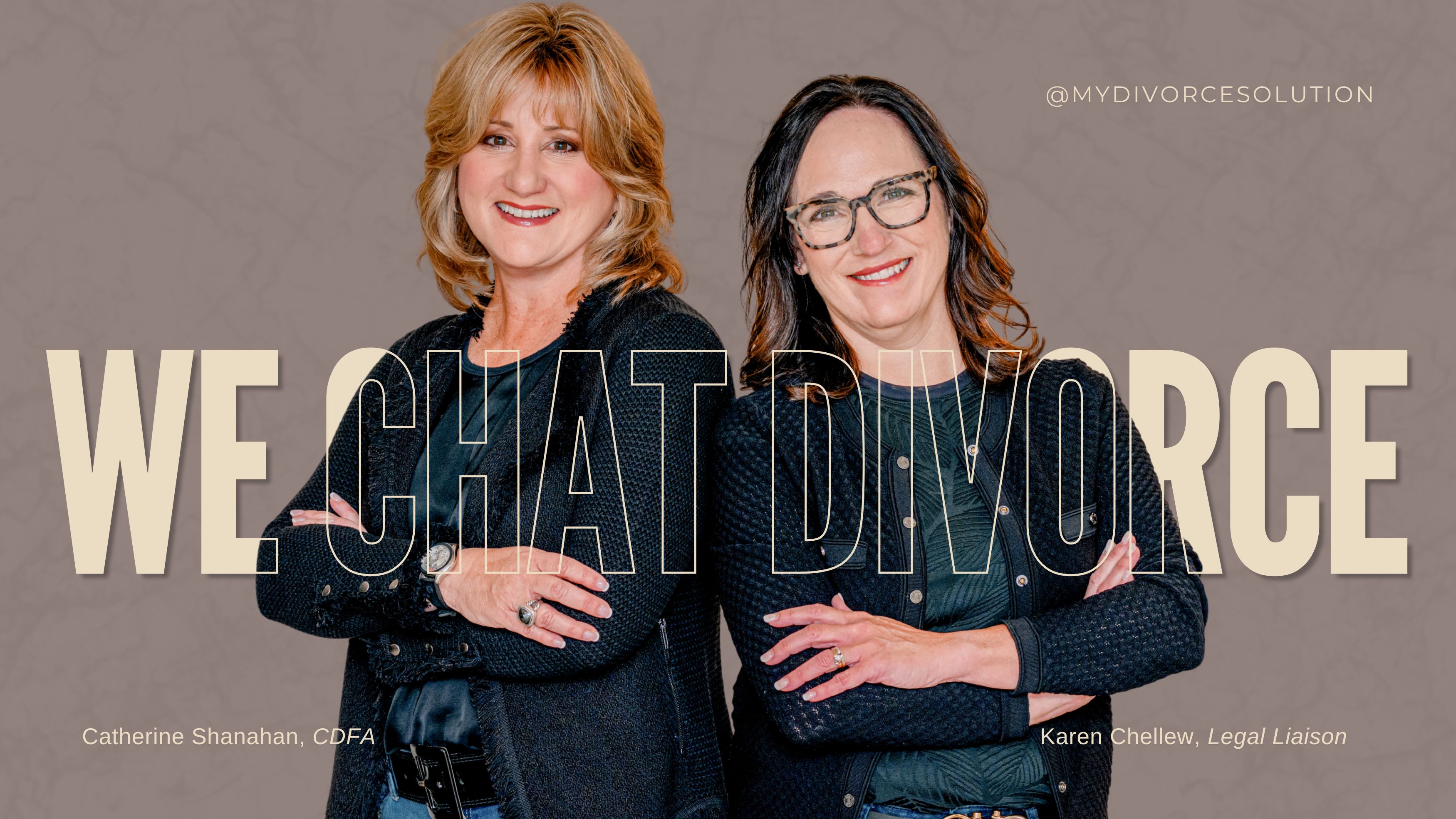
136. Aiming for Financial Clarity: How To Secure Your Financial Independence in Divorce

In this episode, we explore how to navigate the emotional and financial challenges of divorce while setting yourself up for long-term financial independence in divorce.
What We Cover:
- The importance of assessing your financial position before making any major decisions
- How to understand and differentiate between assets & liabilities
- Why having an investment strategy during divorce is crucial
- The role of attorneys & financial professionals—and why you still need to take control
- How to avoid wasting money in the legal process by defining your “everything”
- Smart financial decisions to protect your future
- Reframing divorce as an opportunity for a financial reset
This Valentine’s season, let Cupid’s arrow point toward financial clarity and self-love. Taking charge of your finances is the best gift you can give yourself.
Watch this episode on YouTube
Take our Free Financial Assessment to start your journey!
Have questions? Send us your questions, comments, show ideas to wechat@ck11.net
Resources Mentioned
About My Divorce Solution
We Chat Divorce is produced by My Divorce Solution (MDS) — a financial divorce preparation company dedicated to helping individuals navigate divorce with clarity, confidence, and a strategic financial plan. Founded by Karen Chellew, Legal Liaison, and Catherine Shanahan, Certified Divorce Financial Analyst (CDFA), MDS was created to solve one of the most common and costly mistakes in divorce: entering the legal process without fully understanding your financial picture.
Divorce is not just a legal event — it is a financial transition that can shape your long-term security. Through the MDS Divorce Financial Portrait™, clients receive expert financial analysis, organized financial disclosures, and scenario planning to understand how different settlement decisions impact their future. This financial preparation often reduces legal fees, shortens the divorce process, and helps individuals negotiate from a position of knowledge rather than fear.
If you are considering divorce or already in the process, you can begin by taking the Free Divorce Financial Assessment to better understand your options. You can also join the MDS Community for expert guidance, educational resources, and live Q&A events designed to help you move from uncertainty to clarity.
At My Divorce Solution, the mission is simple: replace fear with knowledge so you can make informed, confident financial decisions during divorce.
Episode Transcript
0:01
Welcome to WeChat Divorce, hosted by Karen Chellew, Legal Liaison and Catherine Shanahan, CDFA.
Each episode we sit down with divorce professionals and industry experts to provide insights and frank discussions about real people, real situations, and real divorce to help you achieve your best life post divorce.
0:40
Welcome to WeChat Divorce, brought to you by My Divorce Solution and hosted by myself, Karen Chellew, Legal Liaison, and Catherine Shanahan, Divorce Financial Specialist and CDFA.
On these special explainer episodes, we answer the top questions about divorce, giving you confidence and clarity.
0:58
Now today we’re going to explore a topic that might not seem very love friendly.
And I know we’re in February, it’s Valentine’s Day, everyone’s just thinking about relationships, but but for us, it’s all about finding loving security in a different way.
1:14
With this being such love centric month, we’re talking about divorce, finances, how to navigate the emotional and financial challenges of divorce, and more importantly, how to rebuild and rediscover your financial independence and your own self worth.
Instead of channel energy into searching for new romance, we’re going to explore how you can reallocate your financial resources, your most important investment, and secure a more empowered future.
1:40
You know, Catherine, many of our listeners probably feel that divorce is a painful loss.
I know I did, and it’s hard to get beyond that emotion.
But what if we looked at it like a financial reset, a chance to review all of the finances, their entire portfolio, shed unnecessary liabilities and really invest in US and you as a divorcing spouse?
2:06
Because that is really what matters moving forward, don’t you think?
Yes, exactly.
That’s exactly what I think.
It’s never too late to start a new relationship with money.
I, I like to talk about that a lot because people are so afraid and post divorce finances can be like a fresh start.
2:22
You know, you have the opportunity to rebalance your assets, maximize your savings and even reinvest in your retirement and self development.
So it, I like, it’s so cathartic, right?
It’s like cleaning out your closet.
Why not start over with your financial life?
Yeah.
And I believe, and you talk a lot about this a lot, you know, the financial mindset, I think when you’re married for, I don’t know, 5-10, fifteen, 20 years, whatever it may be, you, you can easily adopt your spouse’s financial mindset and you kind of lose your own.
2:55
And so, you know, that’s right.
What I really love about our process is that people can start to explore, unpack and kind of, you know, get back how they think about money.
And so moving forward, they can make better decisions for themselves.
3:12
It’s kind of like what I like.
I know everybody must be seeing the campaign we had about like Cupid, take your new arrow.
You know, at first, at first I had to think about it and then as I saw the post that Jamie was doing for us, which she’s been doing a fantastic job with those, it really like resonated with me.
3:29
You know, yes, make Cupid’s arrow go to your finances for you because it’s such a that’s the best kind of self Love, Actually, when you feel financially secure.
Yeah, I I so agree.
And I feel like with our clients, we run into that so much that they need to take the time to learn or relearn themselves, right?
3:51
And how they think about money.
So today we’re going to talk about 7 steps of financial knowledge, letting that Cupid’s arrow guide you.
And so the first step is assessing your financial position.
We say this all the time ad nauseam, but I feel like we can’t say it enough.
4:09
It’s really important when you’re starting the divorce process or you’re thinking about divorce to review all your assets, liabilities and current net worth because knowing that and knowing your cash flow really sets the pace for whatever financial decisions you’re going to make moving forward.
4:29
So many times people say, you know, I’m going to hire an attorney, they make negotiations with their spouse or or whatever the IT may be.
You know, sometimes they’re putting a house on the market, not understanding the financial impact.
But taking the time to our discussion today and resetting and figuring that out is really, really important, I believe.
4:51
Well, you know, it also is the best first step to realize where you need some more knowledge, right?
So when you start reading your assets and your liabilities, some people don’t even know what a liability is.
You know, a liability is a debt, money you owe to somebody, right?
And when you don’t know your current worth, so do you need to get some resources to learn about liabilities, to learn about assets?
5:11
And that’s a really scary first step for a lot of people.
But again, it’s just setting the pace for what kind of knowledge you actually need.
So second tip is let me just find it.
Well, it’s about your investment strategies that you’re doing during divorce, right?
5:29
So everybody has strategies and sometimes they confuse strategies with strategizing against somebody, but you really have.
No points.
You really need to know what what you’re looking at, you know, home equity versus retirement money.
5:45
What’s more valuable to you, you know, understand the impact of when you’re choosing one of those managing the debt.
Are you paying down debt now?
Hurley, what’s that word?
Hurry.
I’m saying trying to say hurry hurriedly.
Yeah, you’re trying to do that quickly so that you don’t have that debt post divorce.
6:04
But are you really using marital money to do that?
And should you be doing that or are you using your own separate property that you should not be paying down marital debt and then reinvesting your in yourself?
Do you need money to relocate or do you need money to further your career or to get educated so that you can have employment that you don’t need spousal support?
6:26
So these are all the things that you need to go through before you make any negotiations during divorce, during divorce.
And you’re not really strategizing against someone.
You’re just putting together an investment strategy for yourself to have a post divorce, successful and thriving life.
6:43
Catherine, let’s talk a little bit about why some people feel like their attorneys just going to do that for them or their financial planner is just going to do that for them.
Let’s talk about the differences there and why on some level they need to do it for themselves, with assistance of course.
7:02
But unless you have a professional in the divorce world that you know can help you with your finances, another professional is really not going to help you in that space, in the space of making decisions during a divorce.
You know, I thought about that because we’ve had that comment so many times over the years.
7:21
And I think that when somebody goes to an attorney, they’re not in an emotional state where they’re really super prepared, right?
They, they’re either going there because they’re just fed up and they’re initiating the divorce and they think they know everything.
So they just went out or they’re going there because their spouse initiated this and they have no other choice.
7:39
And I think when they go for those consults, they might be saying things like, Oh, I don’t understand the assets.
How am I going to get information?
You know, my spouse is a narcissist.
They control everything.
How are we going to do that?
I won’t understand what what decisions I have to make.
And I think what they’re hearing in return is, oh, we’re going to help you with that.
7:57
You know, yes, we’re going to get that information from your spouse and that’s what we’re here for.
And legally that, you know, 50% of everything is yours, whatever it could be.
I’m just using that as an example.
And So what they’re hearing is their attorney’s going to do that for them.
But in fact, when you go there and you’ve retained them and now the process is starting and they hand you a packet and they say this is what we need you to fill out your financial disclosures or affidavit, whatever your state calls it.
8:24
And you’re realizing you don’t have this information, but you still want to know what’s it going to look like.
So you’re going back to your attorney and they can’t answer that.
They don’t even know what you have.
And they’re not investment people.
So they don’t really understand the impact of all the assets and the complexities yet because they don’t even have anything.
8:39
So people quickly feel, figure out after the month that they’ve gone through the retainer that, Oh my gosh, I’m not going to get that clarity that I need.
And it’s the same thing with financial planners, you know, and Cdfas, you know, I’m a CDFA, so I, I understand how it works.
8:55
But what they usually are doing is they’re doing the work that the attorney wants them to do, right?
They want them to say, you know, tell me about this investment.
Should she keep this?
Or they’re looking at an investment and they’re saying, oh, this is the best asset, you should keep it.
But they don’t really know the overall impact of everything.
9:10
They don’t look at their real estate.
They don’t look at things that are not investable typically, right?
So I think you just get in this whirlwind and you have, I think you’re not clear when you’re going through this of what, what do you actually need?
And that’s why, you know, the, the MD’s method is get all of this together 1st and, and you’ll understand where the holes are, what’s missing, what rabbit hole you should avoid or get the resource.
9:37
You’ll get the resources to understand what is an asset, what is a liability, you know is could this be considered marital?
Could this be considered separate?
And then when you take that knowledge and you go to your next professional, now they’re you’re going to be able to direct them to what you want you.
9:53
Hit the nail on the head 100% because people do think that I’m going to fill out this paperwork and my attorney’s going to send out discovery and we’re going to get everything we need.
But if you haven’t done the homework of, first of all, identifying the knowns that you have, you could easily be throwing money at assets or debts, throwing more money at those at getting the documents for those assets and debts than they’re actually worth.
10:26
We see that so often because, you know, in the litigation world, the processes just ask for everything.
And so it becomes a back and forth of less than everything.
No one’s really betting it out.
Everything is being asked for it.
10:42
And you’re spending so much money on things that don’t matter.
But if you take control and know what you have and what you need, you can say to your attorney, look, I have those bank statements.
If they didn’t provide them all, it’s OK, I got them right here.
10:59
And on so many levels.
But I do need data to support.
I do need documents to support these other assets because if you don’t do that, it does become confusing, chaotic and very expensive.
And for those assets where you really do need information, those probably are the assets or debts that are kind of being held back.
11:21
And so, so many of our clients never actually acquire certain documents to value the assets that are most critical to their marital estate.
Yeah, I’m gonna, I wanna hone in on a word you kept using and that’s everything, right?
11:37
And I know we’re going off the tips because that’s what Karen and I do.
We just start talking about things because so much comes to our head because we deal with so many people every day.
So excuse us for going off 123-4567, but hopefully you’ll you’ll hear 7 tips in here.
But the word everything, like what does everything even mean, right?
11:56
So when the attorney says, well, subpoena everything, what is everything?
And that’s what we’re trying to say to you.
You need to know what everything means because sometimes you just want something, you know, you don’t need everything.
And that’s why when the attorneys say, oh, just tell me what you want, you know that that makes me crack up laughing, right?
12:13
Well, we want everything, right?
And everything to us is anything that we can get our hands on maybe, right?
Or everything is everything that we need to know to move forward.
So don’t ask your clients what you want, give them different scenarios and say which one is your most preferable.
12:30
And that’s when we go through division scenarios, right?
Here’s a scenario B scenario C scenario.
If you can go to your attorney with those scenarios and then say, get me the best one of these three scenarios, you’re that’s money better spent.
And it’s also money saved because you’re not going to go in this back and forth with your attorney not knowing what you want because that word everything, of course you want everything.
12:52
So define your everything.
What is your everything?
Right.
And getting in the ring to say, no, I don’t want you to subpoena these accounts because we already have them.
I know what this account or this asset means to me.
13:09
You have that ability so that you’re investing your money in your divorce in a way that’s beneficial to you and not necessarily someone just following the motions of due diligence because at some point you’re going to run out of money and you’re not going to have an attorney because they’re going to fire themselves.
13:29
That’s another thing they fire themselves when you’re not.
You’re telling them what you want and they say they can’t support that and that then they would in turn.
That saying is you’re not listening to them, right, So.
Be.
Really prepared, if you’re in the middle of the process, stop, take pause, think about it.
13:47
Do you have financial clarity?
You got to take care of yourself because at the end of the day, your attorney goes on to another case.
At the end of the day, everyone goes home, but you’re stuck with that.
So how do you give yourself self love if you don’t know financially where you stand or where you’re going to stand post divorce?
14:03
So we really want you to reframe this Valentine’s Day month or love month to, you know, take care of yourself, and that’s with financial knowledge.
Yeah, use that Cupid’s arrow to know that divorce is an opportunity to reassess and reinvest in your future.
14:22
You can use it for strategic financial planning, like rebalancing your asset portfolio.
You can secure law.
You can secure long term financial independence and use this Cupid arrow to serve as a reminder to celebrate self love and to channel that energy into smart financial decisions.
14:42
So I think that the take away to all of this is you pretty much just said it, you know, set it on yourself, You know, take the month to treat yourself to some financial knowledge.
It will really change the way you look at yourself in the mirror.
It will change.
It’ll put a little pep in your step when you can actually turn the news on and hear anything and know how it affects you financially.
15:05
That’s really empowering when you can sit in a room with people who are talking about finances or just bringing up finances in any way.
And if you know just a little bit of what they’re saying or you don’t feel like you’re so in the dark about that When someone mentions a budget or an asset or a liability or cryptocurrency, which is the big word now.
15:25
But when you have a little bit of knowledge, you will feel so much better moving on to your new phase of your life.
Absolutely.
So thank you for joining us on this episode, 7 steps to financial knowledge.
Let Cupid’s new Arrow guide you.
Stay tuned for future episodes as we continue continue to Ravel the fascinating world of finance and divorce.
15:46
Remember, knowledge is power.
I want to say again, I know Karen just said it again, seven steps.
I don’t even know what the seven steps were but if you’re listening to this and you can’t put pull out seven tips that we gave you or seven steps, please message us and we will make sure there are 7 that are said.
16:04
Love it.
OK Disclaimer This information provided in this podcast is for education and information on purposes only and should not be considered as financial or legal advice.
Please consult with professionals in the relevant fields for personal personalized guidance.
16:21
Thanks for joining us on another episode of WeChat Divorce.
We hope this episode was informative and supportive on your divorce journey.
If you're looking for more support for navigating divorce with confidence and clarity, head over to azure-emu-499854.hostingersite.com/ for more podcast episodes, divorce events, and resources for your divorce.
16:44
We’ll see you back here for our next episode.
© 2026 Spotify AB
0:01
Welcome to WeChat Divorce, hosted by Karen Chalou, Legal Liaison and Catherine Shanahan, CDFA.
Each episode we sit down with divorce professionals and industry experts to provide insights and frank discussions about real people, real situations, and real divorce to help you achieve your best life post divorce.
0:40
Welcome to WeChat Divorce, brought to you by My Divorce Solution and hosted by myself, Karen Shalu, Legal Liaison, and Catherine Shanahan, Divorce Financial Specialist and CDFA.
On these special explainer episodes, we answer the top questions about divorce, giving you confidence and clarity.
0:58
Now today we’re going to explore a topic that might not seem very love friendly.
And I know we’re in February, it’s Valentine’s Day, everyone’s just thinking about relationships, but but for us, it’s all about finding loving security in a different way.
1:14
With this being such love centric month, we’re talking about divorce, finances, how to navigate the emotional and financial challenges of divorce, and more importantly, how to rebuild and rediscover your financial independence and your own self worth.
Instead of channel energy into searching for new romance, we’re going to explore how you can reallocate your financial resources, your most important investment, and secure a more empowered future.
1:40
You know, Catherine, many of our listeners probably feel that divorce is a painful loss.
I know I did, and it’s hard to get beyond that emotion.
But what if we looked at it like a financial reset, a chance to review all of the finances, their entire portfolio, shed unnecessary liabilities and really invest in US and you as a divorcing spouse?
2:06
Because that is really what matters moving forward, don’t you think?
Yes, exactly.
That’s exactly what I think.
It’s never too late to start a new relationship with money.
I, I like to talk about that a lot because people are so afraid and post divorce finances can be like a fresh start.
2:22
You know, you have the opportunity to rebalance your assets, maximize your savings and even reinvest in your retirement and self development.
So it, I like, it’s so cathartic, right?
It’s like cleaning out your closet.
Why not start over with your financial life?
Yeah.
And I believe, and you talk a lot about this a lot, you know, the financial mindset, I think when you’re married for, I don’t know, 5-10, fifteen, 20 years, whatever it may be, you, you can easily adopt your spouse’s financial mindset and you kind of lose your own.
2:55
And so, you know, that’s right.
What I really love about our process is that people can start to explore, unpack and kind of, you know, get back how they think about money.
And so moving forward, they can make better decisions for themselves.
3:12
It’s kind of like what I like.
I know everybody must be seeing the campaign we had about like Cupid, take your new arrow.
You know, at first, at first I had to think about it and then as I saw the post that Jamie was doing for us, which she’s been doing a fantastic job with those, it really like resonated with me.
3:29
You know, yes, make Cupid’s arrow go to your finances for you because it’s such a that’s the best kind of self Love, Actually, when you feel financially secure.
Yeah, I I so agree.
And I feel like with our clients, we run into that so much that they need to take the time to learn or relearn themselves, right?
3:51
And how they think about money.
So today we’re going to talk about 7 steps of financial knowledge, letting that Cupid’s arrow guide you.
And so the first step is assessing your financial position.
We say this all the time ad nauseam, but I feel like we can’t say it enough.
4:09
It’s really important when you’re starting the divorce process or you’re thinking about divorce to review all your assets, liabilities and current net worth because knowing that and knowing your cash flow really sets the pace for whatever financial decisions you’re going to make moving forward.
4:29
So many times people say, you know, I’m going to hire an attorney, they make negotiations with their spouse or or whatever the IT may be.
You know, sometimes they’re putting a house on the market, not understanding the financial impact.
But taking the time to our discussion today and resetting and figuring that out is really, really important, I believe.
4:51
Well, you know, it also is the best first step to realize where you need some more knowledge, right?
So when you start reading your assets and your liabilities, some people don’t even know what a liability is.
You know, a liability is a debt, money you owe to somebody, right?
And when you don’t know your current worth, so do you need to get some resources to learn about liabilities, to learn about assets?
5:11
And that’s a really scary first step for a lot of people.
But again, it’s just setting the pace for what kind of knowledge you actually need.
So second tip is let me just find it.
Well, it’s about your investment strategies that you’re doing during divorce, right?
5:29
So everybody has strategies and sometimes they confuse strategies with strategizing against somebody, but you really have.
No points.
You really need to know what what you’re looking at, you know, home equity versus retirement money.
5:45
What’s more valuable to you, you know, understand the impact of when you’re choosing one of those managing the debt.
Are you paying down debt now?
Hurley, what’s that word?
Hurry.
I’m saying trying to say hurry hurriedly.
Yeah, you’re trying to do that quickly so that you don’t have that debt post divorce.
6:04
But are you really using marital money to do that?
And should you be doing that or are you using your own separate property that you should not be paying down marital debt and then reinvesting your in yourself?
Do you need money to relocate or do you need money to further your career or to get educated so that you can have employment that you don’t need spousal support?
6:26
So these are all the things that you need to go through before you make any negotiations during divorce, during divorce.
And you’re not really strategizing against someone.
You’re just putting together an investment strategy for yourself to have a post divorce, successful and thriving life.
6:43
Catherine, let’s talk a little bit about why some people feel like their attorneys just going to do that for them or their financial planner is just going to do that for them.
Let’s talk about the differences there and why on some level they need to do it for themselves, with assistance of course.
7:02
But unless you have a professional in the divorce world that you know can help you with your finances, another professional is really not going to help you in that space, in the space of making decisions during a divorce.
You know, I thought about that because we’ve had that comment so many times over the years.
7:21
And I think that when somebody goes to an attorney, they’re not in an emotional state where they’re really super prepared, right?
They, they’re either going there because they’re just fed up and they’re initiating the divorce and they think they know everything.
So they just went out or they’re going there because their spouse initiated this and they have no other choice.
7:39
And I think when they go for those consults, they might be saying things like, Oh, I don’t understand the assets.
How am I going to get information?
You know, my spouse is a narcissist.
They control everything.
How are we going to do that?
I won’t understand what what decisions I have to make.
And I think what they’re hearing in return is, oh, we’re going to help you with that.
7:57
You know, yes, we’re going to get that information from your spouse and that’s what we’re here for.
And legally that, you know, 50% of everything is yours, whatever it could be.
I’m just using that as an example.
And So what they’re hearing is their attorney’s going to do that for them.
But in fact, when you go there and you’ve retained them and now the process is starting and they hand you a packet and they say this is what we need you to fill out your financial disclosures or affidavit, whatever your state calls it.
8:24
And you’re realizing you don’t have this information, but you still want to know what’s it going to look like.
So you’re going back to your attorney and they can’t answer that.
They don’t even know what you have.
And they’re not investment people.
So they don’t really understand the impact of all the assets and the complexities yet because they don’t even have anything.
8:39
So people quickly feel, figure out after the month that they’ve gone through the retainer that, Oh my gosh, I’m not going to get that clarity that I need.
And it’s the same thing with financial planners, you know, and Cdfas, you know, I’m a CDFA, so I, I understand how it works.
8:55
But what they usually are doing is they’re doing the work that the attorney wants them to do, right?
They want them to say, you know, tell me about this investment.
Should she keep this?
Or they’re looking at an investment and they’re saying, oh, this is the best asset, you should keep it.
But they don’t really know the overall impact of everything.
9:10
They don’t look at their real estate.
They don’t look at things that are not investable typically, right?
So I think you just get in this whirlwind and you have, I think you’re not clear when you’re going through this of what, what do you actually need?
And that’s why, you know, the, the MD’s method is get all of this together 1st and, and you’ll understand where the holes are, what’s missing, what rabbit hole you should avoid or get the resource.
9:37
You’ll get the resources to understand what is an asset, what is a liability, you know is could this be considered marital?
Could this be considered separate?
And then when you take that knowledge and you go to your next professional, now they’re you’re going to be able to direct them to what you want you.
9:53
Hit the nail on the head 100% because people do think that I’m going to fill out this paperwork and my attorney’s going to send out discovery and we’re going to get everything we need.
But if you haven’t done the homework of, first of all, identifying the knowns that you have, you could easily be throwing money at assets or debts, throwing more money at those at getting the documents for those assets and debts than they’re actually worth.
10:26
We see that so often because, you know, in the litigation world, the processes just ask for everything.
And so it becomes a back and forth of less than everything.
No one’s really betting it out.
Everything is being asked for it.
10:42
And you’re spending so much money on things that don’t matter.
But if you take control and know what you have and what you need, you can say to your attorney, look, I have those bank statements.
If they didn’t provide them all, it’s OK, I got them right here.
10:59
And on so many levels.
But I do need data to support.
I do need documents to support these other assets because if you don’t do that, it does become confusing, chaotic and very expensive.
And for those assets where you really do need information, those probably are the assets or debts that are kind of being held back.
11:21
And so, so many of our clients never actually acquire certain documents to value the assets that are most critical to their marital estate.
Yeah, I’m gonna, I wanna hone in on a word you kept using and that’s everything, right?
11:37
And I know we’re going off the tips because that’s what Karen and I do.
We just start talking about things because so much comes to our head because we deal with so many people every day.
So excuse us for going off 123-4567, but hopefully you’ll you’ll hear 7 tips in here.
But the word everything, like what does everything even mean, right?
11:56
So when the attorney says, well, subpoena everything, what is everything?
And that’s what we’re trying to say to you.
You need to know what everything means because sometimes you just want something, you know, you don’t need everything.
And that’s why when the attorneys say, oh, just tell me what you want, you know that that makes me crack up laughing, right?
12:13
Well, we want everything, right?
And everything to us is anything that we can get our hands on maybe, right?
Or everything is everything that we need to know to move forward.
So don’t ask your clients what you want, give them different scenarios and say which one is your most preferable.
12:30
And that’s when we go through division scenarios, right?
Here’s a scenario B scenario C scenario.
If you can go to your attorney with those scenarios and then say, get me the best one of these three scenarios, you’re that’s money better spent.
And it’s also money saved because you’re not going to go in this back and forth with your attorney not knowing what you want because that word everything, of course you want everything.
12:52
So define your everything.
What is your everything?
Right.
And getting in the ring to say, no, I don’t want you to subpoena these accounts because we already have them.
I know what this account or this asset means to me.
13:09
You have that ability so that you’re investing your money in your divorce in a way that’s beneficial to you and not necessarily someone just following the motions of due diligence because at some point you’re going to run out of money and you’re not going to have an attorney because they’re going to fire themselves.
13:29
That’s another thing they fire themselves when you’re not.
You’re telling them what you want and they say they can’t support that and that then they would in turn.
That saying is you’re not listening to them, right, So.
Be.
Really prepared, if you’re in the middle of the process, stop, take pause, think about it.
13:47
Do you have financial clarity?
You got to take care of yourself because at the end of the day, your attorney goes on to another case.
At the end of the day, everyone goes home, but you’re stuck with that.
So how do you give yourself self love if you don’t know financially where you stand or where you’re going to stand post divorce?
14:03
So we really want you to reframe this Valentine’s Day month or love month to, you know, take care of yourself, and that’s with financial knowledge.
Yeah, use that Cupid’s arrow to know that divorce is an opportunity to reassess and reinvest in your future.
14:22
You can use it for strategic financial planning, like rebalancing your asset portfolio.
You can secure law.
You can secure long term financial independence and use this Cupid arrow to serve as a reminder to celebrate self love and to channel that energy into smart financial decisions.
14:42
So I think that the take away to all of this is you pretty much just said it, you know, set it on yourself, You know, take the month to treat yourself to some financial knowledge.
It will really change the way you look at yourself in the mirror.
It will change.
It’ll put a little pep in your step when you can actually turn the news on and hear anything and know how it affects you financially.
15:05
That’s really empowering when you can sit in a room with people who are talking about finances or just bringing up finances in any way.
And if you know just a little bit of what they’re saying or you don’t feel like you’re so in the dark about that When someone mentions a budget or an asset or a liability or cryptocurrency, which is the big word now.
15:25
But when you have a little bit of knowledge, you will feel so much better moving on to your new phase of your life.
Absolutely.
So thank you for joining us on this episode, 7 steps to financial knowledge.
Let Cupid’s new Arrow guide you.
Stay tuned for future episodes as we continue continue to Ravel the fascinating world of finance and divorce.
15:46
Remember, knowledge is power.
I want to say again, I know Karen just said it again, seven steps.
I don’t even know what the seven steps were but if you’re listening to this and you can’t put pull out seven tips that we gave you or seven steps, please message us and we will make sure there are 7 that are said.
16:04
Love it.
OK Disclaimer This information provided in this podcast is for education and information on purposes only and should not be considered as financial or legal advice.
Please consult with professionals in the relevant fields for personal personalized guidance.
16:21
Thanks for joining us on another episode of WeChat Divorce.
We hope this episode was informative and supportive on your divorce journey.
If you're looking for more support for navigating divorce with confidence and clarity, head over to azure-emu-499854.hostingersite.com/ for more podcast episodes, divorce events, and resources for your divorce.
16:44
We’ll see you back here for our next episode.