

145. From Disconnect to Discovery: Navigating Marriage, Divorce, and Beyond with Colleen Kowal

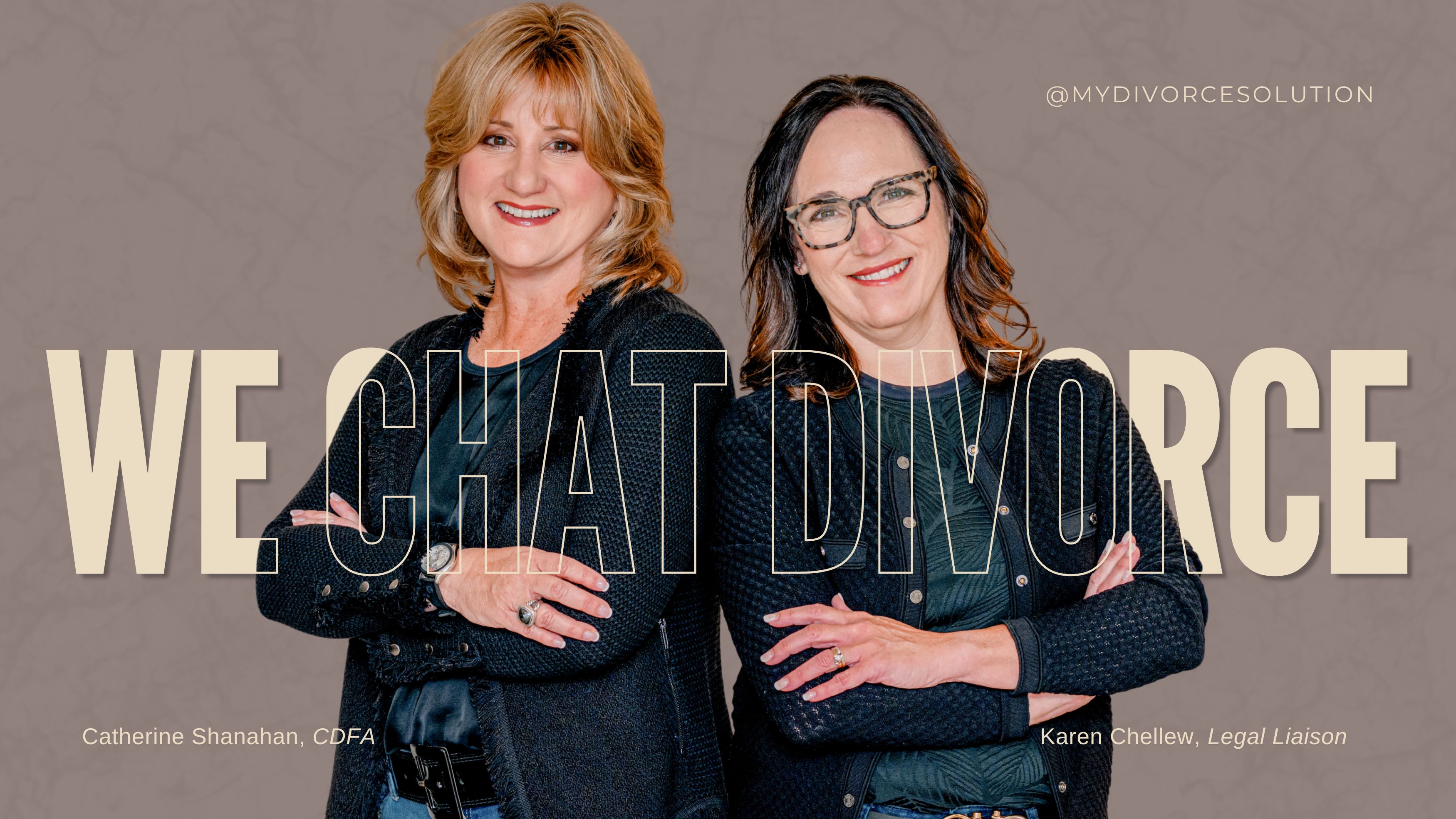
In this powerful episode, Karen Chellew and Catherine Shanahan sit down with Imago Relationship Therapist Colleen Kowal to explore the emotional complexities of marriage, divorce, and co-parenting. Drawing from her personal journey and years of professional experience, Colleen shares how relationship dynamics can lead to disconnect—and more importantly, how intentional conversations, discernment, and closure can pave the way for healing and rediscovery.
Colleen explains the concept of Relational Contracts, the role of Discernment Therapy, and the importance of processing divorce in a way that minimizes harm—especially for children. Together, they discuss how financial imbalances, emotional triggers, and unfinished relationship dynamics often carry over into divorce and co-parenting if left unaddressed.
About the Guest: Colleen Kowal
Colleen is an Imago Relationship Therapist who works with individuals, couples, and families navigating the complexities of relationships, divorce, and co-parenting. Her approach blends personal experience as a child of divorce and a divorced parent with professional expertise to help clients move from pain to purpose.
Learn more about Imago Relationship Therapy: https://www.hiltonheadislandcounseling.com/
Listen & Subscribe:
Catch this episode and more on We Chat Divorce—your go-to resource for navigating the financial and emotional side of divorce with confidence.
Submit questions: WeChat@ck11.net
Episode Transcript
0:01
Welcome to WeChat Divorce, hosted by Karen Chalou, Legal Liaison and Catherine Shanahan, CDFA.
Each episode we sit down with divorce professionals and industry experts to provide insights and frank discussions about real people, real situations, and real divorce to help you achieve your best life post divorce.
0:39
Welcome to WeChat Divorce.
I’m Karen Shalou and here with Catherine Shanahan today and we will be speaking with Colleen Colwall about from disconnect to discovery, navigating marriage, divorce and beyond.
Really, it’s going to be a great conversation.
0:57
Yeah, I’m starting to laugh because Colleen, fantastic as she is in so many things, I’m thinking of the time that you and I went and met with her.
So Colleen has sent us clients.
We’ve sent her clients just because she’s a great resource and we’re a great, great resource as well.
1:13
But we didn’t know that she was actually going to use her MAGA therapy on us.
And she wasn’t trying to use it on us, but she was trying to show us how it worked.
Remember, she gave us the puppets.
I remember it.
I remember you were one puppet, I was the other.
1:29
And she actually had us like talking to each other and I, I think I cried.
Did you cry?
I told I’m 100% sure I cried.
But it was so great because what she used, although she does it for people in marriage as business partners, it’s like we’re married, right?
1:44
But it really it was, it was almost in the beginning of our relationship as partners at MDI and it really helped.
It was almost like a coaching session, right?
And.
You.
Said something.
Then she said, well, Catherine, how would you respond?
Well, maybe you want to respond this way.
2:00
And then you said and then she said to you, well, Karen, how are you internalizing it?
Well, maybe you want to respond.
It was really so good.
We left there like how this was fantastic.
Yeah, It forced us to talk about things we would never, I guess, find time to talk about.
2:18
But it really put front and center in front of us.
Real, not issues, but real dynamics that we deal with every day.
But we don’t talk about it.
It’s It was so interesting.
It really was.
It really opened my mind to that type of therapy and I’m sure she’ll talk about it today, which will be really fun.
2:38
And I just can’t get that image out of our head with those puppets.
I forget what I was, I forget what the puppets were, but it was really good.
But if you are listening, don’t forget to subscribe to our podcast, invite your friends to join us, and always send us a topic.
We’re always happy to hear from you.
2:54
Absolutely.
All right.
Let’s welcome, Colleen.
Welcome, Colleen.
So glad to have you here today.
It’s awesome to be back.
It’s taken me back to when I met you in the Catherine in my office.
Oh, my gosh.
And we bantered a little bit before we got on here today.
3:12
And that’s exactly what it was.
I just started laughing when she said your name because I said I recall when she inadvertently did a session on us where we both ended up crying and walking out there like this was the best thing that happened, you know?
And for for our listeners, let me just take a couple minutes to introduce Colleen Colleen’s journey as a Imago Relationship therapist is deeply rooted in her personal experiences with divorce and family dynamics.
3:41
It’s in her 30s.
Colleen has a profound understanding of the emotional turmoil that both children and adults face during such transitions.
Her work with hundreds of children dealing with their parents divorce has given her invaluable insights into the pain and resilience associated with these life changes.
4:01
That is powerful.
Well.
Thank you for that introduction.
She is powerful, really.
Yeah, I agree.
You know, there’s one thing about, you know, getting master’s and postmaster’s degrees and then there’s real life experience.
And I think that it has really deepened my desire to help couples who can save their marriage.
4:23
And it’s deepened my desire to help people recover from divorce.
And it’s absolutely deepened my mission to even if we’re going to get divorced, to minimize that impact on our children, our finances, our new relationship as Co parents, building a new relationship in that way, like saying goodbye.
4:48
I love the goodbye process of the marriage, especially when children are involved.
But even when they’re not being able to put the past behind and actually have, it’s not a ceremony, but it’s really a closure around the marriage.
And without that closure, a lot of that carries over into the Co parenting, which is already a difficult task.
5:12
But if we’re kind of carrying that animosity and the herd and the betrayals and all the mess, picture yourself with a great big bag of Santa’s, Santa’s bag.
But like it’s full of hurts and disappointments.
And when we move forward with that and we haven’t let that go, it just it permeates so much of our lives.
5:32
It’s so true.
And what the work that we do, what I love how it goes hand in hand.
What you’re saying is, you know, there’s a lot of people that come and there’s just an imbalance of financial power in the house and that causes a lot of people to want to retreat to themselves or just get the hell out right.
5:49
But they don’t know if really that’s what they want.
They just want to be clear on that and have some control of their own financial life.
So we have a lot of people that come through this process and then we say go back to marriage counseling.
Like maybe divorce is not your answer.
Maybe it’s a postnuptial agreement.
You know that you 2 just put into place and you have new boundaries when it comes to your finances so you don’t.
6:09
Not everybody has to get divorced.
Yes, and even even like well there’s three types of therapy I do 1 is of course couples counseling and any relationship mother’s mother, daughter, father, child, whatever the sisters that are struggling, how do we deal with mom who’s aging?
6:28
I want to get her an assisted living and you want to keep her in her home.
And, and how do they navigate that hard stuff?
You know, so it’s all, it’s all relationships.
But I think what we’re talking about here is so it when both people want the relationship, that would be just called relationship counseling.
6:47
When they don’t know if they want to continue the relationship, which is what you’re talking about, Catherine, we call that discernment therapy.
And then if they’ve already decided we are getting a divorce, OK, then how do we Co parent after this?
So there’s really three different ways to look at this.
7:06
And I don’t think that any of us, including myself, really could do that well alone, just with the two people, because we’re too in it to do it.
Yeah.
You know, that also plays into we have a lot of executives who use our service and a lot of them run banks and run industries and, you know, they’re really smart and they run their books.
7:30
But when you’re in it, you can’t think about the numbers the same way.
It just has such an emotional attachment to you that your mind is just circling, circling in ways that is uncontrollable.
And they always, you know, they always want to apologize.
You know, I don’t understand.
I could do spreadsheets all day long.
7:46
I understand everything we have, but they don’t understand how it’s going to really impact them and moving forward.
So it’s kind of that same thought process.
So Catherine, I think what you’re saying is so important for your listeners is when you just said they’re carrying this emotional attachment, whether it’s to the boat or the house or whatever the thing may be.
8:08
And then those emotions often get in the way of the logic, which is really why we actually are teaching people who are lay people like yourselves.
Now something called the facilitators approach, which is non clinical, not non clinically trained people to actually take the Imago facilitators training.
8:30
And for example, we have one person in Atlanta working with Emory, with the physicians how to have better communication with their patients because they are so you know, driven by what medicine is today.
It’s all numbers, right?
8:45
So not being relational, people are missing a lot of important health really facts that are being bypassed because they don’t have a framework in order to talk to somebody about these things.
So that’s other thing that we can kind of suggest to our listeners.
9:04
Well, there’s a lot of attorneys that should go through that.
Yeah, absolutely.
And as you were talking, Catherine, all I could think of is like, maybe they don’t need your, the your referrals.
Maybe some of your listeners really need a group where they can talk about, you know, their Co parenting struggles as they go through this process.
9:24
Because keeping the child at the center is what you said, Catherine, so beautifully.
It’s too emotionally charged, whether it’s finances, children, houses, etcetera.
So being able to get from that reptilian brain, which is our old brain, which is either safe or unsafe, and then we stay in the feelings and we never get to the frontal cortex, which is our really great power of decision making and logic.
9:50
But if you’re traveling with a on a muddy Rd. from that reptilian old brain where I don’t feel safe with you, I don’t trust you, and now you’re wanting me to either compromise or do something I feel scared about.
I’m not going to get here and then I might make an impulsive decision that really isn’t in our best interest.
10:12
You know, it’s so true.
I, I was talking with a client yesterday and her spouse participated.
He came on and, you know, he’s at the point where he wants to start separating some assets and, and, and not in a bad way.
I mean, it was nice because we provide that space where they get to really talk about what their intentions are, right.
10:29
And being financially on the, on the financial end, I should say I’m able to just point out some pros and cons and, and you can really feel out if they’re trying to be deceptive or not.
But I gave them an example that my ex and I did with my son.
I did not get a support payment.
10:46
We went off with the Pennsylvania guidelines because he we used a credit card and anything that was for my kids went on the credit card and he would pay that.
He just didn’t like the idea of paying anything for me, but he didn’t mind paying for my son or my daughter at that time.
11:03
And it really he was in control.
And if he didn’t like something that was going on that charge, I used to say, well, you tell the kids they can’t have it, right?
Like I’m not going to tell them.
So it was just and and that’s how this man felt.
She went and bought tickets to a show that he was thrilled that his daughter got to see.
11:18
And he didn’t mind that she went to see it.
It was just thought starting to bother him that he was still paying for her things.
And that’s a fair feeling, right?
And so I gave them the example of how we use the credit card and they were both thrilled about that and I said it is a little bit of a pain.
When I went to Target, I had to do 2 checkouts, 1 was what was for the kids and one was for me.
11:37
But a lot of times with Co parenting and when it comes to the finances, it’s just that they want to tell you how to spend and not spend.
And if you can really separate that, you get more out of it than you would have thought otherwise.
And I’d love the creativity of your solution, but underneath all that is the power struggle that you were in in the marriage.
11:59
So it’s really hard to navigate the future when you’re still in the power struggle of what was Wow.
That’s interesting.
That’s because whatever you had in your marriage, that wasn’t working right, it doesn’t go away by itself.
It could.
If it could go away by itself, then you’d still be married.
12:16
You might even be happily married because you would have done the work on what was really underneath.
I always tell couples that it is not the iceberg at the top that sunk the Titanic, it was the ice underneath.
So Colleen, I typically like our guest to tell a little bit about their story and I think now’s a good time to kind of have that session or section of this discussion because I think it will be very helpful to our listeners hearing that about your personal story.
12:50
OK, so as far as my personal story, I think you really highlighted everything in the introduction.
I was a child of divorce.
I was one of those people who made a promise like if I was going to get married, I was going to have the white picket fence.
13:05
I was going to make it work regardless, regardless, and really at my own expense.
After 13 years of marriage and a four year old that I adored, watching her go through that was painful.
13:22
And and you know, she’s 33 and she still talks about feeling in the middle as much as my ex-husband and I do our very best to make that not happen.
And our respective spouses are really kind and and wonderful and work.
13:37
We work together even still because we’re grandparents now.
That’s the thing that people forget about.
It’s like when they’re 18 and the Child Support ends.
I’m done.
Well, guess what, You’re not done.
You are not done.
You have graduations and birthdays and that weddings and then you have these little babies that come into your life.
13:58
And when my daughter was in labor with our granddaughter Harper, it was a five day difficult event and we were all in the room with her.
And so we didn’t have to put our baggage aside because we hadn’t brought it in the room with us.
We didn’t make it about us.
We made it about her and the baby and her husband.
14:16
So I’m really grateful for the work we’ve all done around that because I and I still say that she has some hurts around it.
You know what, what while she does, even when you do your best, they’re going to be some some difficulties that are hard for kids of divorce.
14:36
Yeah, there’s also difficulties for children or parents who are not divorced.
Absolutely.
That’s so true.
That’s yeah.
I mean, staying together for the children and not doing anything to change that dynamic is really harmful, so.
That’s why if you’re, you know, if you’re listening, sorry Cameron, you know, a lot of us beat ourselves up because we think we messed our kids up going through divorce.
14:58
But I can tell you some family, I mean, not family, but friends, maybe family, but some people that I know that I’m around sometimes and I think, shit, they should have got divorced because they make it uncomfortable for even your friends to be around.
So don’t be so hard on yourself.
If you’re going through divorce, you’re not going to mess your kids up.
15:13
It’s how you behave before, during and after divorce.
And I think that’s the point we’re getting to that can mess your kids up.
But by doing this work will help you to do things better.
Absolutely.
But I think we all owe it to ourselves, those of us who are contemplating divorce, to really just make sure that we’re clear about what we think we want.
15:37
And then maybe seeing a professional about ways that you might just go through that discernment process.
And my couples that do that and then also do the goodbye process, they fare so much better than those who don’t so.
15:53
Can you explain what discernment is?
Because that’s a word that’s not used a lot and I don’t know if everyone can really internalize that.
Absolutely.
So let’s just say that Elizabeth and David are, they’ve been married seven years.
They have two children.
16:09
And it’s really not been good for five or six of those years.
And they both have threatened divorce or talked about it.
And yet it’s so hard.
It’s so hard to decide.
You know, there’s so much riding on it financially, emotionally, children.
16:26
And so discernment therapy is helping them safely explore together if that’s what they really want.
And sometimes one person has already made-up their mind.
And then we give the other person this opportunity to either understand that more deeply or to even explore.
16:45
Have we explored everything, You know, because maybe somebody’s been drinking during that time and they’re willing to stop.
Can we give this six months to sort of just assess again?
I mean, there’s a million different scenarios, but I think you understand that it’s not about they don’t have to come in and start doing couples work.
17:04
They come in to start just opening the box.
What’s in there?
What do we really treasure about what we’ve had and what do we miss about what we had?
And is there something new that needs to grow from what we have?
And how do we do that?
17:20
Can we do that?
And then either way, it’s OK because you’re really just doing your very best and giving your your heart to the process.
Yeah.
So, Colleen, how is it that when people start off so connected, then they feel so delusion?
17:38
I think a lot of people have trouble understanding that concept as well.
Yeah.
So I think it’s absolutely a normal part of relationships that nobody told us was normal.
So we we begin.
Everybody barely begins with attraction.
17:56
It’s not love when you say, oh, we’re not in love anymore.
OK.
You weren’t really in love the first day that you got in bed with your spouse.
You were attracted.
You went through that.
It’s AI have more to say about this, but it’s another podcast.
18:14
But there’s this unconscious.
Oh, this is a great podcast.
I listened to that about the contracts.
Is that where we’re going?
Relational contracts.
Oh my gosh, Colleen, I’m so glad you.
Texted me about that I.
Think I did.
I listened to that podcast of yours, Colleen, So I’m glad you’re bringing it up.
18:31
If you’re listening, you’re definitely going to have to get a link to this podcast.
I think everybody should listen to it, so go ahead.
Sorry, I got so excited.
I didn’t mean to cut.
Okay, no, no, so relational contracting isn’t in that romantic stage yet.
Okay, because the romantic stage, if any of you have ever really just falling in love like they would, they call it falling because you can’t make yourself do it.
18:52
Your friend could say, oh, Catherine, I have the greatest guy for you.
He’s this, he’s this and this and this on paper.
You’re like, wait, I can’t wait to meet him, right.
And then you meet him and it’s like, no, he’s really super.
I like him, but no, no, that’s because why we’re attracted to someone is such an unconscious process.
19:12
And, and that’s what I mean by we take that for another, but then what happens when we are in that what we call in love and I’m going to call attraction phase.
We can’t eat, we can’t sleep, we can’t stop having sex.
We stay up all night and talk and even the turtle talks all the time.
19:29
And we’re we’re absolutely like our truest self.
All of our defenses are put away and they’ve done brain research for the the brain in that stage will mirror what ecstasy looks like in the brain.
So I’ve never done that drug, but it if it feels like falling in love, I think it would be interesting.
19:49
It’s such a powerful, right?
If you’ve had that feeling, it’s really magical.
And so then you start to produce all of these hormones in your body and chemicals that make you really experience a lot of joy.
20:06
And then, as nature would have it, anywhere between 2 and 18 months, getting married, living together or having a baby.
Those, those hormones start to dissipate, the chemicals go away and then all of a sudden remember that little like laugh he had that was so cute.
20:25
You want to shoot him?
You know what, what was great about this person, like my husband, he is the risk taker.
And so unconsciously I’m so attracted to that because I was so risk adversive until I started doing this work about 10 years ago, 15.
20:45
And so I’m attracted to somebody who has it and then I’m repelled by it because I’m scared if I could have owned my own risk taking, I wouldn’t have been attracted to the risk taker.
Right.
And then when they actually take the risks, I’m like, whoa, whoa, whoa, we can’t open another office.
21:03
We can’t do this.
And what they hear is criticism.
So it’s an example of how these little mini power struggles are born.
And so then during the marriage, let’s just say one person spending all the money and one person is trying to save all the money.
21:20
There’s an imbalance and there’s a disconnection about how we do that.
But nobody tells us how to talk about it.
Nobody gives us the framework about how to have a safe conversation about hard things.
So over time, there is, if you imagine this circle, right?
21:36
And we start in connection.
And then over time, every time we have what I call a rupture.
It can be a big rupture, like an affair.
It can be a big rupture like humiliating you at a party.
It can be a little rupture, like insulting you in front of your friends at a dinner table.
21:54
But all these ruptures are like caught.
So picture a tire that starts to get bald.
Because I want you to know that the ruptures will happen in the best of marriages.
But the good marriages, the masters, not the disaster marriages, know how to repair them because they have a structure to talk about things.
22:14
They have a structure how to repair when we hurt each other because that’s what we’re human and we do that.
But once you kind of know when, once my husband realized that my reaction to risk was so much about me and not about him, it sort of took the steam away and see that I needed to see things on paper and have a plan and then I could agree to it.
22:37
I could agree to the risk when I had more information.
Yeah, that’s pretty good.
You know, I, I put it, I’m, I’m going to put it into a financial sense because that’s what most of our listen listeners are for.
You know, it’s even the ones that say they reconciled and we say, OK, well, let’s still complete your portrait because if your spouse is reconciling with you, one of those ruptures is the financial imbalance or the deceit financially, whether he opened a credit card and they didn’t know about or you bought a house they didn’t know about, whatever it is.
23:08
So for if I put that into context here, it would be OK, let’s let’s share this information now.
Let’s let’s have a new financial life to rebuild the trust there financially and let’s set new boundaries with that and it can be done.
You can also change your relationship with money, but that’s how you can start doing that.
23:27
And what you talked about with the episode on relational contracts, we talked about that.
We say this is this is the way that we handled money before and it made sense at the time or we didn’t talk about it on the front end, but if we could let’s renegotiate our contract.
23:46
I mean, why do people use Realtors and lawyers to settle home sales?
Because it’s a big investment, right?
But we don’t do that with our primary relationships.
We don’t talk about the front end of who’s going to give up their job.
24:03
What then happens to the shared duties in the home?
What happens to finances now?
Do I have to ask you for money now that I’m taking care of two kids under the age of three, I have to ask you about can I get this?
Like, what does that feel like?
So without that relational contract and that we renegotiate these contracts from time to time within our marriages, it saves the resentment that builds from not getting our needs met.
24:32
Most most fights are about unmet needs.
That’s incredible.
And financially, if that has been your relationship the entire term of your marriage and you’re going to get a divorce and you didn’t, I guess, balance that playing field for financial specifically.
24:50
It is what it is.
You know, a lot of people said, well, you know, I was going to look at a tax return.
I was going to ask more questions about our finances.
We had these agreements, but I didn’t realize, you know, we had an agreement that I was going to stay home.
25:07
We had an agreement that all that we were going to have a prenup.
But in any event, you know, I would still be taken care of.
And now they’re on the brink of divorce and so many people have that regret of, you know, you can’t go backwards.
25:25
And so that’s a little bit, I think that’s a little bit different than a relational contract, but it still has a substantial impact.
I think what you’re talking about is a relational contract.
OK.
So it it would be awesome if people did a premarital course where we talked about relational contracts and, and in your case, when you get people who’ve already hurt one another financially, and maybe I’m the woman who, you know, in our division of duties to just get through life because we can’t do it all.
26:00
We can’t double check everything our partner does and they can’t check us.
But we’ve divided these duties unconsciously.
They just kind of happened.
And now we’re sitting with Catherine and Karen and we’re we’re trying to navigate this new this new place where we are called divorce.
26:19
And what might be helpful is fostering that dialogue, which might sound like the woman saying, I was not meaning to be negligent about our financial, my financial awareness, but I believe that in our division of duties, I felt overwhelmed by XY and Z.
26:39
And so I didn’t feel informed.
And it would be so helpful now in this process for you to sort of help me through this because it’s, it’s not as clear to me.
And when you we share what’s going on in our finances with Karen and Catherine, it would be so helpful for me to, if you help me, guide me through that for, for us, like where that money is.
27:04
People generally will respond to a kind request from a vulnerable place.
What they won’t hear is you hid this from me.
I was taking care of your children while you were hiding the money.
27:19
And now look at us now I’m 40 years old and I don’t know anything about our finances.
Like no one’s going to hear that, frankly.
Well, that’s why I’m, it’s such an important point because that’s why we truly believe it absolutely, positively matters how you start this process.
27:37
Because if you go to two attorneys, you don’t get that dialogue anywhere.
You have two attorneys who are interpreting what you, they think you want them to say and it’s not being received or delivered the same way that you want.
So our process, we, we have such a high percentage rate of we have an over 90% percent participation rate from spouses and we sit on Zoom just like this.
27:59
And the amount of data that comes out and the conversation and dialogue is exactly that.
I don’t have access to this.
Show me how it works.
And because we’re financial, we have a 10 step process.
We know the follow up questions to ask to verify all of that, but it’s exactly what you’re saying and it gives you the best chance to get this information and then to move on past it to go even if you go through litigation, I always say give your spouse the benefit of the doubt because everyone thinks their spouse is a narcissist in divorce and whether they are or not, they might have that behavior.
28:31
But we’re always like give them the benefit or doubt first.
Give them the opportunity to give the information before you have to go legally get it for thousands and hundreds of thousands of dollars.
We see.
Yes, and I think that you’re right when you say everybody thinks their spouse is a narcissist and maybe the legal process turns us into narcissist because we’re whenever you’re in your protective mode, Remember I talked to you about the the reptilian brain, the old brain that only feels safer danger.
29:02
It does not.
This is true.
It does not differentiate between, you know, my partner’s dirty look and a man at my window with a gun that’s two buttons save for dangerous.
And if you’re in danger, you really cannot solve a problem.
29:18
You know, you just create problems.
So eliminating that fear factor is a lot harder than it sounds, but so important to really get to the, you know, get to the heart of all this.
And I love that you have a process like that.
29:34
You said the ten step process.
Like it’s like the dialogue that I’m teaching people because it’s a structure and what you provide for people is a structure, and that all contains.
I want you to think about a container.
When you contain something, you’re setting boundaries around it.
29:51
You’re giving a framework so that it doesn’t go all over the place.
Well, remember that time you did?
And that is just absolutely damaging.
You know, it’s unfortunate our generation didn’t really look at it.
You know, even now you always hear communication is the key to some successful relationship, all relationships, right?
30:11
But you don’t really, I love the way that you put it because you don’t really think of it like that.
It’s an unwritten contract.
And so, you know, a lot of the stay at home moms that come the first thing they want is to apologize, you know, or give a reason why they gave up their careers and they feel like they’re defending that so much.
30:27
But if they if they can turn it around, the sooner the better about saying, you know what, this was what we agreed.
But what they don’t do is that next step is that when all of a sudden you don’t agree with that anymore, that’s when you need to say, wait a minute, Our agreement was this.
30:42
But I’m feeling differently now.
You know, I would have never thought to to do that.
Not that it would have saved either one of my marriages for that for that matter, but but it’s just such a good thing to know now that you can think of it like that.
30:57
That’s why I love that podcast so much and how you talk about it, because you don’t think to say, wait a minute, I know we agreed to this, but I don’t really feel good about it anymore.
Can we can we re talk about that, you know, or I don’t want to be a stay at home mom anymore or I do want to be a stay at home mom or, or what have you.
31:15
Whatever it is, I mean it.
Sometimes it means the kids are back in school and I’m going back to work and now I’m still doing everything that I did when I was at home and I’m working 40 hours a week, you know, because we didn’t renegotiate the contract.
31:31
But you didn’t know you had one.
You didn’t know you had one.
It just kind of happens in life, like people will say to me all the time.
Do you dialogue all the time about everything?
I don’t, but I wish you could see my house.
I have chairs that swivel and face each other probably in three rooms because when you don’t know when things are going to come up.
31:54
But our immediate strategy is, do you want to dialogue about this?
And then somebody might say yeah, or they might say, you know, not right now.
I don’t have time, but can we do it tonight?
And that can even be about, you know, other things other than your relationship, but maybe a hurt feeling you have from the children or whatever that is to process with your partner, who really in the best case scenario is your best friend.
32:23
I love this.
So if you don’t have swivel chairs in your house, go get some.
And if you ever go to lunch with Colleen and she picks a place that the chairs are swiveling, be prepared.
Well, no or just you can use your kitchen chairs just just don’t have the table between you.
It doesn’t want to fancy chairs, but we just there’s so you all you need is your kitchen chairs.
32:43
You know, we talked about it in Imago.
If you’re going through a divorce, this may be too hard without her therapist help, but you’re basically eye to eye, heart to heart, knee to knee, and it’s really hard to say things mean to somebody when you’re looking at them in the eye.
32:58
Oh my God, that makes me so nervous to think about that.
Yeah, me too.
Yeah, yeah.
I don’t know how we were nervous when we were talking, Catherine.
I wouldn’t do that with your spouse.
If you’re going through divorce, I would get Colleen there to do with.
You.
Yeah, it’s not, no.
And, and you’re making a great point, Catherine.
33:14
This is not as easy as it looks.
If it was easy, you’d already be doing it.
But we have a Mago therapist all over the world.
I mean, that’s one of the things that I wanted to share today, that while I’m really moving away from my practice, I’m really moving towards, I’m on the faculty for a Mago International training Institute.
33:35
And we have, I think I don’t even know, I, I don’t know.
We’re in Sri Lanka, South Korea, South Africa, all over the world, major cities, of course, New York, Chicago, they’re full.
South Carolina is not full.
33:51
There are two certified imago therapist in this whole state.
So my, my legacy is to build a community here.
And what I mean by here is South Carolina Savannah primarily Hilton have blocked in Charleston that we can really have confidence certified imago therapist who are specialist in relationship therapy.
34:13
But you can go on imago relationships work and find the therapist wherever you live in Pennsylvania anywhere pretty much except rural areas are tough.
Rural areas are really tough.
If South Carolina is tough, you can imagine being in Montana and.
34:31
Well, I do not want to end this conversation without addressing this one question because it not only has to do with relationships with your spouse but with your divorce professionals.
So the question is how do you avoid marrying the same person again in a different outfit?
34:49
But what we experienced when people are approaching the divorce process or in the divorce process, they’re hiring professionals or creating relationships with even other, you know, even dating relationships with the same person.
35:05
And it really does not fare well for the divorce process or for future dating relationships.
So can we just spend a couple minutes on that topic?
Yes, let me clarify the question.
Make sure I understand so when you’re working with, say, a woman.
35:21
And.
She has is divorcing her husband Bill, who has these attributes and they didn’t work in the marriage.
And now she’s dating someone and you see her kind of dating Bill but in a different outfit.
You already see the patterns.
35:37
We’re hiring an attorney that has the same personality traits.
OK, we’re it’s really the.
Attorney relationship they go they hire the same person that they’re trying to divorce and they’re getting treated the same way and they’re.
35:53
Personality trait.
Yeah.
Interesting.
I’ve really never thought of it.
It’s a really interesting question.
So so then if if Mary is the person who is easily bossed around, she maybe have an attorney who is very no, you need to do this closed door, not inquiring about her feelings or what she really wanted.
36:15
But like, I’m the expert.
So it’s this instead of this a collaborative relationship.
Yeah, because at first it feels comfortable to them because there is somebody else is taking control and that’s what they’ve been trained for 20 years to have.
So now they feel like and and through the consult, the attorney talks to them the same way, takes control the same way.
36:36
But it becomes Bossier as they go on until this person doesn’t want to listen anymore and then they want to fire themselves.
The attorney, you know?
And the client doesn’t feel heard, there’s no progress in their case.
They feel, you know, and they’re just shelling out money.
36:52
We see it a lot.
So what do you tell your clients when you see it, preferably?
We know they’re a state first.
That’s why they, we like them to get their portrait because then you know what type of an attorney you need.
And when you go with financial clarity, you can advocate for yourself because I don’t care what you say at the end of the day, you can have your therapist, you can have your coach, you can have your financial people, you can have your attorney.
37:14
You have to advocate for yourself.
And the only way you could do that with knowledge.
So we always try to get them to back up a little bit.
And Karen’s really good at pointing out what the system is actually asking for or what their attorneys are asking for.
And then we can apply the impact to all of that and just keep fueling them.
37:29
We never tell them what to do, but we’re fueling them with enough knowledge that they their gut starts talking to them or they start seeing the difference between the two.
Like, OK, he’s talking to me.
Like my ex talk to me.
I’m going to not do that anymore.
I’m going to have a voice for myself now today.
And so for us, it’s our ten step process that gets them there.
37:47
Yeah.
If I can ask that well.
Or it’s having a discussion where we will be on the phone with the council to ask specific questions so that we know, you know, it’s it’s a client just not ready to hear this information.
38:04
Or is or can we see this, a relationship not faring well for the client because the attorney is just so accustomed to saying, you do this and you follow my instruction and if you don’t, I’m not representing you.
38:20
So sometimes it’s just kind of resetting the relationship and sometimes it’s I’m going to give you a couple other names.
Let’s ask these questions to these other attorneys so you can experience a different relationship and maybe you need to, you know, change course here.
You know, I think it’s a big question.
38:36
I’m not sure that I truly have an answer for it after the fact, but what I tell my clients say it’s women or men that are seeing me individually.
Their partner won’t come or whatever the situation is and they’re ready for a divorce.
38:52
I encourage them to hire a lawyer you trust and then trust the lawyer you hire.
But there’s a lot of homework involved in finding that attorney.
And so I sort of preload that question on the front end.
39:09
Now, if they’re unconsciously stepping into that relationship with someone who is so similar to their spouse, they’re not going to see it, I promise you.
You know, this is a great conversation and I think that we can one big take away that I’d like to leave everyone with this, what you just said.
39:25
And that is if you’re thinking divorce, if you’re in the middle of it, you’re just starting it or you’re even at the end of it, look at yourself in the mirror and say, do I trust myself?
And if you don’t trust yourself, you’ll never going to trust your professionals, your spouse, your new partner or anyone.
39:41
And so doing this work that you’re talking about with a imago therapist nationally wherever they are and focusing on yourself first because and then getting the financial knowledge that you need to trust your decision making when negotiating or anything else or even just responding.
40:01
Will then allow you to start trusting other people.
So start with yourself and even if you get a swivel chair just for yourself to look at yourself in the mirror.
I love swivel chairs.
I mean, I have them in my house too.
But this has been really great, Colleen.
And I think it will give people a lot of time to really start focusing within so that you can actually live your best life.
40:22
Yeah, remember, it all starts with you.
It’s easy to to project and blame other people, but it and you can still do that later if you want to.
But when you start with yourself and you’re asking yourself those questions and then how do I begin to trust myself again?
40:37
Because.
You.
Don’t want to lose you in the process.
Because small steps lead to big changes, right?
They do, and there is life on the other side.
And I said to this young woman the other day that I saw going through this process, I just hugged her.
And I said, there’s somebody waiting for you out there that will be the partner you’ve needed and wanted.
40:58
And this will pass.
Like, it’s hard, but it will pass.
Yeah.
This too shall pass.
I just saw that actually on a bracelet.
Thank you, Colleen, for a great conversation and thank you to our listeners for being here with us today.
We value your time and we all wish you the best.
41:16
Always.
Don’t forget to like, subscribe and share this episode with anyone navigating divorce.
Submit your questions for our listener Q&A and check out our resources at My Divorce solution.com. e-mail us at WeChat at ck11.net.
41:32
Remember, knowledge is power and you’re stronger than you think.
Thank you again, Colleen.
Absolutely.
Thank you all.
Thanks for joining us on another episode of WeChat Divorce.
We hope this episode was informative and supportive on your divorce journey.
41:49
If you're looking for more support for navigating divorce with confidence and clarity, head over to azure-emu-499854.hostingersite.com/ for more podcast episodes, divorce events, and resources for your divorce.
We’ll see you back here for our next episode.
Disclaimer:
The information provided in this podcast is for educational and informational purposes only and should not be considered financial or legal advice. Please consult with professionals in the relevant fields for personalized guidance.
The WeChat Divorce podcast (hereinafter referred to as the “WCD”) represents the opinions of Catherine Shanahan, Karen Chellew, and their guests to the show. WCD should not be considered professional or legal advice. The content here is for informational purposes only. Views and opinions expressed on WCD are our own and do not represent that of our places of work.
WCD should not be used in any legal capacity whatsoever. Listeners should contact their attorney to obtain advice with respect to any particular legal matter. No listener should act or refrain from acting on the basis of information on WCD without first seeking legal advice from counsel in the relevant jurisdiction. No guarantee is given regarding the accuracy of any statements or opinions made on WCD.
Unless specifically stated otherwise, Catherine Shanahan and Karen Chellew do not endorse, approve, recommend, or certify any information, product, process, service, or organization presented or mentioned on WCD, and information from this podcast should not be referenced in any way to imply such approval or endorsement. The third-party materials or content of any third-party site referenced on WCD do not necessarily reflect the opinions, standards or policies of Catherine Shanahan or Karen Chellew.
WCD, CATHERINE SHANAHAN, AND KAREN CHELLEW EXPRESSLY DISCLAIM ANY AND ALL LIABILITY OR RESPONSIBILITY FOR ANY DIRECT, INDIRECT, INCIDENTAL, SPECIAL, CONSEQUENTIAL, OR OTHER DAMAGES ARISING OUT OF ANY INDIVIDUAL’S USE OF, REFERENCE TO, RELIANCE ON, OR INABILITY TO USE, THIS PODCAST OR THE INFORMATION PRESENTED IN THIS PODCAST.
If you would like to obtain a typed transcript of this podcast episode, please email us at hello@mydivorcesolution.com. Please be sure to include the episode name in the transcript email request. Thank you!