

127. Divorce Explored: Dividing Assets in Divorce — 6 Financial Pitfalls and How to Avoid Them

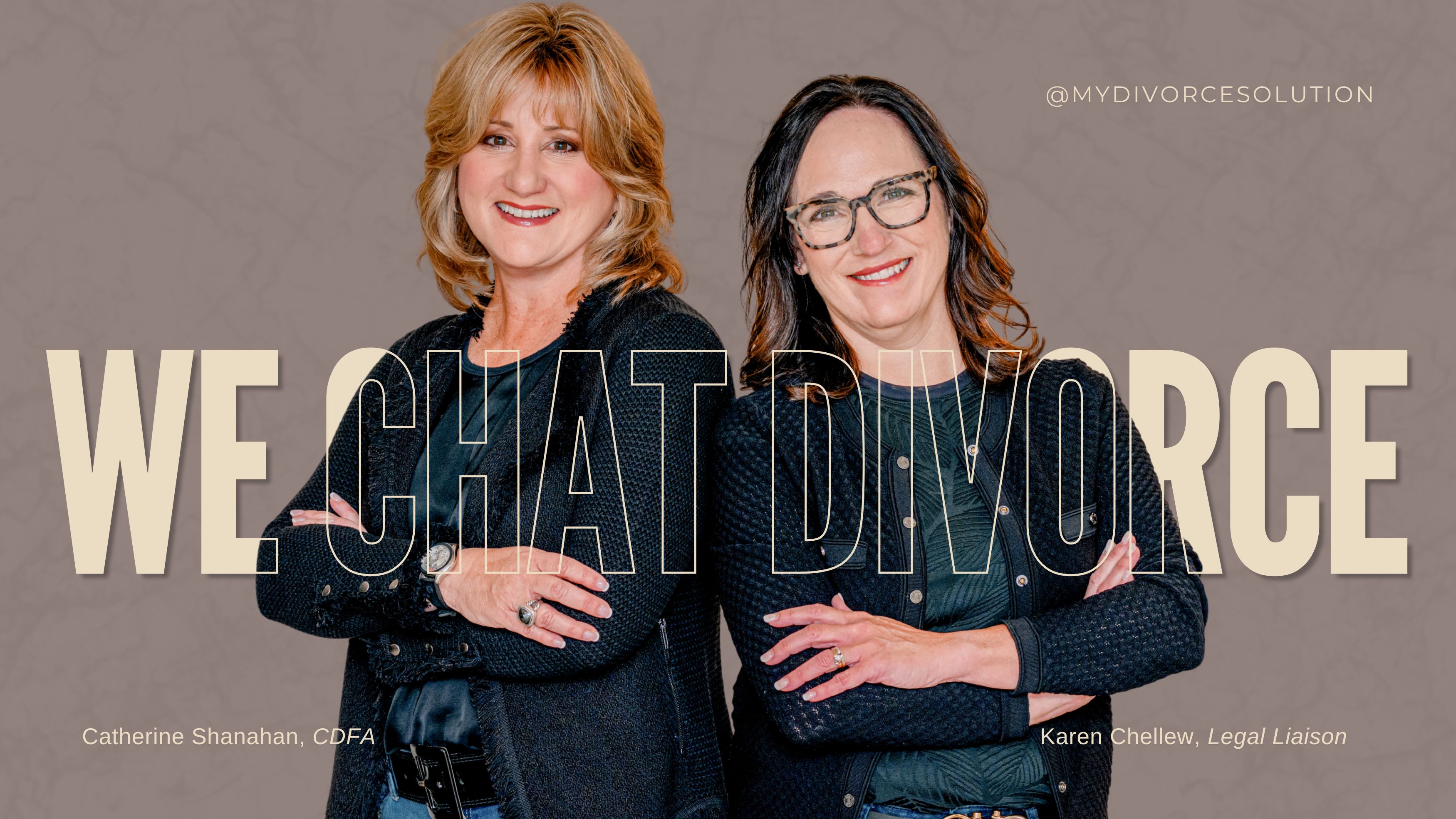
In this episode of Divorce Explored, brought to you by We Chat Divorce, hosts Karen Chellew and Catherine Shanahan take a deep dive into the financial complexities of dividing assets during divorce. Inspired by the Morgan Stanley article, “6 Financial Mistakes to Avoid,” they explore the common pitfalls that can derail financial stability and provide actionable insights to help listeners navigate asset division with clarity and confidence.
From delayed financial planning to overlooking future expenses, this episode unpacks real-world scenarios, offers expert advice, and underscores the importance of building a trusted divorce team. Whether you’re preparing for mediation, tackling financial negotiations, or simply seeking to avoid costly mistakes, this episode is packed with practical strategies to support your journey.
Key Takeaways
- Plan Ahead, Strategically: Learn why delaying financial planning until after your settlement is finalized can protect you from making emotionally driven decisions.
- Avoid Emotional Agreements: Understand the importance of analyzing the financial impact of your settlement to ensure long-term stability.
- Account for Future Costs: Discover often-overlooked expenses, from tax liabilities to QDROs, and how to incorporate them into your plan.
- Be Cautious with Asset Division: Learn how prematurely dividing assets can lead to unintended financial consequences.
- Update Your Beneficiaries: Ensure your estate plan reflects your new reality while being mindful of state laws and timing.
- Assemble Your Divorce Team: Build a team that works solely for you, offering personalized guidance to protect your financial future.
About My Divorce Solution
We Chat Divorce is produced by My Divorce Solution (MDS) — a financial divorce preparation company dedicated to helping individuals navigate divorce with clarity, confidence, and a strategic financial plan. Founded by Karen Chellew, Legal Liaison, and Catherine Shanahan, Certified Divorce Financial Analyst (CDFA), MDS was created to solve one of the most common and costly mistakes in divorce: entering the legal process without fully understanding your financial picture.
Divorce is not just a legal event — it is a financial transition that can shape your long-term security. Through the MDS Divorce Financial Portrait™, clients receive expert financial analysis, organized financial disclosures, and scenario planning to understand how different settlement decisions impact their future. This financial preparation often reduces legal fees, shortens the divorce process, and helps individuals negotiate from a position of knowledge rather than fear.
If you are considering divorce or already in the process, you can begin by taking the Free Divorce Financial Assessment to better understand your options. You can also join the MDS Community for expert guidance, educational resources, and live Q&A events designed to help you move from uncertainty to clarity.
At My Divorce Solution, the mission is simple: replace fear with knowledge so you can make informed, confident financial decisions during divorce.
Morgan Stanley’s article: 6 Financial Mistakes to Avoid https://www.morganstanley.com/articles/divorce-financial-planning-guide
Learn more about the Divorce Financial Portrait™ https://mydivorcesolution.com/
Episode Transcript
welcome to we chat divorce
hosted by Karen Chellew legally Asian
and Katherine Shanahan CDFA
each episode
we sit down with divorce professionals and industry experts
to provide insights and Frank discussions about real people
real situations
and real divorce to help you achieve your best life post divorce
this episode of we Chat Divorce
is brought to you by my Divorce Solution
offering divorce financial planning
so clients can secure the divorce settlement they deserve
visit my divorce solution.com to request access
welcome to we chat divorce
brought to you by my Divorce Solution and hosted by myself
Karen Chellew Legal Liaison
and Katherine Shanahan Divorce Financial Specialist and CDFA
on these special explainer episodes
we answer the top questions about divorce
giving you confidence and clarity
we often run across articles
that sparks the need for us to elaborate on
and that’s exactly what we’re going to do today
today we’re going to unpack an article that Morgan Stanley published
titled 6 Financial Mistakes to avoid
so let’s get started
okay so this article um
states navigating the division of assets in divorce
can be a long and difficult process
and I’m sure many of you can relate to that
and today we’re going to talk about how to avoid those mistakes
and navigate with intention and clarity
so let’s get started with mistake number one
delaying financial planning until after the divorce is final
so we see this all the time Catherine
I’m sure you would agree that
you know people approach divorce whether it’s mediation attorneys
um whatever
even kitchen table discussions with their spouse to talk about
how can we divide these assets
and it’s an it’s an emotional decision right
I want this you want that
this is what we have let’s talk about that
well when they say delaying financial planning
you know what does financial planning mean to you
because me it means planning out your strategy for investments
right like
how much do you have to have invested in certain type of assets
what are your expenses
it’s your whole picture of planning for your future
and I get the part of delaying financial planning
until you see what your settlement is
that’s smart I agree with that
because during the process
you know you go to um
financial planners and sometimes they look at your assets
and they want you to keep certain ones
maybe because that’s their
where their book of business is gonna manage it for you
and that’s where they make their money
so doing it during the process can
can have a negative impact on your overall agreement
because your financial planner isn’t in your negotiations
so if they’re telling you one asset’s better than the other
that’s good to know but they can’t tell you
keep this one
keep that one if they don’t know what your overall agreement is
and because we’re so emotionally attached to certain assets
we feel like that’s the one we want
for example like
the house oh
my gosh I need to keep the house
and do you know the impact to that
you know do you know that you might be house poor
that you’re giving up all your retirement money for that
and what’s your ages and what’s the impact to your retirement planning
and how long you’ll have to work
um so I like the idea of the financial planning
delaying till after divorce
so you see what your settlement is
but understanding
what’s the cost of the emotional value
to an asset you might want to keep
you have to know what the data is showing you
you can’t just rely on your emotions
well let’s
let’s kind of rephrase that then
because
I believe we find value when we’re helping people build out a divorce
financial portrait or financial portrait
if people aren’t getting divorced
a post nup agreement or whatever it is
I believe that we do find value
in speaking with their financial planners
to talk about well
what are their goals and will this divorce settlement
what we believe is fair and equitable
does this support their future goals
and we cover that a lot in our work with them
but if they’re being you know
after divorce they’ll continue their work with their financial planner
and having that discussion of a financial planner is already in place
is important but I think you’re talking about financial planning of
if you’re leveraging your investments
I think that’s what you’re saying right right
don’t choose an asset because you wanna keep that asset
because you think that’s your financial plan moving forward
because you have to really know
what the impact to keeping any asset is
in your overall negotiation
exactly so Catherine um
I think a lot of times people in the beginning of divorce
they will um
withdraw money from accounts
or whether it’s a retirement account
because their attorney told them that
that’s how you can pay for attorney’s fees
or whether it’s an investment account or whatever the
it may be spending down assets for various reasons
without understanding the financial impact
and I think that go
kind of goes into the financial planning space as well
because if you’re doing things that are going to negatively um
impact you in the future
you should definitely have a knowing or knowledge about that
oh totally
and that’s where their financial planner is very handy
because you know
there’s a cost basis to some of your accounts um
and you could make a a costly mistake
not only in the liquidation
but in the taxes that would be due
yeah and you could make a costly mistake in
over in divorce planning right
because you could be um
charged for lack of a better word with
you know a dissipating that asset or manipulating
manipulating that asset in a way that
you know you would have a consequence for in the divorce decree
so you should be very very knowledgeable about any money
any cash flow any um
access to your investment accounts during the divorce process
and what you’re using that money for
you know it just baffles me that people spend this money
thinking they’re going to get it back
and they don’t get it back
so you have to really make sure you’re in line with a strategy
that you believe in
or that you have the support of some legal advice there
before you do that and if your spouse is withdrawing money
you need to document that
and tell your attorney or your mediator
in a way that they can adopt the information
believe me mediators and attorneys hear all day
every day my spouse did this
my spouse did that and they don’t know what to do with the information
and again the MDS financial portrait takes that information
and applies it to division scenarios
in a way that either your attorney or mediator can adopt um
in your settlement discussion
so really be careful about that too alright
mistake number two agreeing to a settlement just to get it over with
hmm first of all
that can be a tactic right
of the what we call the uh
the main wage earner of the home
it it’s a well known tactic that they just wear out the other side
until they throw up their hands and
you know I’m done
um but it
it’s really not a good idea
and then they also make promises of things that sound good
because they know what you want
so you’re like okay
that sounds good that’s exactly what I want
oh he or she is being so nice about it
I should do this now well
things change as soon as you sign on that dotted line
and there’s no way to go back with that
so don’t agree with things just to get over with it
everyone’s always looking for that light at the end of the tunnel
and I totally get it I was there
um but take the time you need now
because your future depends on it basically
right and how many times do we hear someone say well
I’m not going to go after that asset
I’m not gonna go after my spouse’s business
or I’m not gonna go after my spouse’s pension plan
because that’s his or hers
and you know
I get that and we consistently say
you can have that opinion
and we’ll adopt that opinion
only after you go through
and understand the financial impact of that opinion
because typically when people say that
they have no idea what it means
because it’s emotionally driven or driven out of guilt or obligation
or whatever the it may be
so be very careful about these agreements for for whatever reason
you decide to agree without knowing the
the financial impact
yeah and
you know
sometimes knowing the impact is knowing what you don’t know too
but as long as you know you don’t have that information
then okay you can settle it in your mind
but don’t just do it to get it over with
alright so mistake number three is overlooking future expenses
so you know
this happens often or worse
it’s brought up at the mediation table or the settlement table
or at a a settlement conference
you know all of a sudden
well what about tax liabilities
what about the cost of a Quadro
what about all of these things
extra expenses that could incur in a settlement that you have a
no knowledge about and b
no one’s ever brought up to you
that’s a huge huge mistake
and who’s going to initiate doing all of those tasks
like who’s
who’s preparing the Quadro
you know who is transferring the retirement accounts
who’s sending the letter to the financial advisor
like you have to have a plan on who’s at
who’s closing your credit cards
who’s closing your bank accounts that are jointly held
you know you have to have a plan on what’s happening
or otherwise it doesn’t happen
yeah absolutely
you know regarding those Quadros
a lot of attorneys will just refer someone that they use all the time
which it’s not always bad
but it’s typically way more expensive
because the Quadro preparer will send it to the attorney for review
and then it’s got to be processed
and they’re typically fairly expensive
so if you and your spouse are able to get a Quadro preparer
that you can hire um
and they can walk you through that process
it is typically much less expensive
up to 50% less expensive that
you know that’s our experience with our clients
mm hmm and the future expenses for your children
if you have them like weddings and college and cars and cell phones
depending on the age of your children
you know that’s never discussed
so who pays for that it’s a thing
it’s a thing yeah
and you need to know to that point
child support you know
doesn’t cover the shared expenses
and you need to make sure you cover that with a fine tooth comb
you know now and in the future
and alimony is not supposed to cover that either
you know alimony is to keep your lifestyle that
what you’re accustomed to basically
until you can support yourself
but you’re not supposed to pay for your kids college
or your kids weddings and um
other big events with your alimony
you’re supposed to contribute to it
but you should have that laid out in your agreement exactly
all right mistake No. 4
attempting to devalue assets prior to divorce
I think I talked about this earlier in one of the earlier mistakes
but um
you know you should know that during divorce
sometimes there’s what’s called ex parte orders or other agreements or
or other interim orders that
you know say
you cannot touch your accounts for any reason other than status quo um
and so your finances are carefully monitored and scrutinized
so you should be aware of that
not only for yourself but for what your spouse is spending
so before you withdraw money um
or use money for large expenses
moving assets around reinvesting money
creating other accounts you
you need to know what the financial impact of that could be to you
here’s a big one and it just came across yesterday again
often times people will take advance to equitable distribution
meaning they have an account
let’s just say that has $100,000 in it
one spouse takes $50,000 to set up a new place to live
but that’s considered or or buy a new home
um they might take a lump sum money out
and that’s considered an advance to equitable distribution
if the parties agree to that
and I see that happening a lot
and it’s totally fine so yesterday
I came across someone who took a lump sum of money out
to purchase a new home
and now spouse wants the appreciation of that home
they don’t they don’t want just the amount taken out now
as equitable distribution
they want the house valued now
and they want the difference of that as equitable distribution
so it’ll be interesting to see how that one plays out
so yeah
in in conclusion to what we’re saying here about that
it is make sure you have an agreement
and you two put something in writing when you do something like that
just to protect yourselves
well and in further conclusion Catherine
even if you do have an agreement
you need to understand the financial impact
because if you’re dividing cash
which leaves you very cash poor at the
you know eventual settlement table
how are you gonna balance that balance sheet
how are you going to make it all work
if you’ve already divided
or if you reconcile or if there’s a delay in your divorce
and you’ve already divided that account
it could have future impact that’s not beneficial to you
yeah remember
you want to streamline this process if you can
you do not want to make it messier
yeah and sometimes you
you know someone will say well
let’s divide this account
cause that’s that’s the largest marital account
then you have trouble getting to the finish line
because you can’t get the spouse to engage
to get over the finish line
because they have what they want
so just be very careful in those phases
that’s so true that happens so often
mm hmm
mistake No. 5 not updating your beneficiaries in estate plan
um so every state is different
um everyone needs to know that
so it is very important that you have a consult
with your family attorney about this
your family law attorney but also an estate planning attorney
so you know when to change beneficiaries to change your will
to change your estate planning plan
so it’s a conversation to have
so don’t just run an update without understanding again
the impact so
you know this says the mistake is not updating
but it’s very important that you do it with intention
and knowledge about what that updating means to your divorce
in the event a spouse dies during dependency
things like that those are the things that you need to talk about
and some are really easy you know
all your retirement plans
they come with a named beneficiary
so contact your um
plan holder and just change your beneficiary
it doesn’t cost you anything to do with there and
and now even at banks you could do transfer on death um
for a lot of your accounts
so if you’re worried about
going to have your whole estate plan done right away
you can take immediate action to do some of the simple things
uh right away exactly okay
mistake No. 6 not seeking all the help you may need
one of the most valuable assets during a divorce is your divorce team
very important and
you know I wanna say your divorce team
not your attorney’s divorce team
there’s a big difference there
so typically when you hire an attorney
especially in higher net worth states um
or even in you know
mid midstream America that
you know get a forensic for a business valuation
get a forensic for um
you know tracing dissipation of assets or whatever the it may be
and so they’ll say you know
get these other experts on your team
but what you need to know is
those experts are working for your attorney
or they’re dual experts
that are doing valuations that both parties are sharing in
so that’s not particularly your team
because they’re not gonna help you understand
the financial impact of that valuation
to you moving forward
and that’s why we say your team
get your team together a financial
a divorce coach your attorney
your mediator whoever
and make sure that their agenda is to help you understand the impact
not necessarily get an evaluation for the court’s benefit
or for anyone else’s benefit
it’s a really important differentiation there
I mean that was perfectly said
I don’t really have much to add
other than remember that these individuals work for you
and if they make you feel less than at any time
they might not be the right professional for you
hundred percent so
thank you for joining us on this episode
6 financial mistakes to avoid when divorcing
stay tuned for future episodes
as we continue to unravel the fascinating world of finances
and divorce remember
knowledge is power disclaimer this information provided in the
in this podcast is for educational and informational purposes only
and should not be considered as financial or legal advice
please consult with professionals in the relevant fields
for personalized guidance
thanks for joining us on another episode of we chat divorce
we hope this episode was informative
and supportive on your divorce journey
if you’re looking for more support for navigating divorce
with confidence and clarity
head over to my divorce solution dot com for more podcast episodes
divorce events and resources for your divorce
we’ll see you back here for our next episode
Disclaimer:
The information provided in this podcast is for educational and informational purposes only and should not be considered financial or legal advice. Please consult with professionals in the relevant fields for personalized guidance.
The WeChat Divorce podcast (hereinafter referred to as the “WCD”) represents the opinions of Catherine Shanahan, Karen Chellew, and their guests to the show. WCD should not be considered professional or legal advice. The content here is for informational purposes only. Views and opinions expressed on WCD are our own and do not represent that of our places of work.
WCD should not be used in any legal capacity whatsoever. Listeners should contact their attorney to obtain advice with respect to any particular legal matter. No listener should act or refrain from acting on the basis of information on WCD without first seeking legal advice from counsel in the relevant jurisdiction. No guarantee is given regarding the accuracy of any statements or opinions made on WCD.
Unless specifically stated otherwise, Catherine Shanahan and Karen Chellew do not endorse, approve, recommend, or certify any information, product, process, service, or organization presented or mentioned on WCD, and information from this podcast should not be referenced in any way to imply such approval or endorsement. The third-party materials or content of any third-party site referenced on WCD do not necessarily reflect the opinions, standards or policies of Catherine Shanahan or Karen Chellew.
WCD, CATHERINE SHANAHAN, AND KAREN CHELLEW EXPRESSLY DISCLAIM ANY AND ALL LIABILITY OR RESPONSIBILITY FOR ANY DIRECT, INDIRECT, INCIDENTAL, SPECIAL, CONSEQUENTIAL, OR OTHER DAMAGES ARISING OUT OF ANY INDIVIDUAL’S USE OF, REFERENCE TO, RELIANCE ON, OR INABILITY TO USE, THIS PODCAST OR THE INFORMATION PRESENTED IN THIS PODCAST.