

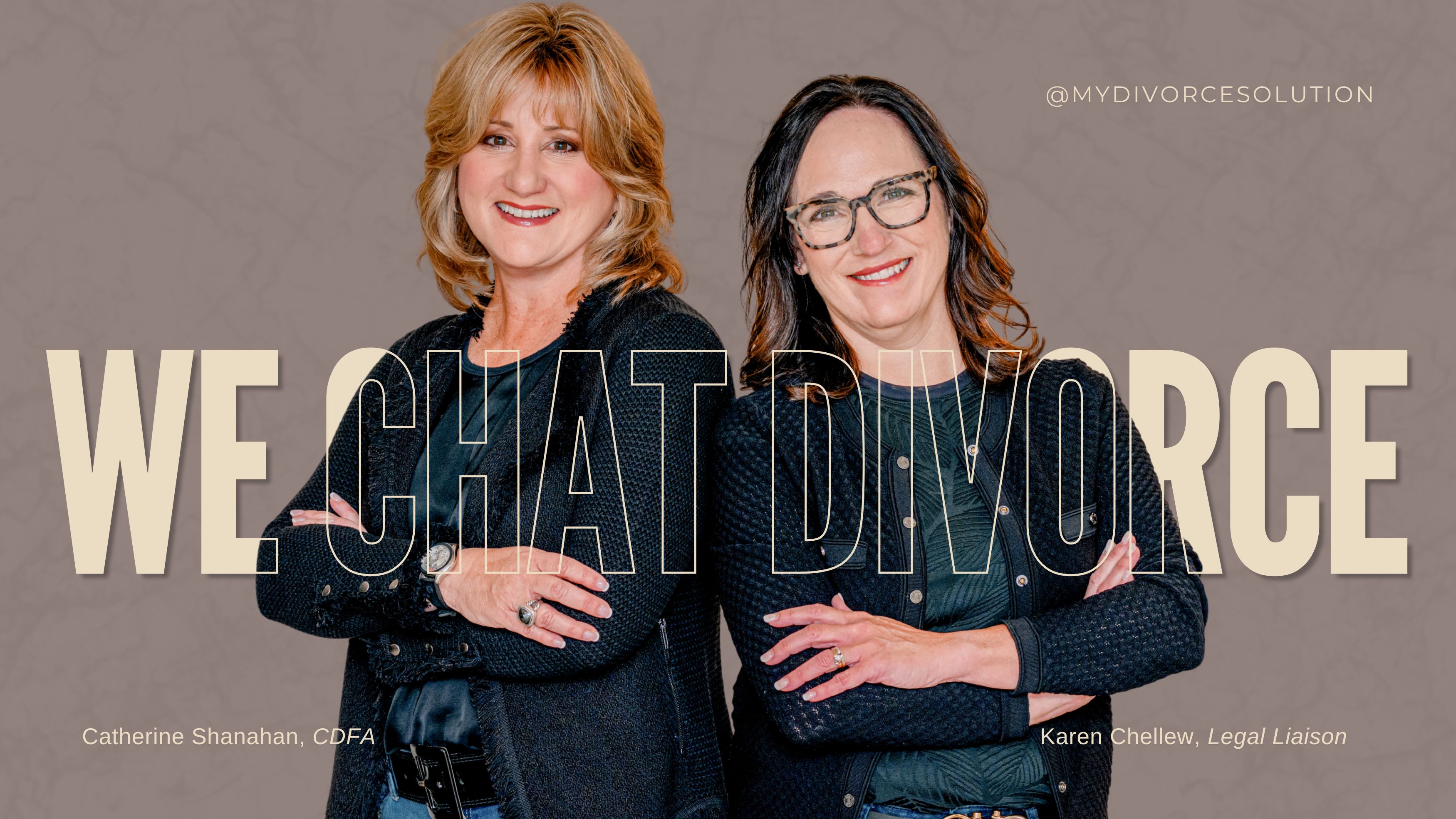
139. Divorce Decoded: From Financial Assets to the Courtroom with Bree Sullivan Howell, Esq.

Divorce is a life-changing legal and financial process, but understanding your rights and financial landscape can make all the difference.
In this episode of We Chat Divorce, we sit down with top divorce attorney and award-winning author, Bree Sullivan Howell, Esq., to discuss financial clarity, courtroom strategies, and common pitfalls in divorce settlements.
Bree shares insights from her 20+ years as a family law attorney, along with personal experiences that shaped her mission to support divorcing individuals—especially Christian women navigating the complexities of divorce in faith-based communities.
Key Topics:
- The emotional and legal realities of divorce
- Why financial clarity is essential before negotiating assets
- Common mistakes in property division (and how to avoid them!)
- The two biggest pitfalls of dividing assets: Ownership & Obligation
- How alimony is determined and the misconceptions around financial need
- Hidden assets—where they may be lurking and how to uncover them
- Why an organized financial strategy strengthens your legal case
At My Divorce Solution, we believe knowledge is power in divorce. Our Divorce Financial Portrait™ prepares you organize financial data so you (and your attorney) can confidently navigate asset division and settlement negotiations.
Connect with Bree Sullivan Howell, Esq.:
- Law firm website: https://www.sullivan-firm.com/
- Crush Your Divorce Book: https://www.crushyourdivorce.com/
- Facebook: https://www.facebook.com/sullivanfirmllc/
- Instagram: https://www.instagram.com/lawyerbree/
- Instagram: https://www.instagram.com/crushyourdivorce/
- LinkedIn: https://www.linkedin.com/in/bree-sullivan-howell-esq-63b31325/
Resources Mentioned
About My Divorce Solution
We Chat Divorce is produced by My Divorce Solution (MDS) — a financial divorce preparation company dedicated to helping individuals navigate divorce with clarity, confidence, and a strategic financial plan. Founded by Karen Chellew, Legal Liaison, and Catherine Shanahan, Certified Divorce Financial Analyst (CDFA), MDS was created to solve one of the most common and costly mistakes in divorce: entering the legal process without fully understanding your financial picture.
Divorce is not just a legal event — it is a financial transition that can shape your long-term security. Through the MDS Divorce Financial Portrait™, clients receive expert financial analysis, organized financial disclosures, and scenario planning to understand how different settlement decisions impact their future. This financial preparation often reduces legal fees, shortens the divorce process, and helps individuals negotiate from a position of knowledge rather than fear.
If you are considering divorce or already in the process, you can begin by taking the Free Divorce Financial Assessment to better understand your options. You can also join the MDS Community for expert guidance, educational resources, and live Q&A events designed to help you move from uncertainty to clarity.
At My Divorce Solution, the mission is simple: replace fear with knowledge so you can make informed, confident financial decisions during divorce.
Episode Transcript
0:01
Welcome to WeChat Divorce, hosted by Karen Chellew, Legal Liaison and Catherine Shanahan, CDFA.
Each episode we sit down with divorce professionals and industry experts to provide insights and frank discussions about real people, real situations, and real divorce to help you achieve your best life post divorce.
0:39
Welcome to WeChat Divorce.
Catherine and I will be welcoming Bree Sullivan to our podcast today to discuss Divorce Decoded from assets to the courtroom.
Bree Sullivan is an attorney and author specializing in helping Christian women navigate the complexities of divorce.
0:59
Well, before we invite her in, this is kind of a interesting topic for me, right?
And I will bring this up to the attorney because she has nothing to do with this.
But you know, when we say Christian helping Christian women, you know, I thought about the times I sit in church, I’m Catholic and I sit in church and I hear this.
1:17
So, you know, you shouldn’t be going to church if you’re a divorcee or you’ve gotten a divorce.
And it really rubs me the wrong way, like, OK, because I’m Catholic, I’ve been divorced, I shouldn’t go to church.
And so why is it different for Christian women than any woman going through a divorce?
OK, maybe she just specialized in that, which is great.
1:34
But we all have the same feelings going forward, right?
So I just want women listening today, whatever comes out of the conversation, you know, you don’t need a reason to get divorced other than you’re not happy.
You only, you know your true self.
And even if you’re Christian, we carry this big weight of guilt on us that we shouldn’t have to carry on us.
1:56
And all of you deserve financial knowledge.
And that’s what my divorce solution is all about.
So that’s me I hope is the take away today, that you deserve financial knowledge and you deserve to be happy no matter what your religion is.
I agree, Catherine, that was really great.
2:12
Now let’s move on and have our conversation with Bri and welcome her to the conversation.
Welcome, Bri.
We’re so glad to have you today.
Oh, thanks for having me.
I’m glad to be here.
I’m sure it’s going to be a great conversation and our topic today is divorce Decoded from assets to the Courtroom.
2:31
But first, let me just tell our listeners a little bit about you.
So Bree, with her impeccable record of an academic achievement, achievements and commitment to justice, has distinguished herself as a top divorce lawyer over her 20 year career.
2:47
Beyond the courtroom, Brie’s combination and vast legal experience and profound personal experiences have made her an award-winning author.
She’s written the book Crush Your Divorce and Keep Your Faith and its sequel Crush Your Comeback, essential guides of encouragement and empowerment for Christian women walking through the harsh reality of divorce.
3:08
And I feel that that’s a very unique space to be because a lot of times the word Christian and divorce can’t even be said in the same sentence.
So I’m really excited for this conversation.
So Bree, before we hop into our topic, can you spend a couple minutes sharing with our listeners a little bit about your story and how that has created the passion for what you do today?
3:35
Sure be glad to I’ve been practicing law 22 years.
Twenty of those years were in the area of family law.
So I’ve I’ve drilled down and specialized like they tell you to do.
And I just have really enjoyed my career helping families and people in their hardest times.
3:53
But it wasn’t until I went through my own force in 2018 with three children after a long marriage that I really understood and under and and came to realize how painful and raw the experience is when it’s you going through it.
4:09
So I got a whole new perspective when it was me as a Christian woman going through a divorce in a small Southern town in the Bible Belt.
And it made me realize there’s just nothing to read if you’re that woman going through there through that hard time.
4:26
You go to the Christian bookstore.
All the books about divorce are a written by men and B say don’t do it, God hates it, stay married.
So where does that leave a person who doesn’t have a choice?
You know, they’re in this divorce either because they’ve been filed against and they have to defend or they’re in an abusive situation or they’re being abandoned.
4:48
I mean, you have these legal remedies for a reason.
So my, my work in authoring these books has been to speak to that woman mainly.
The themes are also good for men if they can read past the pronouns and see themselves in my hypotheticals.
5:05
But there’s there’s a need for this conversation for people feeling shame about being in this situation.
And going through it myself taught me a lot.
So I guess that’s what informs my practices.
You mentioned you know 2 reasons.
5:20
You know, either they’re being sued against or filed against, or they’re being an abuse, an abusive relationship.
What about the woman who just isn’t happy in that relationship?
Well, she’s normally unhappy because she’s been mistreated.
I mean, they, they go hand in hand.
5:36
I don’t know a single person who gets married thinking, oh, can’t wait to get divorced one day.
That just doesn’t happen.
So if a person is that despondent and that miserable, they may not talk about it.
They talk about it with me in my conference room all the time.
So I know this is the case.
5:52
They’re sad about being divorced.
Nobody thinks that’s a great outcome.
And there’s normally some abuse or some kind of unfaithfulness that they aren’t sharing with friends and family that they’re really struggling with that led them to that place.
So all those things are connected.
6:09
Sure.
For sure.
In the historical context is, you know, the male is typically the leader and so the role of the submissive wife doesn’t really follow through to the word divorce.
6:24
Yeah.
Well, the submission pieces we could talk all day about.
That yes, we could.
The model in the Bible is mutual submission.
It’s not.
Yeah, just the woman.
And if the man’s not this part, it just doesn’t work.
Yeah, I’m really glad that you say that.
6:40
And you help people kind of think through that because when you’re going through a divorce and you end up in a courtroom, right, that even makes it more challenging, more difficult.
It ramps it up.
And I think it’ll be very helpful to go through some of those talking points so people can kind of reframe that experience in their lives.
7:03
So let’s hop right into it.
Today.
We’re talking about, you know, from assets to the courtroom and my divorce solution.
We are all about helping people financially prepare, but often people can’t avoid the courtroom for whatever reason.
7:19
So we’re going to talk today about, you know, how to prepare a case for your attorney and talking about practical courtroom strategies with you.
OK, great.
First question is, can you walk us through some of the key principles that guide the division of property in a divorce?
7:36
Well, first of all, the ground rules are different in every state I practice in Georgia.
So just for the record, none of this is legal advice for your listeners.
Everyone needs their own attorney.
And newsflash, if your ex tells you you don’t need a lawyer, that’s your clue that you do.
7:52
So you should always get an attorney to help you through these things.
But primarily what I tell my clients and what I write about in Section 3 of my book is that you need to know what’s there to know what’s fair.
You need to know what’s there in order to divide it.
8:08
And a lot of times, litigants, male and female, don’t know what their assets are because the other spouse handled all of that during the marriage and they were just trusted with it.
So you end up having to turn over all kinds of stones.
And sometimes the other party isn’t very cooperative.
8:25
So you have to think outside the box about how to find all the assets.
Right.
And I, I feel like, you know, sometimes in that space, when you ask a spouse for the documents or information, it’s received as a threat of sorts.
8:42
Well, there’s this view and it’s it’s not accurate and it’s not legal, but at least yours not legal.
There’s this view that if my name is on that property or if I paid for that property during the marriage, it’s mine.
But that’s not how it is.
8:58
That’s just not a lot, at least where I am.
Well.
Now that’s what our process unravels, right?
So it’s interesting when you come in to get your financial portrait, you know, we do that financial discovery piece.
And so when people are putting in their statements or explaining their accounts, it’s, you know, this is my husband’s pension or, you know, this is my husband’s bank account.
9:20
Well, OK, just because it’s in your husband’s name doesn’t make it non marital, right?
There’s a lot to that.
And it’s so interesting to see them get that aha moment like, Oh my gosh, you know, I’ve been staying in this abusive relationship for this long.
9:35
And meanwhile, only because I was afraid that none of that money was mine or considered mine.
You know, to get that self discovery is really empowering.
One of the that’s one of the things I love about our process because we’re able to go through and just help them understand that financial clarity piece.
9:53
What brings the person hope to think they aren’t going to be broken, you know, out there floundering to find housing or whatever?
I mean, if you feel like you’re going to get a piece of the marital pie that you didn’t expect to get, it’s very hopeful.
That’s a wonderful conversation.
10:09
I’ve had that conversation many times in my office with people who just thought they didn’t have anything.
Right.
So Bree, let’s talk about some of the common pitfalls or mistakes people can make when it comes to property division.
And I know we could all talk about this all day long, but I’m sure there’s some common ones that we all encounter every day.
10:32
Yeah, the one that I talk about in my book that’s easy for people to remember is the two O’s of property division.
This is how I characterized it, just to help people get it in their minds.
There’s ownership and there’s obligation.
So say you’ve got a vehicle or a house, it’s titled in someone’s name or maybe both parties names.
10:53
That’s the ownership piece, but then the obligation piece is what people forget.
You know, you transfer the property in your divorce document and sometimes you forget to say, OK, wait a minute, how’s that debt getting handled?
And is it still in my name even after I’ve given you the property?
11:09
So that that’s where people run into a lot of trouble handling their own divorces in particular.
Lawyers know that rule and they take care of it usually.
But when people do per SE divorces and they bring that to me after the fact, Oh, my heart just sinks for them because you’re, I mean, if you’re stuck owning a home with someone and your name’s on the dead and you’ve transferred your ownership and a deed to them, they have all the goodie And all you have is the liability.
11:34
And you can’t, you can’t get a new home because your credits tied up, you’re renting forever potentially.
And you may never get your money out of that asset either.
That’s another side to the whole analysis.
But that’s the biggest pitfall that I see people fall into.
11:50
They forget both of those facets of the analysis.
Yeah, I love that when you have a spouse that comes in and they say, no, my typically my husband said I can keep the house.
No, he, he doesn’t want the house.
And I’m and we just listen and then we say, OK, well, let’s go through.
12:06
And we do have a high participation rate of spouses who like to tell us their side as well.
But you know, they’re, they don’t realize that they’re negotiating another asset away.
You know, spouse didn’t mean you get to keep that and their share of the equity in the home.
You know, they said that you can keep that because they want to keep their retirement account or something else.
12:25
You’re not.
They’re not understanding what that trade off was and that’s why when people make these one off negotiations because it feels good at that moment, it’s really a costly mistake that you could be making.
Right, it can be.
And the other one, the timeshare timeshares are not an asset.
12:43
No, they are too.
It’s not an asset.
People say, oh, I got to keep the timeshare.
Well, you’re stuck with it and you’re paying for it till the Kingdom comes, so enjoy that.
Especially in the South.
I’m in the South also, it’s the homes that have mandatory Golf Club dues and you want to keep that home, but you also have a $30,000 yearly dues to the Golf Club that you’re probably never going to golf that right.
13:06
So you have to be really careful when you negotiate that as well.
Absolutely.
It’s just so important that people have counsel.
And, and, and for us, it’s so important you have financial clarity so that you can go to counsel and understand what you’re talking about.
Because if if you go to your attorney and you’re prepared financially, then your attorney is able to do their good work based on the data, not on the emotion that you’re feeling That’s.
13:30
Right, that’s right.
That’s my, that’s my point in my book is sections 1 and 2 are all about getting your mind and spirit in a place where you can do the business part.
And Section 3 is how to do the business part with your lawyer because that’s what people struggle with.
13:47
They’re making emotional choices and those are not wise 9 times out of 10.
Exactly.
I couldn’t agree with that.
More and it’s from just a lack of not knowing.
So many times people come to us, Bree, and you know, they’ll say, well, you know, I feel guilty about, I don’t know, I’m just going to let him have his pension or his retirement account or whatever the IT may be.
14:13
And you know, I understand, we understand the emotion of that, but we’ll always say, you know, just hold that thought.
You don’t need to have that conversation right now.
Let’s get our work done So you understand what’s on the table, what’s divisible between the two of you, what the financial impact is.
14:33
And then you can have that conversation and then you can work through these division scenarios with more knowledge.
And then then if you want to give up that asset or have that asset be entirely on your spouse’s side of the balance sheet, then you can make that decision.
14:50
And I do think one of the common pitfalls and very common is having those negotiations before you understand what that financial impact is because they’re going to come to you, Bree, as an attorney and say I want the house no matter what.
But what if you don’t know what that means to you, that could be financial devastation for you?
15:11
I mean, that would be worst case scenario.
But to your point, there’s nuances about that, that if you haven’t anticipated that or if you don’t know that, it could end up to be something you don’t want.
Absolutely right, and you need the whole picture to analyze what’s a pro and what’s a con.
15:28
Yes, for sure.
Look.
Like they’re bright and shiny and you want them in the divorce so you can brag to your friends are really going to bring you a lot of heartache later, so it’s good to know that.
Yeah, let’s, let’s shift this gear a little bit to the, you know, we’re talking about financial, if you’re listening, we’re talking about financial division of your assets, but there’s also the other side and that’s your support side, not child support, because that’s a calculator in every state, guidelines in every state.
15:54
But in Georgia, the common question is that alimony question or spousal support.
You know, how important is it for their living expenses to be recorded properly, and how much at heart do you take to the actual budget to calculate that alimony number?
16:11
You mean on the financial disclosure?
How important.
I mean in settlement negotiations, yeah, yeah, I do mean on the financial disclosure and then taking it forward to actually what they end up with because a lot of people think whatever my financial disclosure of my expenses are, the deficit there is what I’m going to get in support.
16:28
Not necessarily.
In Georgia, alimony is based on one party’s need and the other party’s ability to pay.
And there’s certain nuances like you, you’re barred from getting alimony if your adultery created the separation.
In my state, that’s not the same everywhere, but here you get penalized and it’s an automatic.
16:49
You don’t get any if you cheated, and that’s why everything broke down.
But I agree that the disclosure needs to be complete.
I always tell my clients on the expense section of that, we call it the Durfa Domestic Relations Financial Affidavit on your Durfa, be thorough on your expenses.
17:07
The worst thing you can do is not include everything and then say, oh, but Judge, you didn’t give me enough money.
You know, I have all these costs.
Well, you didn’t tell us that, so we rely on that document.
I tell my clients, be thorough with that, really think about it and spend the time to get it right.
And then you also need to look at your budget going forward.
17:25
When you have kind of a working settlement framework, I think it’s important to revisit that Durfa document or that financial document with all of your numbers on it and make sure it is consistent with what you’re going to have in the future.
17:40
So if you took the house, for instance, and you’re going to be paying the mortgage for the first time ever, you got to put that in the numbers along with all the upkeep and, you know, maintenance cost of having a home, for instance.
So it shifts during the case a lot of times.
So you have to go back and reassess.
17:57
I guess you found that to be true too.
Yeah, we do the whole lifestyle analysis with our clients and we help them fill out the derpa and whatever.
Every state’s a different name, right?
But a lot of times, you know, the expectation is whatever that need is, that’s what they want, you know, and it’s really rare that I see someone get exactly what their need is.
18:18
And the southern states are the hardest, you know.
So it’s it’s always interesting to hear the perspective from your point of view.
Yeah.
So for instance, you know, this is what we encounter, Brie, the income to the families, $30,000 a month, OK, spouse doesn’t work.
18:39
So the spouse who doesn’t work, their need comes out to be $18,000 a month, and they think that that is what they’re going to get because that’s what they need.
So they’re shocked then when they say, well, this is my need, why wouldn’t I get it?
18:55
I’m accustomed to it.
I think the the miscommunication is in the context of ability to pay.
So can you, well, the expenses get duplicated in a divorce.
I mean, you’re, you’re combining whatever resources the couple has to pay for one home to run as A and then you get divorced and you have double expenses sometimes or something like that.
19:20
You’ve got two places to pay for two lifestyles to fund.
I always tell my clients, at least in Georgia, it’s not realistic to expect the same lifestyle after divorce, at least not in South Georgia where I am, maybe Atlanta where they have big money.
But down here, you know, we’re just, we struggle to get people through it and on with life.
19:40
And I always tell them, prepare for a lifestyle change and start thinking about your career move.
You know, what are you going to do to work?
Because you may need to work for the first time in your life and it’ll be good for you.
I try to get them excited about it like this will be fulfilling.
Find something you love to do, but you always have to to deal with that question in in my area of the state to get aware that it’s not going to be the cakewalk it’s been you’re going to have to.
20:08
You know, and conversely, we have very high net worth of states where the spouse has no idea what the cash flow is and they, you know, their budget is very, very conservative relative to what we know.
20:25
The cash flow is running through that family.
And so, you know, when they separate, they’re afraid because they don’t know when they’ve reduced their lifestyle.
And so their need is nowhere near like it’s way less than a spouse’s ability to pay.
20:42
So is it always based on that need or are there situations where the ability to pay would provide more for that spouse even if their Durfa or their, you know, presentation of need is much less?
20:58
I think there’s room for the argument, at least here.
It’s in our court’s discretion.
We don’t have a formula for alimony.
Some states, from what I understand, we don’t have would be so nice, but we don’t.
Yeah, it’s so really you just have to kind of know how far you can push it with your judge, like judge is different.
21:16
So point filled attorney with some history in the circuit you’re in to kind of get a fuel.
But yeah, in high net worth situations, you always are able to ask for more mainly because if that recipient spouse is getting a lot of the assets still to maintain and their debts associated and upkeep associated, all those costs go into the column of need, you know, I mean it all kind of connects.
21:45
Yeah.
Is your state one that when you’re separated and you’re dating, you will avoid yourself from alimony as well or just from filing like South Carolina?
North Carolina If you’re dating, you cannot receive spousal support.
Wow, you guys are harder core than we are.
22:02
You know that it’s terrible.
Our churches don’t seem to care if you’re dating after separation when it comes to the financial part.
That’s how much.
The states are.
I don’t like it if you’re introducing the children to somebody new before you’re divorced, unless it’s like a marathon divorce that won’t end.
22:19
And then they they’re like, don’t blame you, you know?
But yeah, here it’s got to be the cause of the separation.
That’s.
A very good distinguishing word, and that’s the hard.
Thing to prove.
So how do you prove?
That right, right.
So it.
22:35
Becomes this, like, in the court’s discretion, It’s why lawyers have a job, because we all have an argument about it.
You know, it’s a Gray area.
Hard, hard to have a bright line unless you’ve got a private investigator placing you at the scene of the crime, you know, And then the next day you say I want a divorce because I love this other guy.
22:53
It’s just not usually that clear.
Yeah.
Yeah.
So true.
You know, another topic I want to cover today is the what I call the financial discovery money pit where, you know, our clients want to just subpoena everything they believe their spouse is hiding everything.
23:14
You know, what are the guidelines that you help your clients with Because, you know, they want to know everything, but sometimes they believe there’s a lot of, I guess lying or not, lack of disclosure when that’s not really the case.
23:31
So how do you walk your clients through that in a way that you know, they’re just not throwing all of their divisible assets into this money pit?
Well, we try.
To look at realistic goals with that too, we start with discovery to the party hoping they’ll comply.
23:50
Usually, I mean, we sometimes we’ll do third party requests right out of the gate to make sure we get things in time for a hearing from the bank or whoever if we don’t think they’re going to cooperate quickly.
But I usually try to give the party the first opportunity to come clean with whatever’s there and then we get whatever they give us.
24:10
And a lot of times you can mitigate your cost on 3rd party discovery using what little information you have.
So for instance, you can take a tax return and normally if it’s a joint filing, both spouses can get their hands on that pretty easily from the CPA or whoever.
And you can look and see if there was a capital gain and that leads you to the stock account, you know, that leads you to the mutual funds of the whatever you’ve got to gain on.
24:34
You can also get, and this is what I tell my clients, go get the insurance policy information on all of your property.
And down here we got a lot of farming communities, you know, we got like equipment, tractors, and that stuff’s expensive.
Do you see what a tractor costs these days or a combine?
24:52
Like all the farming stuff is a big deal.
So that’s just one example, but anything you’re insuring is valued on the document you have with your insurer.
And that number was agreed upon by your fellow who got the insurance policy and said it’s worth this, insure it for this.
25:10
I got to replace it for this.
So that’s just like proof positive, objectively obtainable that the spouse can usually get pretty easily and it doesn’t cost a lot.
That gives you some valuation numbers that if you can live with, provide evidence for court to say, judge, this is the value unless they say something different.
25:28
But it can’t get super expensive.
And if someone’s deceptive and you have to do a lot of third party discovery, pay for the records as you know, you pay for the subpoenas, you serve them certain ways that are required.
It’s all these hoops to jump through.
You can really get in the hole fast.
25:46
So I’ve had this happen and I’ve had to pull clients aside and say, listen, you are blowing so much money on this discovery.
You need to just cut your losses and take what you got and go to court and tell the judge you think the stuff’s there, you’re not sure.
And then insist on a non disclosure provision where if you know something is discovered later and it’s a certain value, then it either automatically comes to you or you can reopen the whole doggone thing.
26:14
And if the other party won’t sign the thing with that provision in there, that is a smoking gun to me and red flag that you are on to something.
So can you get?
Can you how?
Can you get that agree that non disclosure signed before you even decide to go to mediation or to trial?
26:32
It’s normally in.
The final document, normally I throw it in at the end, and that’s a good gauge.
Like if you had all the stuff worked out and you’re not quite sure you know everything, and you propose that dot, that provision go in and they back up a little bit, you might need to reconsider your settlement.
26:51
Another place to get good clues is from bank statements and credit card statements, because wherever they’re paying can lead to assets they’re paying for.
Yeah.
That they might not have told you about.
Yeah.
Yeah, it’s always the big question with everyone because, you know, you never get justice and family law.
27:08
It just doesn’t happen.
And, you know, it’s really upsetting if you don’t have control of your finances.
And you are assuming, you know, there was a mistrust.
So you’re assuming there’s been a lot of deceitful things going on and, and sometimes there are and sometimes there are not, right.
27:24
But if you’re not the financially astute person, it’s hard to let that settle, you know, so that you can move forward with your life.
You know, this is a stage of your life.
So, you know, I think always getting the financial clarity of what you don’t know is also very helpful, you know, because then you can live with it moving forward, right?
27:44
And people need to remember, too, that we’re in this new age of digital currency, and a lot of people are hiding money in crypto that’s hard to nail down and hard to find, hard to understand.
It’s like this whole language.
Is difficult.
28:01
There’s also gold sometimes I’ve even had cases where people buried hundreds of thousands of dollars in the backyard.
My God, I mean that.
Welcome to South Georgia.
Everything that doesn’t happen where you guys are, but.
If you live in South Georgia, go ahead and move and wait for six months to you file.
28:23
See, I like it here, but that’s just, I just deal with my, you know what I’ve got in this area and that’s what I run into.
A lot of people try to hide their assets.
They don’t think they honestly, these men come into court too.
And some women feel this way too.
I don’t want to be a gender basher, but a lot of times men will come into court because they’ve earned all the money, they’ve built all the wealth for the family.
28:44
And they have this attitude of she doesn’t deserve it or who did not.
And I mean, it doesn’t play well in court, but it’s a common theme.
We run into it all the time.
Well, you know.
Talking about playing well in court, we get a lot of executive women that come to us and they’re the breadwinners.
29:03
And I am shocked at how many men are not working.
And the judge or the attorney say to the women, well, you let this happen.
Like, well, no, we didn’t let this happen.
He just wouldn’t get off.
The couch fella.
And so now they’re.
Paying support and they’re angry.
29:19
You know, the women are more angry paying support than men are angry.
And men are angry too.
But the women are more angry because their husbands haven’t done anything for the last five years.
They haven’t taken care of the kids, although they say they were.
But the kids have daycare and all of that.
So how do you get a spouse to get an imputed income when they haven’t worked?
29:37
And what’s the time frame that people should be watching?
Like, OK, this has gone on for one year.
OK, this has gone on for two years.
I better stop this now because after five years it’s going to be hard to battle.
I say a year.
Or two year or two.
I, I wouldn’t want to be with a guy who didn’t contribute, I mean didn’t contribute something either in time or in effort or in financial.
30:00
That just wears you out in a hurry.
I mean, anytime anyone that man or woman is married to someone who doesn’t pull their side of the cart, it’s that’s hard.
It creates issues, absolutely.
And I think a lot of people think that filing for divorce after a long period of time will resolve that issue, but I think they’ve set a precedence by then.
30:27
So then how do you undo that or how do you rectify that?
And we’ve also been in cases where attorneys take very proactive positions that, well, it doesn’t matter that you didn’t work and that you stayed home with your children for 10/15/20 years, Guess what?
30:45
They’re going to do a vocational exam and you, you are going to have an imputed income.
So we see it all over the place, but it is something that, you know, a lot of families have to wrestle with.
They do.
It’s.
True, yeah.
So Bree, what take away tips do you have for our audience today just relative to being in a courtroom and taking your assets through to a fair settlement?
31:12
Well, I think.
Number one, you’ve got to have organization, you’ve got to give your lawyer orderly records if you have them, if you can get them yourself, and a good at least framework for what you think is there.
And it has to be in order for the lawyer to use it.
31:30
So I always tell my clients and I wrote about this in my book, Give It to me in this format and don’t send me 10 emails a day.
Send me one e-mail with a bunch of stuff like it.
Be efficient.
That saves money to people think they can just contact you anytime they have a thought.
31:48
And you know each one of those encounters is a .1.
So it adds up a lot more than if you just spent 20 minutes going over all of it at once.
So people can save themselves that money.
But I think what I talk about in my book and what I always tell people is when you present your case, you want your attorney to be able to say what you want coherently, have it all in one place, easy to understand.
32:14
Judges are just people like us.
You know, they want a quick outline, say it, explain it with evidence.
I like to have at least one or two documents for each facet of my proposal that I’m asking the court to embrace.
I want it to be easy to agree with me.
32:31
And I want to have the best looking financial disclosure in the room where the judge is looking at mine, not theirs.
So, you know, those are little strategies you want to do your work because it comes off like you’re the voice of reason in the room.
If yours looks better and is more orderly than theirs.
32:49
There’s just some intangible there, I think.
So you say it, you explain it with evidence, and then you show with the evidence, you say this is the point.
I want this bank account.
This is the statement from this state.
33:04
This is the statement from this state.
I’m entitled to this amount.
And This is why, you know, and then it’s just very orderly.
People do well with that, judges do well with that.
Like, you know, you got a point there.
You know, it’s easy to say if you’re the judge, I think I agree with that.
33:20
You know it makes sense, so if you’re listening.
Today you just basically did a commercial for the My Divorce Solution financial portrait because that’s exactly what we do.
We digitalize and organize their inventory.
We do their financial analysis that we do division scenarios and then we hand it, they can hand that off to their attorney who can access any of those documents by a click of a button and you get to be a good lawyer.
33:43
Then you get to have a organized, prepared client who’s gone through the emotional part and has gotten out data-driven responses, and the attorney gets to be the good attorney.
That’s how you know you have a good attorney because they’re actually applying the law to your organization and what you believe you need to move forward with your life.
34:01
And I think everyone should work that way.
And that’s how the good attorneys rise to the top and they do their work for you.
And then we wouldn’t have so many people upset with their attorneys because a lot of times attorneys can’t do their work because they don’t have the information to do it.
So everyone gets frustrated because they don’t know how to move forward.
34:18
There’s no financial clarity.
So how can a how can a divorce person make a decision if they don’t have clarity?
And how does a how does an attorney do their work if they don’t have the proper information as well?
That’s right.
It’s a it’s a team.
34:34
You have to have your clients cooperation and participation.
Yes, every client.
A list of homework.
It’s probably along the same lines of what you do.
Of all the things I want them to bring me as they’re talking.
OK, that’s a good point.
Give me evidence of that.
You got a photo, You got a recording, you got a document, you got a financial statement, you got a loan application.
34:55
That’s another place to find assets.
It’s a great place to find, Yeah, especially.
And they’re finding comma too, yeah.
And they are so boastful in loan applications, so I’ll pay your loan back.
And it’s often inflated.
But it’s their own words.
35:11
So you can say, oh, it’s beautiful.
I love it.
OK, if your spouse is applying for something, let them but get a copy of that so that we can we can get that documented.
That’s right.
Absolutely.
Yeah, that’s so.
True.
35:26
And Bri, I agree, you hit the nail on the head.
If you know what you have and you’re able to support that with documentation and then convert that to what you want and you know the financial impact of that and you know your ability to negotiate and compromise, that is a home run in a divorce transaction.
35:46
So thank you for that.
I I really appreciate your the work that you do and helping clients really navigate this difficult process.
It’s a pleasure to do this work.
It’s it’s a ministry.
I feel like it’s why I’m on the earth, to help people through it.
36:05
And then they’re done and they’re so happy and they feel hopeful again.
It’s a beautiful transformation to see play out.
Absolutely.
I always.
Say divorce.
Does not define who you are.
It’s part of your story, but it’s not your total story.
Your story’s still yet to come.
36:21
Yeah, builds.
Fortitude too.
I always tell people, get ready to be like stronger than you ever thought you could ever be, because if you can get through this, you can get through anything, I can remember saying.
You know, they always say God doesn’t give you anything you can’t handle, and I’m always like God, why do you think I can handle so much?
36:40
Yeah.
I’ve had enough like, why do you think I can handle so much more?
Michael has never.
Promised to be easy though.
In fact, I think we’re promised tribulation and hardship.
Hardship to get through our lifetimes.
And if we can all help one another, that’s what we’re here for.
36:57
Totally agree.
So, Bree.
How can our listeners and view and viewers learn more about you and your work?
Well, I’ve got some social media presence.
I’m on Facebook, Sullivan Law Firm.
I’m also on Instagram, Loggerbree and also Crusher Divorce.
37:14
For my books on TikTok, I’m Loggerbree.
What else do I have?
I think I’ve got LinkedIn.
I’ve got some websites, Crusher, divorce.com.
My books are on Amazon.
Barnes and Noble Target, lots of booksellers have it so excellent.
37:33
It’s a great ministry for sure.
Thank you so much for being here today.
I want to thank our listeners for listening to our podcast.
We hope to bring really good resources to our listeners.
Don’t forget to.
37:48
Like, subscribe and share this episode with anyone navigating divorce.
Submit your questions and check out our resources at My Divorce solution.com.
You can e-mail us at WeChat at CK11 dot net.
Remember, knowledge is power and you’re stronger than you think.
38:07
Thanks.
For joining us on another episode of WeChat Divorce, we hope this episode was informative and supportive on your divorce journey.
If you're looking for more support for navigating divorce with confidence and clarity, head over to azure-emu-499854.hostingersite.com/ for more podcast episodes, divorce events, and resources for your divorce.
38:30
We’ll see you back here for our next episode.
Disclaimer:
The information provided in this podcast is for educational and informational purposes only and should not be considered financial or legal advice. Please consult with professionals in the relevant fields for personalized guidance.
The WeChat Divorce podcast (hereinafter referred to as the “WCD”) represents the opinions of Catherine Shanahan, Karen Chellew, and their guests to the show. WCD should not be considered professional or legal advice. The content here is for informational purposes only. Views and opinions expressed on WCD are our own and do not represent that of our places of work.
WCD should not be used in any legal capacity whatsoever. Listeners should contact their attorney to obtain advice with respect to any particular legal matter. No listener should act or refrain from acting on the basis of information on WCD without first seeking legal advice from counsel in the relevant jurisdiction. No guarantee is given regarding the accuracy of any statements or opinions made on WCD.
Unless specifically stated otherwise, Catherine Shanahan and Karen Chellew do not endorse, approve, recommend, or certify any information, product, process, service, or organization presented or mentioned on WCD, and information from this podcast should not be referenced in any way to imply such approval or endorsement. The third-party materials or content of any third-party site referenced on WCD do not necessarily reflect the opinions, standards or policies of Catherine Shanahan or Karen Chellew.
WCD, CATHERINE SHANAHAN, AND KAREN CHELLEW EXPRESSLY DISCLAIM ANY AND ALL LIABILITY OR RESPONSIBILITY FOR ANY DIRECT, INDIRECT, INCIDENTAL, SPECIAL, CONSEQUENTIAL, OR OTHER DAMAGES ARISING OUT OF ANY INDIVIDUAL’S USE OF, REFERENCE TO, RELIANCE ON, OR INABILITY TO USE, THIS PODCAST OR THE INFORMATION PRESENTED IN THIS PODCAST.
If you would like to obtain a typed transcript of this podcast episode, please email us at hello@mydivorcesolution.com. Please be sure to include the episode name in the transcript email request. Thank you!