

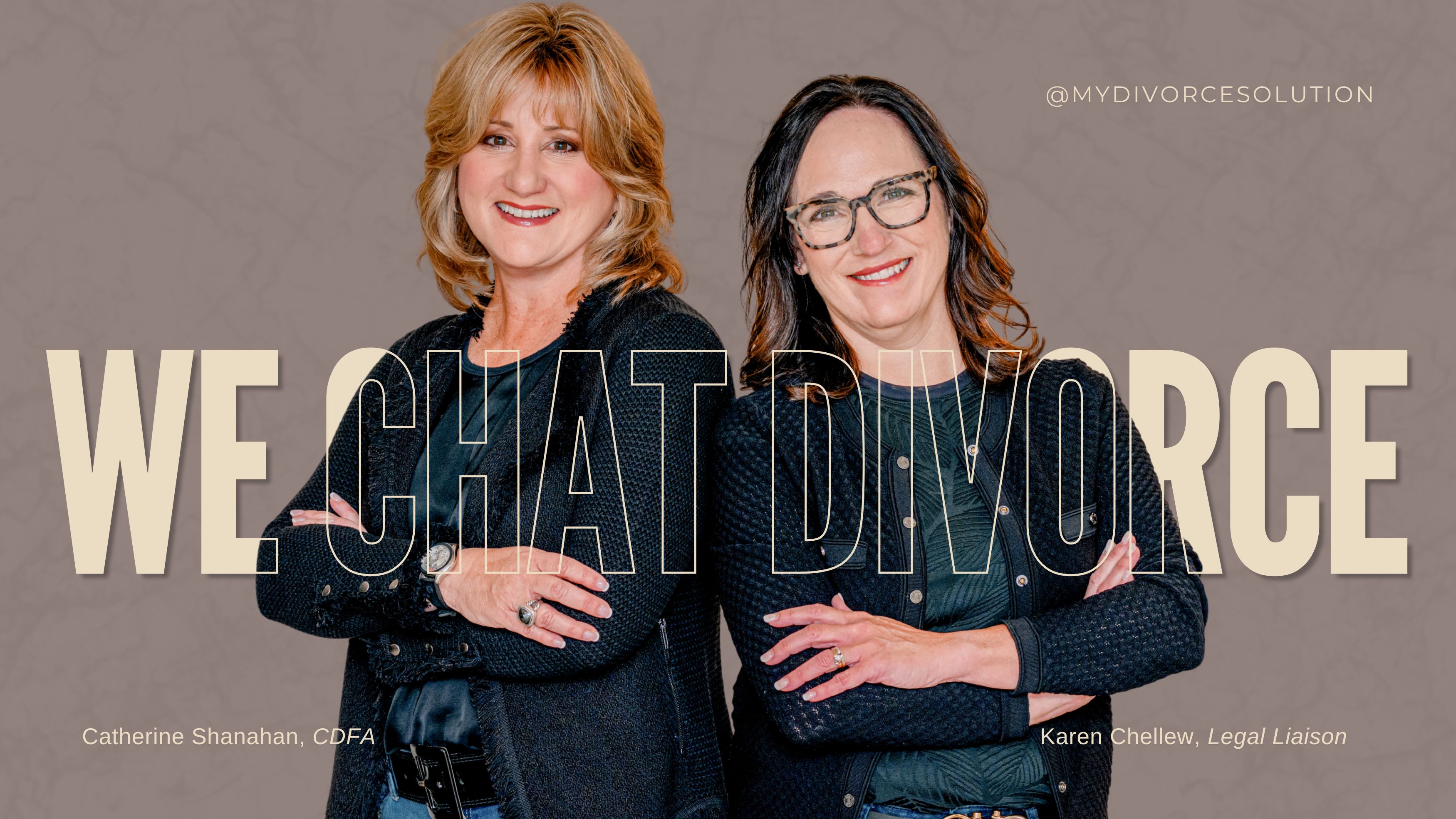

In this insightful episode of We Chat Divorce, we sit down with New York matrimonial law expert Jacqueline Newman to uncover the real story behind cryptocurrency in divorce. From the early days of “Bitcoin parties” to high-stakes cases involving millions in crypto, Jacqueline shares her experience dealing with digital assets during complex marital dissolutions.
Whether you’re navigating a high-asset divorce or simply concerned your spouse might be hiding crypto, this episode breaks down what you need to know—and what your attorney should be asking for.
What You’ll Learn:
- How digital assets like Bitcoin impact divorce settlements
- Why cryptocurrency still feels “mysterious” and how to demystify it
- Common mistakes when dealing with crypto during financial discovery
- When to consider dividing assets “in kind” instead of assigning a value
- The real cost of hiring forensic experts to uncover hidden crypto
- Tips to protect yourself from financial blind spots during divorce
Key Takeaways from Jacqueline:
- Always trace the source: “Every crypto purchase comes from somewhere—start with the bank statements.”
- Consider dividing in-kind: This strategy helps both parties share in the gains (or losses) of volatile assets.
- Don’t fear the unknown: Crypto is just another asset—fear fades with financial literacy and the right support.
Top 3 Documents to Request if You Suspect Hidden Crypto:
- Complete bank and brokerage account statements
- Sworn statements of net worth or financial affidavits
- All crypto wallet addresses and digital exchange records
Learn more about Jacqueline’s work at:
- BerkBot.com
- https://nycdivorcelawyer.com/
👉 Learn more at azure-emu-499854.hostingersite.com/
🎧 Subscribe to WeChat Divorce on your favorite podcast platform. Have questions or topic ideas? Email us at wechat@ck11.net
Navigating crypto, complex assets, or financial uncertainty in your divorce? Start with the MDS Financial Portrait™ – your personalized financial plan for divorce clarity.
About My Divorce Solution
We Chat Divorce is produced by My Divorce Solution (MDS) — a financial divorce preparation company dedicated to helping individuals navigate divorce with clarity, confidence, and a strategic financial plan. Founded by Karen Chellew, Legal Liaison, and Catherine Shanahan, Certified Divorce Financial Analyst (CDFA), MDS was created to solve one of the most common and costly mistakes in divorce: entering the legal process without fully understanding your financial picture.
Divorce is not just a legal event — it is a financial transition that can shape your long-term security. Through the MDS Divorce Financial Portrait™, clients receive expert financial analysis, organized financial disclosures, and scenario planning to understand how different settlement decisions impact their future. This financial preparation often reduces legal fees, shortens the divorce process, and helps individuals negotiate from a position of knowledge rather than fear.
If you are considering divorce or already in the process, you can begin by taking the Free Divorce Financial Assessment to better understand your options. You can also join the MDS Community for expert guidance, educational resources, and live Q&A events designed to help you move from uncertainty to clarity.
At My Divorce Solution, the mission is simple: replace fear with knowledge so you can make informed, confident financial decisions during divorce.
Episode Transcript
0:01
Welcome to WeChat Divorce, hosted by Karen Chellew, Legal Liaison and Catherine Shanahan, CDFA.
Each episode we sit down with divorce professionals and industry experts to provide insights and frank discussions about real people, real situations, and real divorce to help you achieve your best life post divorce.
0:39
Welcome to WeChat Divorce, brought to you by My Divorce Solution.
Today, Catherine and I will be welcoming Jacqueline Newman to our podcast to discuss Bitcoin and divorce cheats.
How digital assets are hidden in breakups.
Well, you know, it’s, it’s going to be interesting and I’m not going to be too ahead of myself.
1:01
But you know, we, we hear this a lot about Bitcoin and people going into mediation and they want to divide that value that day.
And how do you know what’s that value unless they pull it up and then mediation can go on several more times or your divorce isn’t settled.
So how, how do you really reconcile your other assets to Bitcoin?
1:21
Because who, really?
People don’t really know about Bitcoin, right?
And attorneys don’t know about it.
You know A lot of them don’t.
And I feel like the approach of the legal industry is that it’s almost dismissed as just an asset that we’ll deal with.
1:37
And one of the things that are most concerning with me when I’m, you know, in engaging with the attorneys or whoever’s mediators, whoever’s helping the clients is that, you know, the, our client or both, I guess not both clients, but our clients would be very concerned about is this everything?
1:58
And I consistently hear, well, if everything isn’t disclosed, you can go back later, etcetera, etcetera.
And that’s true.
But my pushback is, well, they actually have disclosed there’s Bitcoin, right?
2:13
So it’s disclosed.
So then you have to take the next step and say, is this everything?
That’s a good point.
Right.
Because if the fact that they disclosed it, they disclosed it, and if your attorney isn’t taking you through all of the steps to make sure it’s verified that it’s all of it, then what’s your ability to go back later?
2:36
So that’s something that everyone should be acutely cognizant of so that you are assured that everything has been disclosed.
Yeah, that’s a really good point.
And you know, unfortunately in divorce, you know, we don’t trust our spouses most of the time.
2:53
And so because Bitcoin is something that we’re not aware of, it’s not like you go to your bank and you see the cash there or what have you.
So people are nervous about the stock market just with brokerage accounts.
So now the nerve level goes up with Bitcoin ’cause that’s really an unknown and there aren’t real big statements about it that I mean that you can pull it up, there is an account about it, but still don’t really understand it.
3:17
So.
It’s really, you know, I understand why people are nervous and they think their spouses are hiding more than that.
Because.
You know, it’s just something that’s so out of your control.
But there does come a point where you have to say, OK, how do I accept this and how do we move on?
3:35
And I hope this attorney gives some tips about that.
Yes, for sure, Because, you know, it may seem like another asset, but that’s as long as you’re aware that there are steps to take to make sure you draw a line under it and feel confident that you’ve done everything you can to assure the valuation of it.
3:56
Yeah, well, let’s hop in and invite her and see what she has to say.
OK, Let’s welcome Jacqueline to our podcast.
Welcome, Jacqueline.
Welcome, Jacqueline.
Thank you for being here today.
We’re really looking forward to today’s topic.
As we were briefly discussing before we hopped on here, crypto in the closet exposing hidden Bitcoin in divorce.
4:16
But first, I’m just going to take a couple minutes to introduce you.
Jacqueline is a New York City based divorce lawyer and experienced New York matrimonial law expert as managing partner with top tier 5th Ave.
Manhattan law firm focus focused exclusively on divorce.
4:33
Her practice runs the gamut from prenups for high net worth people contemplating marriage to high conflict mat matrimonial litigation and dissolutions involving complex financial assets and difficult of the issues.
That is a lot and a lot of our audience will remember our discussions with your partner there, Evan Shine.
4:56
So Jacqueline is a law school lecturer and New York continuing legal education and structure.
Jacqueline sheds her fearsome advocate persona to teach mediation and collaborative law as alternatives to lengthy courtroom calls.
Wow, that’s impressive.
5:13
Well, thanks so much for having me.
Happy to be here.
Of course.
And you know, before we dive into our topic today, can you tell our listeners just a little bit about your story and journey that created the passion for the work that you do?
So sure, it’s kind of an interesting one.
5:29
I think I actually have always wanted to be a matrimonial lawyer and I I use the term matrimonial as opposed to divorce.
It just sounds nicer, but it is the same thing.
But I’ve always wanted to do it since really middle school, which is so bizarre because there’s actually no divorce in my family.
If you go back, I mean, it’s you have to basically do like 6° apart to do it.
5:49
But my parents are both psychotherapists.
So the big family joke was that I was too aggressive to be a therapist.
And so this has always been a passion of mine for a very long time.
I put all my eggs in one basket.
When I was in college, I focused strongly on it.
I worked for matrimonial attorneys and then when I went to law school again, everything was about doing family law.
6:09
My professor, Barry Berkman, who is now my partner, I went up to him at the end of class and asked if they were hiring.
And at the time he had one associate who was leaving to go follow the Grateful Dead.
So he said come on board.
And I have not worked anywhere else since.
I’ve been here for over 25 years.
6:26
I’m now the managing partner of the firm and I don’t even have a resume.
It’s the only place I’ve ever been.
I absolutely love it and I think it’s the greatest law to practice.
That’s interesting that you developed this desire in middle school and you don’t come from a divorcing family.
6:42
So did they work with marriage?
Were they, were they marriage counselors?
Like how did you even think of it?
I wouldn’t even have thought of that.
It was.
Really bizarre, I have to say.
I was a little bit of a weird kid, I think, but I, I think really what it was.
I was always into relationships.
I find relationships between people, you know, romantic or otherwise fascinating.
7:02
I think that’s probably what came from my parents more so.
And I just thought the law.
I don’t know, I still have this like magical thing about the law.
I think I like structure in some way.
Not to say that the law is really as structured as one would want.
I’m also very into math and mathematicals, and I’m very into formulas and cell charts.
7:19
I joke and not even joking that my children’s birthday parties are on Excel.
So I think the way that I’ve always sort of thought just kind of matched with law and actually, you know, just on a side when I was just in court the other day and walking in, I don’t know who’s either of you have ever gone to 60 Center St. the courtroom in New York City, but it’s a beautiful building.
7:40
And I was just saying to my associate that when I walk in, I still feel it.
Like I still have that little like excitement, which I mean, I’ve been doing this for so long.
And I said it’s so, you know, sometimes it was a pretty easy court appearance.
So I wasn’t particularly nervous, but just to walk in and still feel it, I feel like it’s just, I feel very blessed.
7:58
I have to say.
I feel like it really, you know, when people say, oh, you know, being lucky or skilled or you know, where it gets you to where you need to be.
I think it’s both personally.
But I do think a lot of it was luck because I did know what I wanted to do early and I put all my eggs in one basket.
Thank God it worked out because I really wasn’t qualified to do anything else.
8:16
But you know, that’s where I feel I was lucky.
And to still feel passionate about it later just makes me feel very, very lucky.
Well, I want to laugh out loud because if you’re listening to this podcast, we do think she’s weird because not once listening gets any kind of good, butterfly stop walking into a pretty courtroom.
8:35
It’s true.
That is true.
It is a really pretty building.
But I hear you.
That’s great.
Well, you know what, frankly, it’s, it’s probably a good thing that you have that confidence when you’re walking into the courtroom that you can appreciate what it what you’re able to bring to the table.
8:52
So I don’t know, I commend you.
Thank you for that too.
I.
Appreciate that.
Thank you.
And now it’s great.
Yeah, you’re welcome.
All right, well, let’s get into the topic today.
Cryptocurrency and Bitcoin.
We see a lot of it here at my Divorce solution.
And you know what I believe?
9:09
We all believe that it’s not as, as you said, Jacqueline’s sexy as people may think it is.
However, I do believe it creates a lot of hiccups when one spouse is not disclosing what what is available to divide and things like that.
9:26
So how has the rise of Bitcoin and other cryptocurrencies changed the divorce landscape from your experience?
Well, I think it way back when it first kind of came onto the scene and you know, Bitcoin was everybody was talking about it and it was a very, very popular thing.
9:42
Not to mention obviously all the other cryptocurrencies that were popping up.
I think then people were very scared of it.
You know, anytime people get scared of anything, they don’t know.
And there was this big fear and it’s the same fear everybody has about the offshore bank accounts and you know, the money in the mattress and the whole thing, you know, so it’s everybody’s always scared of people hiding money.
10:02
I will say what I think really what Bitcoin or just any cryptocurrency did, at least in the beginning, was it did give you the feeling that you could hide money in it.
However, really when it comes down to it, and this is something I would tell a lot of my clients who, you know, when they first heard the word that, you know, no one was, no one was as much into the off share banking accounts.
10:21
Everyone’s like, oh, it’s crypto.
I was like, let’s slow it down.
Because the fact is, even if someone bought crypto, it had to have come, the money still had to have come from somewhere.
So the way that we actually figured that out is when we do what’s called discovery, which is where we go through financial documents and see, you know, like bank statements and things like that, We’re going to see that there’s $100,000 missing and it went somewhere.
10:43
And so when you do a deposition, which is where you would ask somebody on the, you know, you’d ask the spouse all sorts of questions.
Underoath, when I’m going through the statements, I’m going to say, where did that $100,000 go?
Now they have to answer that question, you know, And so whether if it went to Bitcoin, if it went to cryptocurrency or whatever, then they’re going to, that’s how it starts, right?
11:03
So then you’re in the beginning stages where you’re saying, OK, we know that there’s a purchase.
Now this is where it does get a little fuzzy because it’s like, where did it go and what exists right now?
And that is where it gets more challenging.
But to find out if there’s actually an asset that exists, that’s not as hard.
11:20
But I will say that is the the problem is that if you had a four O 1K or if you had just like, you know, money sitting in a securities account, you can see it very clearly and you know what the value is when you’re dealing with cryptocurrency, you know, as you know, it could, you know, it’s it’s hard to trace, It’s hard to see exactly what it’s worth at that time.
11:37
Not to mention the fact, obviously you are dealing with an asset that has a lot of ups and downs.
So that’s always challenging in any type of asset.
To that effect, I will say I had a very big Bitcoin case years ago and this was a gentleman who, I mean, he had I think close to 50 million at one point and then it went down to like 20 million.
11:58
But he and he was not diversified.
He was all in and what was interesting about him and I, I find this just an interesting thing about cryptocurrency.
So he had gotten in back when, you know, people were having parties.
I mean, that’s how this sort of, I don’t wanna say it started, but people would have these crypto parties where there would be all different types of coins and they would do this as a trade.
12:19
And this is again when Bitcoin was like basically nothing.
But the way that they would do it is it was almost on post it notes.
It was almost like these little cards that people would get.
And so there was no tracing from a tax perspective.
So this guy got so much Bitcoin way, way, way, way back.
12:36
I don’t even know what it was worth at the time, but and there were post it notes literally all over all of his computers of all of his passcodes and all of these type of things.
Because it was such a it was almost like a game in the beginning.
It wasn’t real and there was no real value to it.
And so it was just for people that were just incredibly interested in this type of currency.
12:54
But what ended up happening, and this is another place where it does get tricky, is that from a tax perspective, it was very hard to create basis.
Like we didn’t know what it was worth at some point.
We know what it’s worth now, but we had zero basis for it because we have no idea.
I mean, first of all, he got it as some of these he got at parties and even when he ultimately, you know, and then there was a universe that created a people that were into this.
13:16
And so that is where I find that crypto becomes very challenging.
And there are experts, there are expert accountants that are crypto accountants that will try to figure this out for you.
But I will say specifically in my case, he, I mean, he ultimately ended up having huge losses, but at one point he had enormous gains, but we had no idea what the gains were.
13:34
And so the taxes were just, I mean, you know, he actually didn’t file taxes for some period because they just couldn’t capture it, which obviously caused many issues in the divorce as well.
How?
Did that get divided?
Ultimately she took, you know, it was also, I mean, that was a whole, this is where it does get complicated.
13:52
So we had, you know, we had, I mean, I think he had like 30 different laptops and you know, there was other information on these laptops.
So he didn’t want to have people.
We brought in an expert.
You know, what I found interesting about this expert was in his retainer agreement, the expert said I and it was, I mean, I want to say it was maybe $100,000 retainer.
14:11
I mean, it was a huge, and I remember say it was something in the retainer that said I may or may not find everything.
And it was one of those things where I was like, OK, well, we’re going to pay you $100,000.
And you may or may not, you know, it was really, but he said, I can’t represent to you that I’m going to find this, you know, And it was just, it was very disheartening.
14:28
I mean, I happen to have represented the moneyed spouse, so I was probably less disheartened, but I was the one who was also having my client pay.
And I just was like, well, you know, that’s a nice retainer to write that.
I may find something.
I may find nothing you know, but still.
Pay me $100.
All forensics reports have off the agreement say that now.
14:46
Not, I mean, I don’t know, I can just tell you that this one did.
And, and no, I wouldn’t think that they would say in the same way because he was a crypto forensic.
Like generally when you bring forensics in, at least more in my space, it’s more about finding basis for things.
It’s tracing, it’s things like that.
It’s not really, I mean, you’re talking about like a forensic investigator and a forensic investigator may say something like that, but an actual forensic who is basically saying I’m going to value these things.
15:11
He was pretty much saying, I can’t tell you what I’m really going to value because I don’t know if I’m going to find it or not.
So it was a little bit, he was probably a blend.
And also again, this was, you know, probably about four or five years ago.
So it was also kind of a little bit, you know, in the more, I don’t want to say the beginning, but it was more in the beginning world of this really entering into the divorce landscape.
15:31
So that’s interesting.
So that’s four years ago and when we started the conversation you were saying that, you know, it’s not as much as a big deal now and it’s easier to trace.
So how do you find your tracing now?
Like how would you handle him now if you had him now?
So the tracing itself is probably similar, even though I do think things have gotten much more sophisticated.
15:50
He was, he would have probably still been just as problematic because of the fact of when he got the Bitcoin.
But now I feel like that people are getting into the market.
I mean, he was, you know, again, one of the probably the one of the first type of people.
You’re not finding that as much anymore.
I mean, Bitcoin became, you know, more commonplace.
16:07
Everybody was sort of or not everybody, but a lot of people were owning it.
So I think the tracing issue is less of an issue because you’re not having someone that has this element of history.
And so that’s not as big of a thing.
But I don’t think that I think the the fear that people have is that, you know, money just disappears.
16:24
And I think that’s really what I would love for your listeners to know is that’s not true.
Like we will figure out if, unless there’s a cash business, which is a whole nother thing, but then you can’t really buy with cash.
I mean, there’s, it’s not really that easy.
And and so people, you know, one of the big fears you always hear is people are, oh, everybody’s hiding money.
16:40
It’s actually true, Super hard to hide money.
Like you need to be planning for a very long time to hide money and you need to be really good at it.
But it’s it’s not an easy thing to do.
From what I’m hearing from you and what we hear with a lot of our clients is you have to be very intentional about the money you spend on the forensic to uncover whatever you think may be hidden.
17:02
You know, right, They have to make informed decisions about how much money they’re going to spend on finding money.
And sometimes that can just be a complete runaway train.
We, we have this one case that I can recall where it, it was a known asset, I guess the, all the crypto holdings and the spouse provided a wallet And so it came in, it was valued.
17:29
That was fine.
And then, you know, I said, well, did he verify that this was all of the wallets?
Is this all of the holdings?
Well, no.
And to you know, to get that verification that this is everything has been real, the real challenge, not that it wasn’t disclosed, but did you disclose at all?
17:50
And I think a lot of people will just conclude that this is all if one holding or one wallet is disclosed.
So is that, how do you, I know every state is different, but is that something that’s also kind of underscored when a financial discovery is being produced to make sure everything has been disclosed or that they verify it ahead of trial?
18:16
You know, I know a lot of attorneys say, oh, they have to verify a trial, but you can’t really value it late, so you would.
Verify it before that.
I mean, so this is, it’s really the same as any other assets like so people will do sworn statements of net worth where they have to list all their assets.
If someone doesn’t list something and you were able to find it after the fact, then they committed.
18:35
You know, that’s an act of perjury because these are sworn statements.
So it really is the same thing as anything else.
You know, I kind of looked at crypto at least then and still now it’s kind of cash.
You know, it’s the same idea.
Like you don’t know if somebody says I have a safe and I have, you know, $60,000 in it, you don’t know if they really have cash somewhere else.
18:53
I mean, the difference, I think between the crypto and the cash element is that crypto is harder to value, you know, but cash, you know, obviously you know what cash sort of know what cash is worth, but conceptually speaking, you do.
So that’s really, I think the only difference like, but at the end of the day, if someone’s going to lie, they’re going to lie, you know, and then it’s just a question of you trying to figure out, you know, what if they’re lying and if they are to prove it.
19:15
But I don’t see it as actually all that different.
I think it just feels different because it’s kind of just out there and you know, it’s in the, it’s in the sky somewhere.
Yeah.
So on the valuation piece, Jacqueline, do you find that sometimes it’s better to just divide, I guess you call it the coins themselves versus dividing by value, because what the value is today could be very different tomorrow and next week and so forth.
19:42
How what do you feel is the best way when those when that’s occurring?
So I am a big, they call it dividing any kind.
And I am actually, I would prefer to divide any kind in most situations.
You know, the case I was referring to, he really wanted to do the buyout.
19:57
Like, he wanted to buy her out because he believed in it so much, which ultimately would have been a disaster because it ended up, you know, tanking pretty badly.
But you do get these believers and you get these people.
Like he truly believed that and he’s a brilliant man and he truly believed that there would be no cash at someday, like the current currency would be gone and this would be the only way that people would be paying for things.
20:20
So and, you know, he had so much success, you know, up to a certain point.
And I mean, anyone would measure the fact that he had success considering it was a party.
And he still, you know, he got these little slips of new paper and then he still ended up, you know, well, he was at 50 at one point he was at 20.
So, but it’s still, I would say, a successful party that he went to.
20:37
So I would say that, you know, I would like to divide in kind.
I’m probably a little bit more conservative and I feel like everybody should take the highs and the lows of whatever it is that you’re doing.
That said, when you have people that again, are believers, they’re going to want to do it.
And this again, I think is more of a judgement for any type of asset.
20:53
You know, you can have people that would want a home that you know, for them emotionally, it’s an important thing to have.
Yet financially may not be a smart thing.
And you know, there’s market and you could say it about, you know, this comes up a lot with private equity investments, you know, you know, hard to ascertain the value of, but some people feel passionate about it and they believe in it.
21:10
So they want to take it even if you know the value is going to be somewhat unknown and they may overpay for it or they may underpay for it.
We just don’t know.
So many assets are just unable to be valued.
And I put that in there, but I prefer to value things and I mean to divide in kind just so everybody takes the same highs and.
21:25
Lows, yeah.
So if anyone in our audience would be suspecting that Bitcoin may be a part of their marital estate, what would be some indicators they could look for?
I know you said $100,000 going somewhere, but is there anything else that would trigger, you know that maybe there is some cryptocurrency wallets out there?
21:50
I mean, again, I think if somebody has interest in it, you know that I think that the odds of them having probably crypto versus cash is going to be higher.
If somebody, if you have somebody who’s, you know, takes a large interest in those type of assets, you know, beyond that, again, I think if you have to think of it as like cash, you know, you really have to in your mind think what are the odds of somebody having cash in the house that you don’t know about?
22:13
And again, a lot of it also depends on what type of business somebody’s in.
If somebody owns a restaurant or a dry cleaner, then you might be screwed.
Like at the end of the day, that may happen.
But if you have someone who’s AW2 employee and you know, all income is traceable, then it’s a question of where did it go?
And that’s, you know, that’s something I would be looking for.
22:29
I’d be looking for holes, you know, big withdrawals or maybe not even big withdrawals, just withdrawal, unknown withdrawals, I’d say in the bank account.
You know, I find people, you know, very often, you know, men and women, by the way, are what I call in the financial dark.
And they really allow the other spouse to be fully in charge of the finances.
22:47
And then they take different roles in the marriage.
And so, you know, my advice to people is if they’re suspecting something, they should be paying attention to the finances and they should be make themselves educated about their finances so they can actually know what they’re looking for is as opposed to people, you know, speculate and and get panicky, which I understand.
23:05
But education is the most important way for somebody to, you know, lower the panic levels and actually see what’s going on.
Yeah, that’s what we do.
That’s our process.
You know, the MD’s method is to get financially informed, get prepared so that you can work with your attorney to chase what you should be chasing and what you shouldn’t be chasing.
23:24
You know, it’s interesting that you said earlier, and I don’t know if we were on camera or off camera that you don’t feel crypto coming.
You feel like it’s kind of dissipated a bit like you don’t have it much in divorce cases because I feel like everyone thinks their spouse has crypto.
23:41
And you know, again, it’s because, you know, financially we’re totally comfortable here at MD’s.
We know what all the financials are, right?
But for most people, they don’t.
So just the word it’s, it’s still in the news all the time in the financial world, the financial markets, it’s talked about all the time still.
23:58
So I’m wondering why you see a turn of it not being so included.
Are people just forgetting, not just saying OK we don’t care about it in your in your viewpoint or?
What I would definitely not say they don’t care about it.
I think that there was just a time that it was super, super sexy.
24:14
There was a time that it was new.
There was a time that everybody wanted to get in.
They just saw it as, you know, the future.
And so I think that people were just so fascinated by it that it was a constant talk.
At least again, in my industry.
People were taking their cash and they were investing it in crypto.
24:30
I mean, that was what was going on.
Now I see it.
I think it’s just, you know, it’s less sexy.
I mean, that’s what it comes down to.
It’s the same, you know, people may still be investing in it, but nobody’s talking about, you know, AT&T stock, you know, like that’s not exciting.
So I think it almost is like, I don’t want to say it’s as boring as that, but it’s, you know, it’s just not something that people are as excited about.
24:50
So it may be an asset.
We definitely still ask people, do you have crypto?
You know, but I don’t think that I feel like it’s just kind of become an asset like anything else.
I think it’s just become more commonplace, which is why it probably feels less sexy.
And to be honest, as I said, it is easier to trace and the people that have gotten into it more recently, more recently, define as you will, it’s even easier to trace than it is for people that were the beginners that really just didn’t have, they didn’t know what they were getting themselves into.
25:19
You say easy to trace.
You mean if you have the statements and you said you saw 100,000 come out of this account, where did it go?
You know, that’s how you’re saying easier to trace, but it’s really not easy to trace when somebody has it because you don’t really know the value of it.
25:34
I mean, we see people going into mediation and they’re saying, OK, it’s worth, you know, $100,000.
Well, sure, it might be worth $100,000 on that day, but it was worth $200,000 a month ago or so.
When do they actually do If you’re not doing in kind, which I’m an in kind person as well, but if they’re not doing that, when is a fair day to take for the division of that?
25:59
And I know every state’s different.
We deal with everyone in every state.
So when is the fair date to do an equalization from another asset for that?
So it’s a good question.
In New York, I can say that we value assets as of the date of commencement.
So the day you start your divorce action or if you’re in a mediation or collaborative law and you do what’s called the cut off agreement.
26:17
So that is the day that you would value it.
Now, that doesn’t necessarily mean it’s the date you distribute it.
And then again, I don’t know how much we want to get into the weeds on this, but from a New York perspective, if you are actively managing your account, then ultimately it could be you would value it as of the date of commencement.
26:34
So let’s take it for that.
But if you weren’t actively managed it, it was passive.
So let’s say you had bought Bitcoin.
Let’s say it’s sitting in, you know, an account in a wallet somewhere.
And then you do nothing else.
You just, you don’t touch it and you have the date of commencement is May 1st and then you actually say sign your agreement or have a date of distribution of June 15th.
26:51
If you’ve done nothing, then you should value it as of the date of June 15th.
Again, this would be when a date of distribution, if you are going to, I mean, usually an agreement will specify what we’re going to do as a value date.
And again, more often than not, I would say it’s the date of commencement.
27:07
But if it’s pure market forces that are either bringing it up or down, you’re going to have the argument that it should be as of whatever the date of distribution is.
So I know that’s not a clear answer, but that’s sort of how we do it.
Yeah, I know.
It’s so complicated in the financial world because you want to balance it out with other accounts and every, you know, of course, it’s like, it’s like any other investment, you know, the value goes up and down.
27:28
Everyone wants to change their numbers all of a sudden.
Yeah, that’s exactly the.
Move, move the money or move the bit, the coins as well.
You know, they, I, I see more of that going on because, you know, some of the companies have gone bankrupt and so forth.
It can be that piece of it can be very challenging, but yeah.
27:47
Well, but you can get the statements of the accounts.
I mean, that’s the other thing.
So I mean, you can ask for all that to see all the tracing of whatever base, you know, where everything’s going.
Yeah.
So I, I just don’t think it’s as mysterious.
I think the valuation is absolutely an issue.
And but, you know, to Catherine’s point, that’s an issue with almost almost every asset and things don’t generally stay static.
28:08
Do you do you believe that the cryptocurrency forensics are more expensive?
You know, if if someone had, you know, a lot of their marital state held up in cryptocurrency, would they need to plan on spending or investing in that forensic?
28:26
You know, it’s a good question.
I think that they’re specialized.
And I think when you’re dealing with anyone who’s, you know, has a specific specialization, you’re going to probably have them being maybe a little bit more expensive.
But again, I don’t find that as much now as I think I did.
28:43
I will say from a tax, if you’re hiring an accountant to try to figure out the basis, you know, in a crypto situation that really doesn’t have one, I can imagine that person would be much more expensive than, you know, a typical accountant.
Yeah.
Have you come across any cases where people are taking crypto as part of their income?
29:03
When you say take it, I don’t know if I understand there are a.
Lot of there are a couple of athletes who took their agreements, their contracts I should say and their pay is crypto.
Some of it is crypto, you know.
I have not had that personally, you know, and I deal a lot with business owners and I deal a lot in the financial industries.
29:21
So I have not had people that have been that, that risky and creative with it.
But yeah, I mean, but even if they did that, I would still value it at whatever, you know, whatever the value was upon the receipt.
So I’d see it the same as like taking, you know, shares in a company, you know, somebody, some people get paid in, you know, RSU’s.
29:40
And so in that sort of circumstance, you know, it’s, I really see it as very, very similar to other assets.
So I think that that’s why it’s not and I keep using the word sexy, but it’s like, that’s why it’s not as like in that world because of the fact that it really can be comparable.
But I think one of the reasons it was so, you know, attention seeking in the beginning is it was so unknown and it felt so scary.
30:02
But you know, again, I, I have, I have clients now that are back to saying they’ve got, you know, offshore accounts.
We’re back to that again.
So I don’t hear as much about the the crypto and the team.
Yeah.
Well, with that in mind, how do you find an offshore account?
So again, you can figure out, assuming that you’re in a situation where you can look at some sort of bank statement of some sort or company statements or things like that, you’re still going to figure out that some money went somewhere.
30:27
So it’s a question of where it went.
And then beyond that, if you have somebody who is really has a, you know, a very sophisticated financial picture and or somebody who’s in cash or any of those sort of things, I mean, we hire forensics investigators.
That would be people that would go to all sorts of places.
30:44
And I can tell you they’re very expensive.
But there are times that we do that and, you know, to try to find stuff that we don’t have direct access to.
Well, I commend you on your knowledge of cryptocurrency, Jacqueline, because a high percentage of our clients hire attorneys who have little to no knowledge of it and it becomes a dismissed asset.
31:07
They don’t want to talk about it.
They don’t want to do anything but put it on a sheet and hope for the best.
So I feel like a lot of people going through a divorce find this topic to be very challenging, very relative to their attorneys ability to adopt it in a way that you’re saying it can be adopted.
31:27
So I, you know, I do commend you for taking the responsibility of learning these various types of assets and how they play into the division of marital assets.
Thank.
You very much, I appreciate that.
Well, with that being said, what would be the top three things you would advise somebody to ask for to prove this in court or for you that you would need?
31:48
I mean, again, I feel like I’m, I’m saying a lot, but of bank statements, you want to see where the money went.
So that would be #1 #2 I guess is, you know, sworn statements to whatever they’ll be worth.
Because obviously if you can find things after the fact, that would be a meaningful discovery.
32:06
And then beyond that, I think that, you know, I would propose dividing in kind.
I mean, to me, that is the other thing that I think, you know, and then somebody has to become financially sophisticated to understand the asset that they’re, you know, obtaining.
But that same thing when you’re doing private equity, same thing when you’re doing anything, I think, you know, if we can take kind of the fear and the mystery out of it and kind of look at it as just another asset that needs to be dealt with the same way you deal with a, you know, a checking account, I think that people will be more open to being involved in it and just again, not see it as scary because as I see it, it’s just another asset.
32:40
OK.
So if you’re listening, I like that as a summary, you know, don’t be so afraid of the crypto.
We always talk here at MD’s also about transferring shares in kind.
I think that’s a really good piece of advice there.
So instead of getting caught up of the back and forth and then the minutiae of the whole argument, just say, fine, I’ll transfer the all the coins in kind and then that settles it.
33:01
Then you reap the benefit of the growth or the loss of it, but get that sworn affidavit.
That’s the only proof you can really have.
And know that you can go back to court afterwards if you find out that there has been something that he did not or she did not disclose.
So make sure your attorney ask for these three things.
33:17
I like that a lot.
Or you could tell our audience how they can find you.
So I could be found at my law firm, Berkman, Bacher, Newman and Shine.
The website is Burkbot, which sounds a little funny, but it’s B as in boy E as in Edward, R as in Robert, K as in Kite, B as in boy O as in Octopus, T as in tom.com.
33:41
That’s great.
I love that.
Well, thank you again, and thank you to our listeners for joining us today.
If you found this episode helpful, please like, subscribe and share it with anyone navigating divorce.
It may be just what they need to hear right now, and we’d love to hear from you.
33:58
If you have a divorce related question or a topic you’d like us to explore in a future episode, e-mail us at WeChat at ck11.net.
For more resources to guide you through your divorce journey, visit azure-emu-499854.hostingersite.com/.
From personalized financial planning to expert insights and community support, we’re here to empower you with knowledge and financial clarity.
34:21
Remember, knowledge is power, and you are stronger than you think.
This concludes this episode.
Thank you Jacqueline for great conversation.
Thanks.
For having me.
Thanks for joining us on another episode of We Chat Divorce.
We hope this episode was informative and supportive on your divorce journey.
34:39
If you're looking for more support for navigating divorce with confidence and clarity, head over to azure-emu-499854.hostingersite.com/ for more podcast episodes, divorce events, and resources for your divorce.
We’ll see you back here for our next episode.