

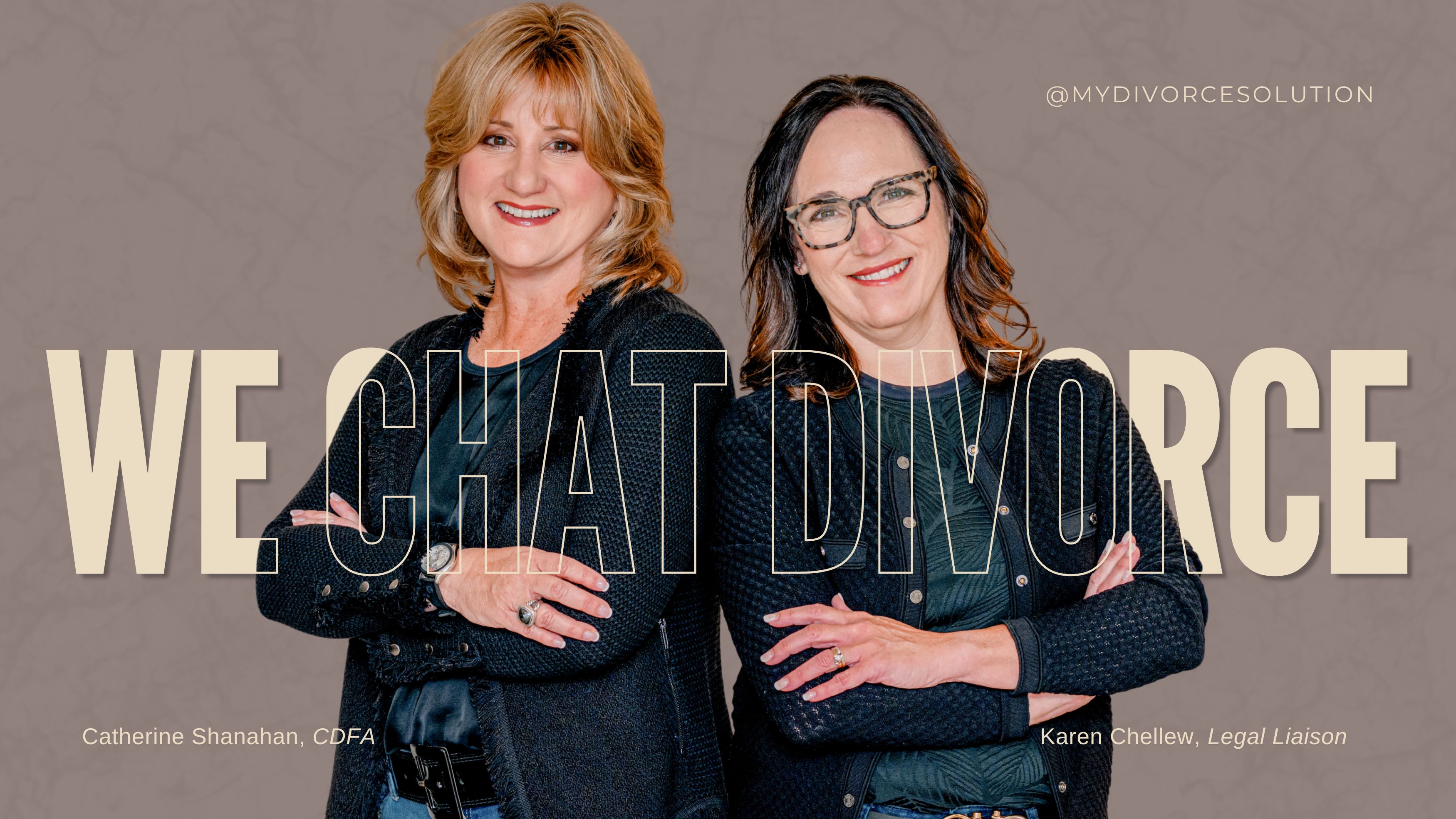
151. Cool Heads, Smart Wallets, Emotional Mastery & Divorce Finance with Jenny Stevens

In this powerful episode, Jenny Stevens joins Karen and Catherine to explore how to manage emotions and make smart financial decisions during one of life’s most difficult transitions—divorce.
Jenny shares her personal journey from being a breadwinner navigating her own divorce, single parenting, cancer diagnosis, and career change, to becoming a coach who helps others turn life’s adversities into transformation.
“You don’t need to overhaul your life. You just need to tweak the behaviors and habits that no longer serve you.” – Jenny Stevens
Jenny Stevens jennystevenscoach.com
IG: www.instagram.com/jennystevens_coach/
FB: www.facebook.com/jennystevenscoach
Email: Jenny@jennystevenscoach.com
Submit your questions for future episodes at: wechat@ck11.net Don’t forget to like, share, and subscribe for more real conversations that make divorce less overwhelming and more empowering.
About My Divorce Solution
We Chat Divorce is produced by My Divorce Solution (MDS) — a financial divorce preparation company dedicated to helping individuals navigate divorce with clarity, confidence, and a strategic financial plan. Founded by Karen Chellew, Legal Liaison, and Catherine Shanahan, Certified Divorce Financial Analyst (CDFA), MDS was created to solve one of the most common and costly mistakes in divorce: entering the legal process without fully understanding your financial picture.
Divorce is not just a legal event — it is a financial transition that can shape your long-term security. Through the MDS Divorce Financial Portrait™, clients receive expert financial analysis, organized financial disclosures, and scenario planning to understand how different settlement decisions impact their future. This financial preparation often reduces legal fees, shortens the divorce process, and helps individuals negotiate from a position of knowledge rather than fear.
If you are considering divorce or already in the process, you can begin by taking the Free Divorce Financial Assessment to better understand your options. You can also join the MDS Community for expert guidance, educational resources, and live Q&A events designed to help you move from uncertainty to clarity.
At My Divorce Solution, the mission is simple: replace fear with knowledge so you can make informed, confident financial decisions during divorce.
Episode Transcript
0:01
Welcome to WeChat Divorce, hosted by Karen Chellew, Legal Liaison and Catherine Shanahan, CDFA.
Each episode we sit down with divorce professionals and industry experts to provide insights and frank discussions about real people, real situations, and real divorce to help you achieve your best life post divorce.
0:24
This episode of WeChat Divorce is brought to you by My Divorce Solution, Offering Divorce divorce financial planning so clients can secure the divorce settlement they deserve.
Visit azure-emu-499854.hostingersite.com/ to request access.
Welcome to WeChat Divorce, brought to you by My Divorce Solution.
0:44
Today, Catherine and I will be welcoming Jenny Stevens to our podcast to discuss Keeping Cool When it Counts, a guide to emotionally smart divorce and financial decisions.
But before we do, as always I’m sure, Catherine, let’s talk about some things of keeping cool heads.
1:04
That’s a good one.
Keeping cool.
You know, it’s easy for us to say because we’re not going through the process right now, right?
Well, sort of.
But it’s so hard, so hard to keep cool going through the divorce process.
I mean, there’s so many triggers and your spouse knows your triggers just like you know their triggers.
1:23
And it’s so hard to bite your tongue and just not say anything.
So I’ll be really interested to for her tips on how to keep that cool.
Yeah, for sure.
And you know, just on the outset, I think a lot of people tend to be in a space of defense like they’re in the.
1:43
I call it the granule level of just dealing with all of the dealing in the weeds, but I love that the NDS method, the My Divorce Solution financial portrait really allows people to get up out of the weeds and and really know this is what you have this, these are your cash flow needs.
2:02
This is what’s divisible.
These are your goals.
This is how you can respond to your goals.
This is all the documentation that supports your marital estate.
So let’s just stay there.
While all of these accusations and assertions can always be swirling around you, you can always stay in the know.
2:19
And so that is one way that people can have cool heads and I’m sure Jenny will be giving us a lot more perspective there.
Yeah, God love our coaches because even going through the financial piece of everything that you just said can make me a little anxious, right?
So if you’re listening, you’re like, Oh my God, uploading the documents, going over my income and expenses.
2:39
You know, we see it creeping in when we’re working with them just because we have that text messaging, I call it thread where they can communicate with us at any time, you know, so even though we streamline the process, we still see it, We still see the emotions, you know, and so to have a good coach that can help you stay focused just on your emotional part is really helpful to get through the financial.
3:02
Part as well.
Absolutely.
So let’s welcome Jenny and get into the conversation.
Welcome, Jenny.
So our podcast WeChat Divorce, So happy you can be here with us today.
Thank you for having me, it’s great to meet you guys.
Likewise.
3:19
So in this episode, we’re going to discuss cool heads, smart wallets, emotional mastery in divorce finance.
But first, let me just take a couple of minutes to introduce you, Jenny.
You’re known as the champion of change, a personal counselor and coach for divorce coaching and adolescent coaching.
3:38
As a professional clinical counselor and now professional and personal coach, Jenny brings an honest, approachable, and no BS style to her interaction with her clients.
She cares deeply about helping others and supporting her clients to make the changes they’ve always wanted but weren’t equipped with the right road map to make happen.
3:59
So that’s amazing, Jenny.
Yes, yes, yes, yes.
Change is the inevitable that we have to always be, you know, leaning into and not resist.
I always say change is good.
Yes, I.
Agree change is really good.
4:15
I mean it can be hard and met with some resistance, but the more we can adapt to change more than not change is good.
I was always that kid that loved to move like I didn’t.
Well, I moved a few times, but I just love moving.
4:30
Like I would move now, just not out of Hilton Head because I love it here.
But I love a new house, a new.
I love packing up and get unpacking and setting up and not many people like to do that.
I love meeting new people.
I never really shield away from that because I I do feel like change is fun.
4:46
Change is good.
Yeah, well, I went to 9 schools in 12 years because we moved around every four months for my dad’s job.
And so I was always the new kid and always a New Girl and forced to make friends almost everywhere I went.
So like almost every two years I was in a new school.
5:02
So maybe that’s where I got the bug of change, and maybe that’s where I flex those muscles from a really early age.
It’s better to adapt and move with the change than to resist it all the time.
That’s awesome because you I am a resistor of change.
5:19
I didn’t get at all.
I like to get my surroundings and count on them.
Now I like to grow and I like to expand, but I like to always have that consistent place I can go back to at all times.
So I’m I’m not a change champion.
5:38
So I can adopt the concept of flexing muscles that have not been flexed before.
I think of it that way.
So I’ll, I’ll be very interested in our discussion today for sure.
But before we dive into this topic, Jenny, can you take a couple minutes and tell our listeners a little bit about your story and journey that created the passion for the work you do?
6:00
Yeah, sure.
So seven years ago, I found myself getting out of a 10 year marriage with two small children and deciding that I wanted to change my circumstances.
And the driving force was that I didn’t want my divorce to be the worst thing that happened to me or the worst thing that happened to my kids.
6:21
And when I told people I was getting a divorce, people weren’t always look at me as if like somebody had died.
And I didn’t like the response that people gave me.
And that was the point in my life where I was 45 and I thought, Oh my God, regardless of how, regardless of how difficult it’s going to be, I won’t let this be the worst thing that happens to me or them.
6:40
And so I made it my mission to hire and be around the right side of team to help me move through my divorce.
And I did it in a collaborative way and ended up after the process, having to go to family court and work on parenting time.
6:58
And so I found myself a person in the court system, which was not a great place to be, and navigating those changes both financially and personally.
And each step along the way, I found myself wanting to help other individuals and families navigate divorce in a more rational, healthy way.
7:19
Because many people do get divorced and a lot of people focus on the difficulties of divorce opposed to the things that can change for the better and optimizing how your life can be thriving both, you know, not only personally, but financially.
7:36
And so there’s so many factors that go into a divorce and the financial aspect of divorces can be not only triggering, but something that can really give people a really shaky feeling.
And so how can we as professionals in the space help folks organize a plan, build strategy, and hire the right people?
7:56
And here I am like 7 years later.
I’ve built a life of my own.
And I was the breadwinner.
So I had to figure out my financial stability after sharing what we had made, but and also navigate how to be a single mom and leaving a 20 year career in the schools as a high school counselor and building my own private practice to build enough financial stability for the girls and I.
8:20
So that was also a driving force.
And it was scary, but I also was like, if you can’t take a risk, I’m not really risk averse.
And I believe that the most significant changes happen when you actually do take a risk, regardless of how big the rest can be.
And in this case, was leaving downtown Chicago to move to a suburb where the kids who go to public school, starting my own private practice so I could be in control of my financial wealth.
8:46
And so I did it.
It was kind of like a dream come true, but it was scary.
But I always think when you’re scared, go there first.
Yeah, yeah, I know.
It was like in in school when you had to give a speech.
I was always the first one.
I want to go first, like your book report or speech, because I wanted to be over with.
9:04
I wanted to, you know, and then I got to sit back and all my friends were like, Oh my God, we want to go on the last day.
And I was like, I want to go on the first day because I just wanted to get over with.
But you know, you know, divorce really brings out the best and worst in all of us, right?
And it is so scary.
9:21
And the unknowns are just what everyone focuses on, which is really why Karen and I created our processes so we can have everyone focus on the knowns.
Financially, when you know, good, bad or indifferent what it could possibly look like or what your post divorce financial life will look like, you can make those changes that you have to make, whether you have to get a job, whether you just have to volunteer somewhere, somewhere that you can move on.
9:45
Because I always say, you know, divorce is a part of my story.
And unfortunately it’s going to be my story again because I’m getting divorced again.
But that’s a whole nother podcast.
But it’s not my entire story.
You know, I do believe that I’ve gone through the this in my life so I can help millions of people do it better.
10:04
I’m not bitter.
I love it.
But your story is really I love because, you know, you took this adverse situation.
People were looking at you like, Oh my God, she’s getting divorced.
And you were like, you know what?
No, I have a good life to live and I wasn’t supposed to be in that marriage forever.
10:23
And now look what you’re doing.
You know, you created your own practice.
You were single mom, and now you’re helping so many other people get through this process a better way.
And that takes a lot of courage.
And people are not comfortable doing that.
And people are afraid to do that.
So if you’re listening, you know there’s great opportunities post divorce.
10:42
Yeah.
And the other thing is that those are all true things and our job in life is not to not be triggered and not, and to avoid adversity.
Because when I, the year, I, the year after my divorce, I found out that I had breast cancer and my, my mom was in Hospice.
10:59
So it was like this like crazy year and my ex-husband died.
So like there was, and I’m sharing this not so you can feel sorry for me that I’m sharing it to paint a picture of like a divorce is one thing and changing careers and then death and illness can be other things.
And so when you find where I find myself is the year of 2022 is like tsunami of change.
11:21
And like when you’ve got two kids and you’re trying to navigate a job and keeping your head on straight, you don’t have the privilege of sitting back and avoiding and not addressing things.
So I think because of what happened that year for me, it just provided this, I guess sort of like breakdown of like you have this opportunity to show up like in a healthy way for your kids.
11:45
Because I didn’t want them to wake up one day and say, why did my mom not do these things?
And I found that not only the career change, but a divorce, but like getting breast cancer and I’m cancer free and I’m doing really well.
So that’s a blessing is that it’s an equalizer.
Before you know it, you need somebody else that went through a divorce and or an illness or losing a job and a divorce or you find out that you’re not alone and there’s a lot of other people going through hard things.
12:11
And I never wanted to not go through hard things.
I never wanted to avoid the hard things because I wanted to show my daughters and prove to myself that I will be OK no matter what.
Again, addressing that life will always have triggers and things and it’s our job to respond to those triggers and not to be not triggered.
12:32
Well, you say you didn’t have the privilege to sit back and do nothing.
Well, you actually did.
You did have the choice of do nothing because some people do do that.
So how do you coach them out of that?
Like, you know, you can stay in bed for so many hours, but you have to get up and yeah, how what is your, your advice when you’re working with somebody who can’t see that they don’t have the privilege to lay there and do nothing?
12:57
So it’s a great question and I think that’s what really guides and leads my work with clients going through divorces and even just other things is that I asked clients to design and think about the life that they want to have and whether it’s not only what they want to have in terms of like where they want to be, where do they want to live, what kind of house they want to live in, but predominantly, how do they want to feel?
13:19
Do they want to feel healthy, strong, empowered?
Do they want to feel financially stable?
Do they want to live in more abundance and thriving?
You know, instead of a lack of fear and what not.
So when when things are shaky and you feel many people can let their emotions or their anger or their grief take over their headspace and it can be almost like a cult leader.
13:44
Like we start believing, and this is a this I didn’t coin the cult leader psychologist named Lynn Lyons, but we start believing these fears and these insecurities and then they live in our brain.
So I think a lot of the work is mindset to help folks understand that those are thoughts.
14:00
We are, our brain is trained to have the negative thoughts and it takes more control to replace those thoughts with more abundant thoughts that give you what you actually want.
And so it’s just becoming aware of those thoughts and replacing those thoughts with more thoughts that give you the outcome that you want.
14:18
And so like, just like we’re the combination of the five people we hang around the most, we are the combination of our five most thoughts.
So I do really ask people to interrogate the thoughts that they have and to ask them to like, what do you need to have in your life?
Or what do you have to what do you need to do each day to show up as your best self?
14:37
And those things like are like, what are the things that you need to stop doing is that you know, don’t need to stop having a glass of wine every night or staying up till 11:00 and scrolling on social media.
Is it that I don’t want to talk to my just one person in my life who kind of brings me down?
Is it that I want to change my sleep habits or my food habits or limiting certain things in your life?
14:58
Because without having a framework of how to show up as your best self, it is easy to default to the tempting things, whether it’s the social media, whether it’s the person I don’t really know how to break up with friendship or romantic.
How do you how do you prioritize self-care, especially when you’re moving through a divorce?
15:18
Yeah, Karen, this is remind you of, you know, so the work that we do, you know, we start with their lifestyle analysis and then we go through once we have all their documentation to go through division scenarios.
And the lifestyle analysis is, you know what, you know, what kind of life do you want to live?
15:35
This is what you were living.
This is what, you know, it’s kind of it’s a reality check, you know, and then if you do get support or don’t get support, what are you going to change?
You know, so we we transfer the ownership of their lives into their hands by them having a clear understanding of the impact of that.
It’s like the same thing with division scenarios.
15:52
Yeah.
You want your A scenario and there is AB scenario and AC scenario, you might be settling on that B or C and then know the impact of that and how you’re going to move forward.
So Karen, it doesn’t make you think of how exactly what’s what we’re saying here is how it transforms our because we see our clients just transform through the process to advocate for themselves.
16:13
Yeah, I mean, it’s everyone’s birthright to feel a piece of mind and to feel happiness.
And I think each day we can choose to.
Like I choose and I try and teach my clients to choose a better thought, to choose a more peaceful thought.
And the reason I mean overwhelm and stress are just thoughts.
16:28
So our brain and our neurotransmitters do not believe they can believe the stressful thoughts or they can believe the non stressful thoughts.
So our brain does not know the difference.
So it’s the way survivors have been able to survive really difficult childhoods or even, you know, folks who are victim of any sort of abuse.
16:47
So it’s really important to tell our brain and understand that our brain doesn’t know the difference.
You can tell our brain anything that you want to tell our brain.
It sounds so easy, but it does take, it takes noticing and it takes effort to notice what those thoughts are, But to replace the thoughts with a more abundant thriving mindset, just like when you’re building these AB and CS scenarios, it’s for the same goes with clients.
17:13
You know, you can have different thoughts to choose from and it’s sort of a fun game if you can notice every 30 minutes or an hour what thoughts are in my brain.
And it train your brain because over time your brain will choose the better thought.
That’s really powerful for sure.
17:31
And finances and divorce is probably next to you know, the parenting plan is one of the most emotionally charged topics for divorcing people, right?
It’s not more.
Sometimes, depending on the kids ages exactly, it can be really really yes.
17:51
Yeah.
And so they’re, they’re bringing to the table when they’re trying to talk about finances, anger, fear, sadness, and a lot of times feeling like they need to defend what’s being thrown at them more than what I hear you saying is that, you know, develop your mindset of where you want to be and just stay in that place.
18:15
And so when Catherine was talking about that transformation, that is a really important journey to take through the divorce process is learning how to change, not to change, but to transfer those emotions into to a different mindset.
18:31
And I think that’s what you’re talking about as well.
Yeah.
And it’s like I’m not minimizing the emotional aspect of divorce, let alone the like the triggers that accompany the financial landscape of what you’re going to get or what you have to give or how you’re going to live differently.
It’s it’s understanding and processing those emotions and understanding your triggers.
18:49
So kind of like have a place to put them in the drawers or wherever it is in your, when you do show up with meetings with you or your mediator or your attorney or even court, you have compartmentalized those things just to show up with a regulated rational, like it’s called like your wise mind.
19:08
Like how do you show up with your wise mind?
Not a young brain or a young mind because it’s so easy to do, right?
You get triggered or like someone says one thing and all of a sudden they’re like you just like on a like attack, right?
And then you get mad and like your amygdala and your brains completely hijacked.
19:24
And then it’s like, whoa, whoa, whoa, OK, take a time out.
It’s like, how do you kind of clean house before you have the conversations around big money decisions?
And like, so again, it’s just prepping yourself before you head into these meetings and having trusted individuals like yourself to be like, OK, we know that, you know, like we know that this is a trigger, like financial infidelity or things they’ve been hiding.
19:47
Like we know this is happening.
And then how do you show up and really ask and be like, really ultimately clear on what you want?
And I love your AB and C scenarios because it’s never, I want this and I’m going to get it.
Sometimes that happens, and a lot of times it’s somewhere in the middle.
Yeah, even with our budget, you know, show your ours is a portrait.
20:05
So it could be a 30 page report.
And it’s like your security blanket when you go to your attorney or your mediator because you can refer back to it like you’re saying, focus on what’s important there.
But even that, you know, you can flip that around and say, tell me what you think I should be cutting out here because they’re legit numbers how you actually lived your life.
20:24
But I want to walk.
Backwards a little bit to your 30 minute.
Write your thoughts down in every 30 minutes.
So exercise.
I I, I like that.
So like at the end of 30 minutes, I should just stop and say, OK, what is my negative thought here or what, what actually is that exercise?
20:41
Well, well, I was.
Saying more so like noticing when the negative thoughts creep in and try and live in your, you know, try to live in your brain.
So whether it’s every 30 minutes or every hour, it’s our brains are trained for negativity and fear like that is just the existence of being a human.
21:00
And it is intentional effort to notice when those thoughts are entering your head, whether it’s every hour, every 30 minutes or every, sometimes it’s every 5 minutes.
If I’m triggered or upset about something, I have to be like focusing on what you do want.
21:16
So I will help clients build a mantra like whether it’s I have enough or I will have enough or I am thriving or I trust myself or everything will work out.
Even just a short statement to say out loud or say in your head when those thoughts of lack in security and fear, right?
21:36
Like that actual fear of like what if you have to pay X amount?
Or what if I don’t get X amount?
And what if court tomorrow doesn’t go as planned?
That the belief in self and that trust in self that you can handle whatever.
That you can handle anything coming your way.
Oh OK, I got it.
21:52
I like it.
That’s really great.
As a matter of fact, I just had a discussion with a client this morning.
She was on with her attorney yesterday and they were having a hearing today, an emergency hearing.
And the, you know, the attorney had downplayed it to her.
22:08
Like we have half an hour and this is what we’re going to do.
Don’t worry about things.
These are the questions I’m going to ask you.
You’re going to be solid.
That’s not how it went at all.
She ended up being interrogated and accusations were thrown at her.
And this morning I was able to spend time with her to say, all right, that happened.
22:28
But let’s talk about what we do now.
Let’s talk about, you know, your integrity.
Let’s just stay right there so that when you speak with your attorney again, you can start out at that space.
You don’t need to be defending all of these false accusations.
22:44
Put them to the side.
Let’s make sure we’re talking with your attorney from a space of what you know for sure.
And that really was impactful because then she was able to, to your point, be able to move herself forward without being in a space of complete unnerve from that experience that she was not prepared for.
23:09
And I think the divorce process has a lot of this going on where it can be very chaotic and it can be very surprising at time and things can come out of nowhere.
But you know, the fact that people can find their place of knowing is extraordinary and helpful.
23:30
Yeah.
And like, that’s what there’s, I definitely spend in the first couple sessions with clients creating like a start doing list and a stop doing list.
So what are the things that you, a client needs to stop doing that puts them in the fearful and secure regulated state?
23:49
And what are those three to five things and immediately stop them?
And then alternatively, what are the things that you can start doing?
And most of the time it’s as simple as like I need to go to bed, you know, at an earlier time or I need to do exercise every day.
24:06
I need to see a, you know, a friend.
Maybe it’s playing a sport that they’ve just learned.
Or maybe it’s just like having a 10 minute meditation or saying no.
And then it’s always, there’s always a boundary thing like not engaging with my ex-spouse, not negotiating with him or her on these things.
24:25
And it could just be radically accepting the facts that you guys are laying out for them.
These scenarios like being comfortable with accepting either one of these scenarios.
I, of course, everyone has a preference.
I’d rather have the first or second, But in the event something in the middle happens, how can I accept that?
24:43
So again, it’s like auditing what you’re doing, what a client is currently doing and what things are working for them and what things are not.
And then creating that start doing list and the stop doing less.
So it’s going to be so powerful.
And then furthermore, you have to revisit them every few weeks.
I was going to ask you that, you know, sometimes we talk to a client and they’re great and they’re calm down the next day.
25:02
There’s a barrage of messages or, you know, keep that list in front of you at all times.
I like.
I like.
You know, if you’re listening out there, put three things on the on those on the start doing the stop doing this and put a post it next to your, you know, computer or your planner or your bedside.
25:19
And it it’s not as hard as we make it.
It’s this is not complicated.
It’s not.
And if we, I mean again, if we think about it to be complicated or difficult, it will be.
But if you think about it that I can do these things again, I don’t really believe people ultimately change.
25:34
I believe that people make minor tweaks to daily habits and behaviors to show up differently.
So I’m an intense, organized, you know, direct, kind of like active human being.
And like, I don’t think I’m ever going to change those aspects of my life.
25:50
I’ve gotten calmer, more peace, more on kind of like mellow as I’ve gotten older.
However, the ways I show up for my, you know, I’m engaged or the way I shop for my daughters or my neighbors or as a coach and a counselor, I can change.
26:06
I can tweak those habits and behaviors that no longer serve me.
But like, you’re not going to, I’m not going to change who I am.
I’m frankly, I don’t want to change who I am.
So it’s not like I’m asking clients to overhaul who they are.
It’s like, what behaviors and patterns are no longer serving you and how can we replace those with better options?
26:24
And it goes back to what we said at the top of the hour, like what some changes are really good and really necessary.
Like, I was just working with a client right before I jumped on with you guys, and there was significant financial infidelity, like significant.
And they’re in like, thousands of, I mean, hundreds of thousands of debt.
26:42
And she was being lied to for years, right?
And so she’s having a really difficult time accepting this reality.
And like, how could you know this person do this to me?
And how can they not take responsibility?
And I was like, yeah, I get it.
Processing grief and distrust, but also accepting that this is where you are and not getting bogged in bogged down with like, how can this happen to me?
27:06
It’s like this is happening.
News flash, this is happening.
Like you said, Karen, what steps can we do to rebuild you financially and, you know, psychologically?
Yeah.
And being brave enough to know the truth and the details.
27:24
I think a lot of people who weren’t the financial manager or tend to defer, you know, that piece of the their marital household during the marriage, which is, you know, you got to divide and conquer.
But you know, in the space of divorce, being brave enough to know the details and the answer and what it means to you is a pretty scary step for a lot of people.
27:50
You know, they want the attorney to figure it out.
They want their therapist to figure it out.
They want us to figure it out.
And a big part of what we do is say, you know what you can know.
It’s worth knowing because from that standpoint, you can make really good decisions for yourself.
But being brave enough to adopt the knowledge is a high challenge we find a lot of times.
28:11
You’re you’re.
I just want to add to that because in the financial world, a lot of that bravery cannot come because they’re so embarrassed by their lack of financial knowledge or their lack of involvement.
Like, for example, your client you just spoke to.
28:27
It’s embarrassing to know that your spouse has hundreds of thousands of dollars of debt that you didn’t know.
So a lot of times people don’t like to talk about it because they’re embarrassed about it.
And they’re ashamed and it forces them to ask themselves how they could have not known and what things were they ignoring.
28:46
It’s usually an intuition and trust that they have in this person.
And then in this case, this is pretty common is this person is left to feel like they can’t trust themselves because they did trust somebody else and they were let down.
29:02
And now how do I help or you guys, someone in your field, like, how do we help that person feel like not everyone’s going to take advantage of you?
I know you felt that way because what you’ve learned, but like, we’re all not trying to take advantage of you.
So it’s how do you deal with that, but also helping a person trust themselves again.
29:22
Yeah, because advantage.
Of you if you have the knowledge.
If you have the knowledge, they can’t take advantage of you.
Yeah, true.
Yes.
Yes, totally true.
Yes.
Yeah, I know it sounds so easy when when three of us are sitting here talking about it, but you know, if you’re listening, we’ve all gone through it.
I am sure the three of us have gone through it ourselves.
29:40
It’s just nice that you know you have resources to get the help you need or get the support you need so that you can be brave and you can have the courage and have the knowledge to move forward.
And the accountability piece, like meeting with folks like yourself or people like me, it’s like the accountability, whether it’s every week or every couple days or even every two weeks, Like how has it gone?
30:00
Like how have you been doing?
And I’m going to ask you again, like what your start doing less and stop doing less.
And what are the thoughts that are swelling around in your head And how are you?
Are you focusing on what you do want and focus on what you do have and being grateful for all of it.
Just having the dialogue, because the more you practice that practice conversation with not only someone like me, but like with the people around you, and the more you focus on the things that you really do want, the more you pick up, the more orders you’re asking for in your head, the more you see like focusing on what you do want and not focusing on what you don’t want because then it’s all just lack.
30:40
That’s so true.
OK, so if you’re listening, this has been a great conversation and something I wrote down is have a combination of five thoughts.
You know, write down five thoughts that you want to think of yourself or how you want to behave or what you want to achieve.
30:58
Well, what I was.
Saying is like we are the combination of the five people we spend the most time with.
So choose your friends, choose those people wisely, right?
Because there’s always someone’s like what that person’s like.
Choose those five people pretty wisely.
And in the same vein, choose your five thoughts really wisely and write those five thoughts down that you want to have broadly.
31:22
And usually it’s not just like I want to be rich and famous.
It’s like I want to feel financially stable and feel I want to be connected to the people I love the most.
I want to contribute to my, you know, clients.
And I want to be financially stable.
31:38
I want to feel a Peace of Mind or I want to feel, you know, self love and self trust and those statements, you know, fill in all the other things that you’re that that someone’s going through.
But again, those five thoughts that you choose are really important because they don’t, I don’t want them to be a lack.
32:00
And when those lack and insecure and sort of like those fearful thoughts take over, which they all do because our brain is programmed for the negativity, that’s when you either choose that one of those thoughts to replace it with.
So it’s a game of like you’re kind of like playing mental checkers or like connect.
32:16
There’s always something coming in and then you’re challenging it.
But your brain gets trained to look at like, I have a gate, like I, I, yeah, you can train your brain to choose the more abundant or thriving thought opposed to the lack or insecure or fearful thought.
32:37
Again, our brains do not know the difference, and that’s what people have to understand.
Our brains do not know the difference.
So you can tell your brain a great story and it believes it.
OK, so if you’re listening, I want you to comment on our post about three to five thoughts that you want, how you want your financial life to change during your divorce process.
32:58
And what would what would those five thoughts be?
And we’re going to help you get that.
So thank you for this conversation.
If you want to let people know how to find you, that would be great.
Absolutely, thank you so much for having me.
My Instagram is Jenny Stevens coach, no, no Jenny Stevens under score coach.
33:15
And then I my e-mail is jenny@jennystevenscoach.com and my website is www.jennystevenscoach.com and really have enjoyed the conversation and you all can do it.
You can change your thoughts and you can also get the financial feature that you want to.
33:31
Thank you again for being with us, and I thank all of our listeners for listening in.
We really are committed to helping you navigate this journey.
So don’t forget to like, subscribe and share this episode with anyone navigating divorce.
33:46
You can submit your questions for our listener Q&A and check out our resources at my Divorce solution.com. e-mail us at WeChat at ck11.net.
Remember, knowledge is power.
You’re stronger than you think.
This concludes this episode.
34:02
Thank you Jenny for a great conversation.
Thank you.
Thanks for joining us on another episode of WeChat Divorce.
We hope this episode was informative and supportive on your divorce journey.
If you're looking for more support for navigating divorce with confidence and clarity, head over to azure-emu-499854.hostingersite.com/ for more podcast episodes, divorce events, and resources for your divorce.
34:29
We’ll see you back here for our next episode.