

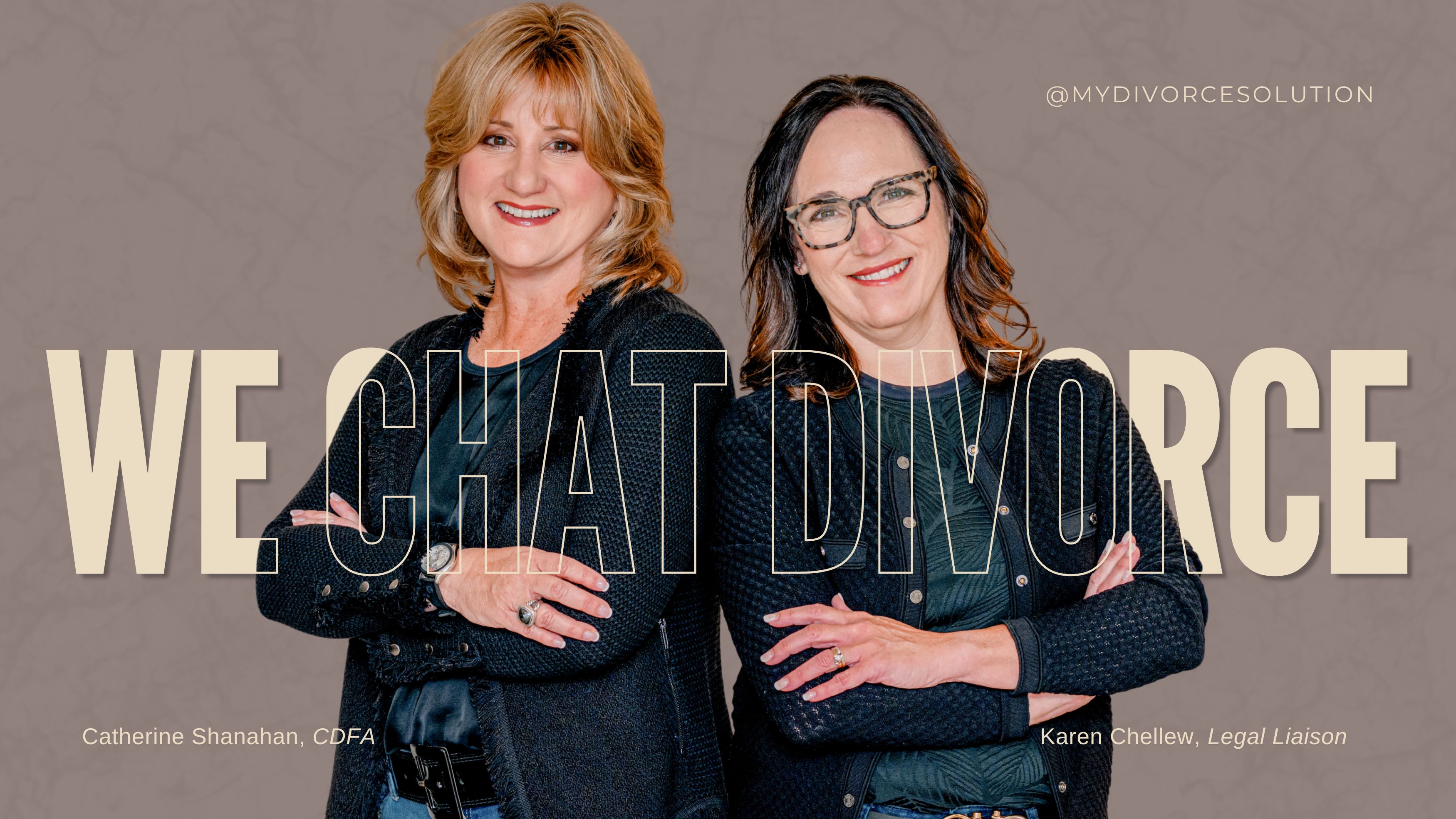

Divorce is not just emotional. It’s economic.
In this powerful episode of the We Chat Divorce, Karen and Catherine sit down with Emily Pollock, partner at Donohoe Talbert LLP and one of Forbes Advisor’s Top 10 Divorce Attorneys in New York City.
With over 15 years of experience in high-net-worth matrimonial law, Emily brings a rare combination of legal precision and psychological awareness to the conversation.
Together, they unpack:
- Why divorce creates a financial gap — especially for women
- The truth about modern maintenance (alimony) laws
- Why “lifetime support” is largely a thing of the past
- What happens when wealth looks bigger than it actually is
- The danger of entering mediation or litigation unprepared
- Why your attorney’s job is to put you in your best position legally — and why that requires financial clarity first
This conversation is honest, strategic, and deeply grounding.
Key Themes & Takeaways
1. Divorce Financial Impact Isn’t About Gender — It’s About Information
The financial gap in divorce often affects the spouse who was not fully involved in the family’s financial management.
Sometimes that’s a stay-at-home parent.
Sometimes it’s the higher earner who never tracked household spending.
What creates vulnerability isn’t income alone — it’s lack of clarity.
And in high-net-worth cases, the illusion of wealth can be even more dangerous than the absence of it.
A Hamptons house may be fully leveraged.
A Manhattan apartment may carry a HELOC.
Cash flow may not reflect actual net worth.
Without verified data, assumptions become expensive.
2. Maintenance (Alimony) Has Changed — And Many Don’t Realize It
Emily breaks down how maintenance laws have shifted significantly over the years.
In many states, including New York:
- Duration is now tied to formulas based on the length of the marriage
- Lifetime maintenance is rare
- There are statutory income caps (though courts may exceed them in high-income cases)
- Courts increasingly focus on transition — not indefinite support
For spouses coming out of 20- or 30-year marriages, this can be a painful reality.
The law does not always account for:
- Career sacrifices
- Lost earning trajectory
- The compounding financial impact of years outside the workforce
Which is exactly why preparation before filing matters.
3. Mediation Is Powerful — But Only When It’s Appropriate
Emily is a strong proponent of mediation — when it’s the right fit.
But mediation can fail when:
- There’s a power imbalance
- One spouse controls financial information
- Transparency is lacking
- Emotional reactivity overrides strategy
One of the biggest risks?
Agreeing to pieces of a deal without understanding the full financial picture — and then feeling betrayed when the process unravels.
Mediation works best when both parties understand:
- What exists
- What it costs to run their lives
- What two households will realistically require
Clarity protects you — even in “amicable” divorces.
4. Cash, Hidden Assets & Credibility in Court
The episode dives into real-world complexities:
- Cash-heavy households
- Income that doesn’t match lifestyle
- Transfers to family members
- Businesses with unclear cash flow
- Accusations of hidden assets
Emily explains that sometimes the goal isn’t to “recapture” hidden cash — it’s to establish credibility issues.
In New York, if a court determines someone is not being forthcoming about income, support can be based on needs rather than reported income.
But that strategy only works when:
- Expenses are clearly documented
- Lifestyle is accurately captured
- Financial inconsistencies are demonstrated with data
Pictures of cash don’t win cases.
Patterns do.
5. Attorneys Can Only Protect What They Understand
One of the most important statements in this episode:
An attorney’s job is to put you in the best position legally.
But they cannot do that if:
- They don’t know what exists
- You don’t understand your own needs
- You’re operating from emotion instead of data
When clients come in financially prepared:
- Legal strategy becomes sharper
- Fees decrease
- Decisions move faster
- Outcomes improve
When clients are reactive and unprepared:
- Litigation escalates
- Costs rise
- Emotional decision-making drives negotiation
Preparation is leverage.
6. The Emotional Reality — And the Long-Term Opportunity
Divorce can feel devastating — especially after long marriages where financial dependency developed over time.
But Emily shares something hopeful:
Many women who leave financially difficult marriages go on to:
- Re-enter the workforce
- Start businesses
- Pivot careers
- Build independent wealth
- Develop financial confidence they never had before
Divorce can shrink your income.
It does not have to shrink your future.
Who This Episode Is For
This conversation is essential listening if you are:
- In a long-term marriage and unsure what divorce would look like financially
- The non-moneyed spouse and feeling behind
- The primary earner and worried about support exposure
- Entering mediation and unsure if it’s appropriate
- Facing high-net-worth complexity
- Concerned about hidden income or assets
- Feeling emotionally overwhelmed and financially uncertain
About Our Guest
Emily Pollock is a partner at Donohoe Talbert LLP in New York City. She focuses on high-net-worth divorce, complex asset division, prenuptial and postnuptial agreements, and cases involving businesses, trusts, and international financial structures.
She was recently named one of Forbes Advisor’s Top 10 Divorce Attorneys in NYC.
She is licensed in New York.
Website: https://donohoetalbert.com/attorneys/emily-s-pollock/
At My Divorce Solution, we believe divorce is financial first.
Before you hire an attorney.
Before you agree to mediation.
Before you react emotionally.
You need verified clarity.
The MDS Financial Portrait™ gives you:
- A full inventory of assets and debts
- Lifestyle analysis
- Support calculations
- Settlement scenarios
- Organized financial disclosures
- A structured plan for negotiation
When you walk into an attorney’s office prepared, everything changes.
Start with clarity.
👉 Take the Free Divorce Financial Assessment at azure-emu-499854.hostingersite.com/
👉 Join the MDS Community for expert guidance and live Q&As
Final Reminder
You do not need to decide everything today.
You are allowed to gather information.
You are allowed to prepare before reacting.
Protect your peace. Let knowledge be your power.
About My Divorce Solution
We Chat Divorce is produced by My Divorce Solution (MDS) — a financial divorce preparation company dedicated to helping individuals navigate divorce with clarity, confidence, and a strategic financial plan. Founded by Karen Chellew, Legal Liaison, and Catherine Shanahan, Certified Divorce Financial Analyst (CDFA), MDS was created to solve one of the most common and costly mistakes in divorce: entering the legal process without fully understanding your financial picture.
Divorce is not just a legal event — it is a financial transition that can shape your long-term security. Through the MDS Divorce Financial Portrait™, clients receive expert financial analysis, organized financial disclosures, and scenario planning to understand how different settlement decisions impact their future. This financial preparation often reduces legal fees, shortens the divorce process, and helps individuals negotiate from a position of knowledge rather than fear.
If you are considering divorce or already in the process, you can begin by taking the Free Divorce Financial Assessment to better understand your options. You can also join the MDS Community for expert guidance, educational resources, and live Q&A events designed to help you move from uncertainty to clarity.
At My Divorce Solution, the mission is simple: replace fear with knowledge so you can make informed, confident financial decisions during divorce.
Episode Transcript
0:01
Welcome to WeChat Divorce, hosted by Karen Chellew, Legal Liaison and Catherine Shanahan, CDFA.
Each episode we sit down with divorce professionals and industry experts to provide insights and frank discussions about real people, real situations, and real divorce to help you achieve your best life post divorce.
0:24
This episode of WeChat Divorce is brought to you by My Divorce Solution, offering divorce financial planning so clients can secure the divorce settlement they deserve.
Visit azure-emu-499854.hostingersite.com/ to request access.
Welcome back to We Chat Divorce, brought to you by My Divorce Solution.
0:44
I’m Karen Chellew, your legal liaison here to help you move through the divorce process with clarity and confidence.
And I’m Catherine Shanahan, Certified Divorce Financial Analyst and your partner in building long term financial security through every phase of divorce.
As you know, at MD’s, we believe that knowledge is your best protection and financial clarity is your power.
1:04
So today we had a great conversation with Emily, a top New York divorce attorney partner at Donahoe Talbert.
She shared some great legal insights, more than financial insights of course, that every person should really hear before, during and after divorce.
1:23
One of them is cash.
So if you are sitting on the cash or your spouse has cash, you’re going to want to listen to this episode because I think that was one of my best takeaways with what to do with that cash and how to protect yourself, you know, And the other thing is, you know, the gap.
You know, I always want to know the logistically, like, why is alimony and spousal support being reduced in every state?
1:46
I agree that it’s just not fair.
If you gave up your career for so many years and your spouse’s income rose during all those years, you can’t jump back into the world and make what you were going to make if you stayed in your industry.
So I get the frustration from everyone going through this right now.
2:05
Yeah, and I think it’s a very important conversation to listen to because a lot of people will just hire an attorney and believe they’re going to fix everything.
But if you’re not very well financially positioned before you start to move forward, you can be back on your heels in a blink of an eye.
2:24
And you know, we we have some really good conversation in this podcast about sometimes people compare their friends, colleagues, other divorce experience to what they can expect.
Yeah, I agree.
With something different.
So if you’re comparing your divorce to one of your friends, or you’re sitting on cash and you don’t know what to do with it, or you really want to know the best role of an attorney, stay tuned.
2:49
Here we go.
Emily, welcome to WeChat Divorce.
Thanks so much, I’m happy to be here.
We’re really looking forward to this conversation and grateful to have your expertise at the table.
But first, let me just take a few moments to introduce you to our listeners.
3:09
Emily is a partner at Donahoe Talbert LLP and was recently named one of Forbes Advisors Top Ten Divorce Attorneys in New York City.
With over 15 years of experience and matrimonial and family law, Emily focuses on high net worth divorces, prenuptial and postnuptial agreements, and cases involving complex assets, businesses, trust, and international financial structures.
3:34
Emily’s also known for her thoughtful strategic approach, balancing legal advocacy with an understanding of a long term financial impact divorce can have.
So again, welcome, so glad that you’re here.
And to begin our discussion today, Emily, can you tell us a little bit about how you came to focus on this work and what continues to motivate you on a day-to-day basis?
3:59
Sure.
I sort of fell into it through a series of life choices, as I think occurs for all of us in the path that we end up on.
I did.
I was a psychology undergraduate and I studied psychology and I also did a lot of theatre in college and I was in Chicago when I graduated.
4:18
I actually spent a couple of years as a working actress in Chicago before deciding that that was not going to do it for me long term.
So I went to law school and I kind of went to law school largely because I really liked law and order.
I didn’t have any lawyers in my family.
4:36
I don’t have any attorneys in my, you know, close circle.
So it was a, a bit of a unknown that I was jumping into.
And I was initially really drawn to criminal law.
And I did my first summer in law school working on criminal law.
4:53
And then I really wanted to be in New York, so I got a, a position with a, a large international, you know, big law firm in the city.
And I did corporate litigation for a few years there after clerking for a judge in Minnesota.
5:09
And I just sort of did that thing that you do when you’ve been in a job for a little while where you look at the people who are ahead of you 2 years, four years, 10 years.
And you say to yourself, do I want that life?
Do I want that life?
Do I want that life?
And none of them looked appealing to me.
So I knew I had to pivot to do something else.
5:26
I thought about going back to school to pursue a graduate degree in psychology.
And then I thought maybe matrimonial be a good way to merge those ideas, right?
Because a lot of the counseling that we do in the matrimonial practice does have a non legal component to it that it does have some basis in psychology.
5:46
I think regularly about how grateful I am that I did not in fact go into a direct counseling position because as a lawyer we have the advantage of being able to say, you know, well, that’s not a legal issue, so let’s not discuss that anymore and to problem solve.
6:04
So I think, you know, one of the real difficulties that I would have had if I was not in, you know, an advocate position is you don’t really get to tell people what to do.
And in this job I do.
So I see when people are talking, I see what the obvious sort of resolution is that would put them in the best position legally, which is the, you know, expertise that I can offer.
6:25
And then, you know, I can give advice.
So that was my genesis for moving into this direction.
And since I’ve been in this position, it’s just been a really good fit.
It’s a, it’s a good practice.
It is, you know, the old adage that in criminal law you see bad people at their best and in matrimonial law you see good people at their worst.
6:46
And that’s true.
People are in a really tough spot when you’re going through a divorce and it’s nice to be someone who feels can make them feel confident and can help them develop autonomy and financial independence.
So today we’re going to be talking about the financial gap for women and or men that divorce can create.
7:09
So let’s just start out with why does divorce have such a significant financial impact for some people?
Well, I think it’s really, you know, when we talk about whether it’s women or men, it’s really the party who was not within the way that the division of Labor was structured in the marriage.
7:28
It’s the party who is not in the know about the finances.
And sometimes there isn’t one of those parties.
Great.
It makes all of our jobs a lot easier.
But often times there is a structure within a marital relationship where one person sort of understands and is in charge of all the day-to-day financial upkeep for the family.
7:49
And one person maybe has less information about that.
And the degree of less information varies, right?
I have some clients who have some vague understanding and then some clients who come in and they think that the sort of indicia of wealth in their family life is indicative of what their actual financial picture is.
8:10
And then they realize that the house in the Hamptons is totally leveraged, that there’s a HELOC on the apartment in Manhattan, that there isn’t really anything there to divide.
So they will be limited post divorce to an income stream.
And that income stream brings up the question of maintenance, which is no longer the full coverage security blanket that I think it may have been in prior years, You know that nobody does lifetime maintenance anymore.
8:40
I think there’s two states that do lifetime maintenance.
And in a lot of states, there’s been a real decrease in the presumptive duration of maintenance, meaning a decrease in the amount of time that the courts presume, all other things being equal, would be an appropriate amount of time to have to pay the maintenance.
8:58
So if you are the money spouse and you know you’re a woman, I think the issue that you tend to have that becomes problematic is that the maintenance obligation is premised on this concept that one spouse is making a lot of money.
9:18
Traditionally the man and one spouse was doing all the work that makes their lives go right.
All of that.
We call it sort of the mental load, the household maintenance.
They make sure there are groceries in the fridge and the house is clean and the kids get through their practice on time.
And all the birthday presents are bought for the parties that are scheduled for the weekend.
9:36
And the dog gets groomed and everybody’s homework gets done and everybody gets to violin lessons on time or basketball practice or whatever.
The sort of overall picture is.
Things that oftentimes the money’s passed, doesn’t even really understand are happening behind the scenes.
9:55
The reason that that makes sense in the traditional structure where you have somebody who’s making a lot of money and somebody who’s not is that post divorce, that person who was doing all of that for the family, That contribution needs to be helped to transition into a world where they can be financially independent because they haven’t been financially independent during the marriage.
10:15
When you have the primary income earner as the woman, typically she is still also the one who’s doing most of that other stuff.
So that’s not always true.
But you know, there are studies that have been done that show when women get married, even before there are kids, they add 7 hours of work to their household tasks each.
10:36
You know, for each week they do seven more hours.
And men, when they get married, they do 1 fewer hour.
So even before we factor in all the kids and the other things that we think about that are traditionally sort of the women’s domain, that’s just a reality that, you know, women are the ones typically still and that gap is narrowing, but it is still there where they’re doing most of that work behind the scenes.
11:00
But then if they’re also the income earner, they’re paying their male spouse as though he was the one doing it.
So that can be one of the situations that I think women don’t necessarily foresee.
Before you go on, can we back up a little bit to the and I know because we’re in every state, so we have seen the alimony laws, spousal support, maintenance changing in every state, but I don’t understand the drive behind that.
11:25
And I get it from the payer, like they don’t want to pay forever, but the payee, the person receiving that, especially these 30 year marriages, 20 year marriages where you know, you have particularly most likely the woman who gave up her career and now she got used to, she stays with her spouse who’s now making 500,000 or more a year.
11:47
And they’re capping this out.
But where, where is the logistics behind that?
Because this woman cannot jump into an income that’s going to catch her up to him, which is why we have this gap.
Right, right.
But what?
12:02
What was the driving force?
Do you even know legally why this has been changed?
Well, I mean, as you know, there’s two components to maintenance, right?
How much am I getting and how long, right?
And so for the how much am I getting piece, I think part of the analysis is there’s a weighing of factors here, right?
12:20
The goal would be that the longer you’ve been married, the more assets have accrued.
So one would hope that in addition to whatever you’re going to be getting in maintenance, you’re getting some part of that pop.
As we all know, that isn’t always true and it can be a lot easier if you’re a spouse.
12:36
And if you’ve been spending what you’re earning during the marriage and there is not an accrual of marital assets, you are not in as dangerous a position because you continue to go on and earn.
Whereas if you’ve been out of the workforce for a long time, you know, as you said, you can’t just step back in at the level you were performing at 15 years ago or you know, even more presumptively at a level that would be where you were 15 years ago.
13:01
Plus what would have happened if you’d stayed in the workforce for 15 years.
So there that is sort of inequity that does exist and I think is not necessarily recognized in the law from the durational perspective in New York.
It’s really interesting there used, there used to be nothing in a statute that specifically said how long you would you would be paid out maintenance.
13:20
It was just discretion to court and practitioners used to think that there was a sort of back of the envelope presumption that it was about 50% of the length of the marriage.
They then created the statue that said, while you can deviate from these guideline maintenance durations, the presumptions are going to be that if you’re married for between 0 and 15 years and 15 is a long, you know, in New York, that could be a long marriage, right?
13:48
If you’re married for between 0 and 15 years, you duration of the of the maintenance would be between 15 and 30% of the length of the marriage.
So it’s a pretty big decrease from what we were all sort of predicting.
If you’re between 15 and 20 years, the presumptive duration goes up to between 30 to 40% the length of the marriage.
14:07
And if it’s a 20 plus year, then it’s between 35 and 50% of the length of the marriage.
So you do eventually get there, but you got to stay in that marriage for a long time to get to that presumptive amount.
And the reason that was offered for that is that a lot of domestic violence advocates were saying that spouses who were victims of domestic violence were hesitant to make requests for maintenance for a particular duration because of the abusive nature of that relationship.
14:38
And that by putting it in the statute, it sort of took the pressure off the abused spouse to have to be the one to propose what it is that they think is appropriate.
An unfortunate side effect of that is that we’re now dealing with durations that are shorter than they sort of were in practice before we had the statute.
14:59
And and the and a decrease in the amount to pay.
And the decrease in the amount to pay.
And yeah, in New York, there hasn’t really been, I would say, a significant downturn in how we treat the amount.
I mean, it’s always, you know, based on the.
They Max out the income.
15:16
Well, in New York, there’s a statutory cap, but the way that the practice happens is that that the presumptive amount of maintenance is with the cap applied with the understanding that the court has discretion to award maintenance in excess of the cap if there is significant income above that.
15:32
And you know, the cap right now for maintenance, I think it’s 228.
But the reality is the case is we’re seeing, you know, when we have people that are making 3415 times that, the court’s not sticking to a 228 cap, Yeah.
We do have a lot of council attorneys who are very reticent to argue that for our clients and they keep wanting to stick with the cap for a variety of reasons.
16:00
Maybe our client doesn’t have enough money to litigate the issue.
You know, they punt it down the road and then things become more challenging.
But that is our experience, especially in New York with that cap that it, it can become, well, while you’re saying, you know, we all talk about it, the actual implementation of it or availability to our clients has been very challenging.
16:29
Interesting even when you have significant income in excess of the cap.
Yeah, just getting to court and getting heard, you know, just getting through all of the, I don’t know, the cancellations and the continuations.
16:45
Yeah, it it becomes very difficult.
Common response is oh a judge isn’t going to award you anything better.
That’s really interesting to me.
Are they in the city or are you it’s?
Usually in the city, yeah.
Interesting.
Yeah, I mean in my experience when we’re when we have higher net worth and higher income cases, nobody’s looking to apply the cap.
17:07
Now some of the caveats to that, you know, as you well know, maintenance can be limited if there are significant assets that are distributed, right, Because we’ll impute income to both spouses for the income that they’re going to be getting from whatever share of the assets they’ll be receiving.
17:26
So if it’s a significantly, you know, if there are a lot of assets at play potentially that could be an issue.
The court may also look at what the Child Support arrangement is if there are particularly extensive child support add on costs, private school tuition, maybe there are extenuating circumstances relating to higher medical needs.
17:49
Sometimes those kinds of expenses will help the pay your spouse be able to articulate why this may be my reported income.
But the reality of the cash flow is significantly different.
So a lower maintenance is appropriate.
But I am, I am surprised to hear that that’s what you’ve experienced in New York.
18:06
Yeah, pretty consistently, yeah, for a whole variety of different reasons.
But yeah, it’s, it’s tough.
It’s been tough.
So you know, a lot of people if they’re already in the court system before going through our process of getting financially prepared, they’re way back on their heels before they ever get started because they presumed that they would have cash flow that really isn’t available to them.
18:34
Because like I said, for a variety of reasons, I, I actually see this isn’t specific to New York, but I think especially in the higher net worth cases, if we have the non moneyed spouse they come to the table with, they believe that it’s mostly going to be amicable and then it’s not going well.
18:54
And then they get mad and then they want to litigate.
So they change off of mediation and go to litigation and then that’s very expensive and then they want to just be done.
And so that that roller coaster of an experience really adds insult to injury because it really never allows them to get clear and focused on what’s available to them.
19:17
And so I think when you play a scenario like that, through the experience, you can see why it’s really hard for an attorney to get them in front of a judge.
It’s true.
I think it’s also that really speaks to why it’s so important when you’re starting this process to take some time before you start the process to know what you’re getting involved in.
19:38
I mean, I do a number.
I’m a huge fan of mediation.
I absolutely believe that when it is appropriate, it is the cheapest, it’s the most efficient, it is the least damaging to the family.
Way to get divorced.
That said, it only works when it works, and when it doesn’t work if it’s not a good thing for the couple to be in, either because there’s a power disparity or there’s a disparity in terms of transparency and access to information, or somebody’s being obstructive or manipulative, any of those things.
20:14
What can happen is you go to mediation for a few sessions, you’re agreeing to different aspects of an overall picture, and people become entrenched in what they hear that they like.
And they forget that what they heard that they liked was also part of other stuff that they didn’t like.
20:30
And then mediation falls apart and they’re saying to their lawyer, well, she already agreed to do XY and Z, right?
Forgetting that they’ve cherry picked only the things that they like.
And then it becomes even more difficult to settle the case because people feel in addition to this resolution is unfair.
20:47
I have the additional betrayal that you agreed to this and now you’re backing out of it, right?
Even though that perception is not accurate.
So I think it’s important.
And I frequently have consultations where people will come in and we’ll kind of talk through what their situation is, what the relationship is like, what conversations they’ve already had about divorce, whether they’re aligned, how far apart they might be, whether there is abuse.
21:10
That would really make it not a good idea.
And I say, you know, some version of that, that I think mediation is great and I recommend it full heartedly.
But you have to really be aware of this risk.
And also you have to have an attorney advising you during the process.
So you know that when you’re hearing things in mediation, you can process them with the understanding of how they would compare to what might happen if you did go to court.
21:33
So you don’t learn later that you were agreeing to things that you never would have agreed to if you knew a judge wouldn’t make you do that.
Yeah.
And I think that holds true with even before you hire your attorney.
You know, you said that earlier, your your job and your role is to give the client the best position legally.
21:50
And we, we preach this all day long.
How does your attorney know that they what your position can be legally if they don’t know what you have, Right, Right.
And how do you articulate to your attorney what are some of your scenarios that you’re looking for and what’s your need if you don’t go through and do the financial work?
22:06
So we don’t give legal advice, obviously, and we don’t want to give legal advice, but what we do, we make sure that our clients are prepared.
So they didn’t they know, you know, is Emily the right attorney for me?
And then we’ll go to Emily and ask these questions and see how she legally can protect me or what her strategy would be if I hand her my portrait.
22:27
She’s able to do that.
And then you’ll right away going to develop that trust with your attorney if you’re financially prepared and you can ask the attorney appropriate questions where you don’t get that it depends.
Answer all the time, right, right.
You have to give that answer when you don’t know anything, when you don’t see anything, right, right.
22:44
I’m a huge proponent of mediation and hiring the right attorney for what your needs are.
If you are financially prepared, just makes a big difference on how you go through the process.
And then for you as the attorney, I mean, yeah, then you get to show up legally and say here’s where my best knowledge, This is why you’re paying me my fee because now legally I’m going to protect what I can protect for you, right?
23:09
Right.
And I just believe people should come and get prepared before they go hire anyone or do anything, unless it’s those extreme cases where you have to file for Protection Orders or anything else, but you know, before you even file, like get yourself organized and prepared.
23:26
Yeah, I have a client who just retained me last week who I first met a year ago.
And when we were meeting, the purpose of the meeting was this is sort of on the horizon, what should I do, right.
And so we had the conversation that she has situation where she has a husband who does he’s very cash heavy.
23:46
So the tax return might not really accurately reflect what we’re dealing with.
So we had a long conversation about what she needs to do to be in a situation, the situation that she wants to be when she starts this process.
You know, check the mail, make sure you know what institutions he has accounts in.
24:04
Make sure that to the extent that you’re able, you have access to those accounts that you’re aware of kind of how much money there really is.
If there is a lot of cash in the house, start taking pictures of the cash.
So, you know, at any given time how much cash there is, Keep very good track of your expenses because that’s where the disconnect is going to come.
24:22
You know, if your tax return that says you make $400.00 a year, but you got two kids in private school and you’re driving Audi, nobody’s going to believe that story, right?
So we want to make sure that we have the accurate picture of what the cash is going to pay for.
And she came back and she said, you know, I’ve got the Venmo statements and I’ve got the pictures of the cash, and I know where all the institutions are.
24:43
And she’s ready now.
Yeah.
Yeah.
Well, she hasn’t come through our process yet and then she would be really.
But let me go back to the cash.
You know, we have a lot of people with cash and yes, I’ve seen pictures of cash, but you know, cash is cash.
25:00
So even if you go to court with pictures of cash, what is the likelihood of you recapturing that?
If, you know, spouse says, oh, well, we spent, I spend it, I don’t have it anymore.
Like what?
Like what?
How do you see that play out?
25:15
Right.
Yeah, I, I agree with you that cash is is tough to recapture looking backwards, right.
So we don’t take pictures of cash for the purpose of saying one day I’ll get a piece of that.
It’s more that a big part of these cases because in a case that’s so cash heavy, it really can be hard to ascertain actual assets that you can get your client any portion of.
25:40
So really it’s a very support heavy focus for a case like that.
And the reason that having the pictures of the cash and a clear understanding what the expenses are become so important is because the the spouse that really doesn’t have the credibility.
So if the court decides that somebody is just not being forthcoming or accurate in terms of how they describe their income, then the court in New York has the ability to base support obligations not on the income, but on the needs, right?
26:08
And that’s what we can say.
You know, we can’t believe anything this guy says.
So let’s not talk anymore about what his tax return says or how much to impute from this bogus side business that he says is the only way he makes any money.
Let’s look at what they actually spent, what their needs are and that’s what we should base support on that going forward basis.
26:26
Yeah.
So if you’re listening and I know there are a lot of you out there and you like to send us your pictures of your cash, it’s not.
It’s nice to know that, you know, there’s a purpose and the purpose is not necessarily you’re getting half of that.
You know, hopefully in the best day you are getting half of it.
But don’t do what that mindset.
26:42
Do it in the mindset that this is part of your portrait, that your attorney will see that there’s a reason why they would use that for legal strategy.
And that’s why it’s important to capture as much information as we can.
I think also big pictures of cash are they’re helpful just to give color to your case to a judge, right?
27:01
No one who’s doing all the right things has huge stacks of cash in their house.
That’s true.
And so in some of these cases as well, some of these variables do create the position that there could be an equal or unequal division of the marital estate just based on credibility issues or cash flow issues.
27:27
Is that something that you deal with often as well?
Yeah, more often than I’d like.
I mean, obviously the the best case scenario for all of us is everybody produces what they’re supposed to produce.
We all get to see the real picture and then we can give real advice to people who are all trying to do the right thing.
27:45
That’s fantastic.
And I would say that’s the majority of my cases is that people really are.
The dispute is not about somebody’s hiding stuff.
It’s really just about, you know, different priorities.
Often times somebody thinks that we should be focusing on saving.
28:02
Somebody else wants to talk about spending some of the same things that could lead to getting divorced in the 1st place.
But we certainly do have cases where there’s stuff that’s being hidden and it can be hidden in as stupid and easily traceable ways as I transferred it to my brother or much more complex stuff that, you know, we have to be able to say to our clients, look, I’m going to pull all the strings that I see.
28:28
And, you know, maybe that will lead to the pot of gold.
But when I’m done pulling strings, I’m out of options, right?
When I’ve served all my subpoenas and none of the account statements are showing outflows that I can track.
And I don’t have any other, you know, colorable basis to serve subpoenas on any other institutions or any other individuals or businesses kind of hit a dead end.
28:54
So that could be a tough message to share because often times people know, you know, they know and sometimes they’re right and sometimes they’re wrong.
But they know that there’s money there and they really feel like they’re walking away from something.
It’s a hard concept because even.
29:10
When you do, you know, we do the expenses right for the state affidavits and all that.
But anyway, you know, you, you think about when you even look at that, you say, Oh my God, I didn’t realize I spent that much money.
So when you take that into the equitable distribution side and you show a family that they’re spending over their need.
29:30
Now, when you have this thought that, oh, he hid all the money, he took the money, you have a real moral reality check that.
No, you guys have always been living over your means and that’s why there’s no money here.
So why are you trying to chase money that’s not there, right?
Right.
And you will when you have somebody who’s not been responsible for paying expenses and they say, oh, he just got a big distribution for $40,000, where did that money go?
29:52
Taxes.
That’s where that money went.
Our complex cases.
We have a lot of wealthy people that have a lot of companies, right?
And so the spouses love to participate with us because they want their spouse to understand the cash flow of the businesses.
Like it’s not, yes, we are living this nice, comfortable life, but there’s so much debt you’re not considering.
30:12
There’s so much of this.
You’re not because you you’ve never been in that because your role was to manage the house or take care of the kids.
And which is all fine, but it is a reality check when you go through divorce about even companies, you know, we see people hiring forensics to do what?
There’s not going to find any.
30:28
You’re spending 50 grand to to do what?
So realize what the scope is, but get an overall picture 1st and then decide with the what if you’re listening, you’re hearing me say this 1000 times.
Get your financial clarity, get everything together.
Of course, get your MD’s portrait and then go to Emily and say, what is the strategy here?
30:48
What can I realistically look for?
What should I get?
And who would be other professionals I would need to add to this because we have it all together.
So we can then help you direct them well, I.
Think that’s it’s, it’s important and I think it’s also, you know, it speaks to when we were talking before about we were this, this conversation is going to be focused on the impact on women.
31:08
And is that because that’s the majority of my practice and it’s, you know, it’s not I, I sort of equally represent both men and women.
And I think it’s important for both to do that because when I represent the moneyed spouse, I have the experience of having the non moneyed spouse and understanding how terrifying it is to not have any knowledge or understanding or clarity or transparency about how much your life costs, where the money comes from, who’s paying for it and how that will work when you’re finished, right?
31:39
So I’m able to help provide that information to the moneyed spouse when they’re my client to sort of say, look, this is what’s happening on the other side.
And also, you know, I know you, you have this feeling like I she went to Columbia Business School and she hasn’t worked all marriage.
And so why am I paying her out?
OK, well, first of all, she went to Columbia Business School 15 years ago.
31:59
And second of all, once you start Co parenting on your own, you know, I had a client who pushed for 5050 time.
He was a king of the world, insisted he needed to have 5050 time, which is great.
And then as soon as they started that schedule, I would get calls from him where he’d be like, I need, I need a wife.
32:16
Like I don’t understand.
I’m getting this call about the prescription I didn’t pick up and so and so’s basketball uniform is dirty.
And so you don’t always recognize the value that is is going away.
And then when I’m representing the non moneyed spouse, I’m able to sort of say, well, this life costs money.
32:36
So his income is huge and that’s great, but this is how you guys have been using it.
So moving forward, there’s either going to not be that much money or we’re going to have to make some changes in terms of how that money is allocated.
Yeah.
You know, it’s, it’s fair.
32:53
Each party has their own fears and concerns.
And so, you know, you can’t take that away from anyone.
But the more realistic and the more forthcoming everyone would be, this process would would just just change it would change it.
Wood Forest attorneys, quite frankly, to change the way they handle their processes with them or it would change the individuals coming in and directing their attorneys in 15 different directions because they can’t make up their mind.
33:19
And it and it gives the opportunity for both parties to kind of put their fears out there and share the data and move through the process knowing instead of gosh, all the emotions.
I mean, we see attorney fees, honestly hundreds of thousands of dollars, and most of it is just pushing paper back and forth and the IT not being able to tell their attorney what they really want and need because they don’t know.
33:43
They don’t, They just don’t know.
Yeah, it’s.
Also, I mean, there is the emotional piece.
It’s a reality and it does have a financial impact.
So I, you know, we talk a lot about the importance of having the right team around you when you’re going through divorce and I and using that team in the right way, right?
34:04
So having those outlets for the emotional aspect of divorce, your friends, your family, you want to be using them for that emotional processing.
You don’t want to be using them to have your friend Kathy tell you why she was able to get X thousands of dollars a month in maintenance and summer house and why am I not getting that right?
34:24
We don’t know anything about what’s happening with Kathy’s finances, with the income, with their asset picture.
So that is not a helpful comparison, but it is helpful to use them to help process the emotional piece because at the end of the day, from the court’s perspective, this is transactional, right?
34:41
It’s once we deal with custody, which is a different beast in a different podcast, it’s a it’s a transaction.
So we have to, you know, I have to be able to advise you that that’s the reality.
And I have to get you to put on your transaction glasses when you’re looking at this picture.
34:58
You know, let’s not talk about keeping the house for 20 years if that’s the only asset, because it just doesn’t make any sense for you.
And we like to change those.
Emotions into data-driven decisions, not emotionally based decisions like our Cfas.
We don’t invest our clients money.
35:14
We have no stake.
We don’t meddle in all of that.
It’s not and we don’t tell our clients what they’re going to get.
That’s not our job.
Our job is to just go through your expenses, collect your documents, assess those documents and put out a couple of scenarios or a property statement that now you need your legal strategy or you could take that to mediation and then let the professional.
35:35
So we stay in our zone of that because because they’re you, because we need where I will support an attorney is when the attorney has a prepared client and the attorney is not doing their financial analysis that we found some new mistakes on along the that the attorney is taking that data and now they’re doing what you said.
35:56
I mean, I wrote it down.
You are to get your clients the best position legally, that is what an attorney is supposed to do.
And so when you’re given that information, which we’d love to hand to you, and you get to do that, I mean, you could take on more cases.
36:12
You won’t get so frustrated by the back and forth of paperwork.
Like that’s not what you’re trained to do.
You didn’t go to law school to do that.
And so for us, the client needs to be prepared so that you have that great relationship.
And then attorneys, when it gets such a bad rap, you know, because it’s a different process, right?
36:29
I mean, it’s not fair to you if you get in a client that comes in, that’s all emotional is not prepared is asking you to do something that shouldn’t.
But you have to do what your clients want to do at some point too.
So it’s hard for you too.
So I’m putting the onus on the person going through it.
36:45
Get yourself prepared and then pick your attorney to I love it.
Best position you legally.
I, I mean, I wrote it down because I’m going to keep saying that and then hopefully this gap will shorten.
Because it is hard.
I mean, it’s hard.
To move on past divorce, especially those 30 year marriages when you’re just not going to have that income and you’re walking away from your spouse you supported all these years who now has this high income.
37:09
That’s a hard pill to swallow.
It is hard, but you know a lot of.
Times when you’re in a situation where it’s really dire, it’s because the person who made the money has, you know, either a God complex or sort of no financial real savvy and they haven’t accrued any real assets, right?
37:25
So yes, that feels very unfair because there’s nothing there when you’re getting divorced.
But the reality is, if that’s their approach, that’s going to continue to be their approach.
So they’re headed for a future of spending other assets and one day no longer making a lot of money and having nothing to show for so many women I see who are able to say that this is a change.
37:47
I’m going to make the best of this.
I’m going to figure out how to take control of this financial picture for myself.
They understand what they’re going to get and then they make a plan based on that.
And then that picture grows for them, right?
So they start to develop the confidence and the success of seeing how to build wealth.
38:07
They oftentimes, you know, I’m also a big proponent for women, even women who want to prioritize parenting and being with the children to sort of keep your foot in something professionally.
Whether it’s just staying in community organizations that are consistent with what your prior career was, keeping up to date on any accreditations that are necessary, maybe working part time, volunteering something to sort of stay in it so that if and when you want to plug back in, it’s not quite as big of a heavy lift.
38:39
And so many women I’ve had who sort of take that to heart during the divorce process, and they either have a career pivot or they try something totally new.
They go back to school and it really is the beginning of a much better and more secure next step for them.
38:56
You know it’s so.
True.
I mean, I never knew I’d be an entrepreneur and start my divorce solution after my divorce.
I mean, whoever knew that?
I just never thought I’d be an entrepreneur.
So you never know what can happen.
But before we wrap up, let’s talk about a couple of these key takeaways.
39:11
And again, I’m going to circle it back to the your attorney’s role is to give you your best position legally.
I mean, how great is that?
We got it, Catherine.
Yes, I just.
I just, I know, I just, I just love that.
And so I think that if you’re listening, you have to that’s your expectation from your attorney.
39:31
So and it’s a good expectation.
And I, I think the attorneys, Emily omit like that.
That’s a good, that’s a good take away for our client to expect that absolutely and be.
Financially.
Prepared and know that you know even if there is a gap for you and it is harder to get started, if you make really good decisions and you walk away with agreement you can live with, you can make the rest of your life the best of your life for.
39:57
Sure, Emily.
Thank you so much for being here today and for the work you do.
Your perspective is so important.
Can you share with our listeners how they can connect with you and learn more about your firm?
Sure.
We have a website, it’s Donna Hotelbert LLP, easy to find andmyemailthroughthefirmisjustepollockspelledlikethepainterpolock@donnahotelbert.com Are you only?
40:26
Licensed in New York or do you handle other states as well?
I am only in New York.
Yes, OK.
And to our listeners, if you’re thinking.
About Divorce Or if you’re already in the process and feel unsure about your financial future, you don’t have to do this alone.
Visit us at My Divorce solution.com to learn how the financial portrait helps you get organized, gain clarity and protect your assets before, during and after divorce.
40:49
And be sure.
To to.
Join the NDS community, where you’ll find trusted resources, expert guidance, and a supportive network of people who understand what you’re going through, whether you’re just starting out or already rebuilding.
You’re welcome here.
We’ll put a link in the show notes.
41:06
Until next time, take a breath, protect your peace, and let knowledge be your power.
Thank you again, Emily.
Thank you so much.
Thanks for joining us on.
Another episode of WeChat Divorce.
We hope this episode was informative and supportive on your divorce journey.
41:24
If you're looking for more support for navigating divorce with confidence and clarity, head over to azure-emu-499854.hostingersite.com/ for more podcast episodes, divorce events, and resources for your divorce.
We’ll see you back here for our next episode.