


Amicable Divorce, Uncontested Divorce & California’s 2026 Joint Petition: Why Financial Clarity Matters
Many couples going through divorce say the same thing: “We’re amicable. We just want to get this done.”
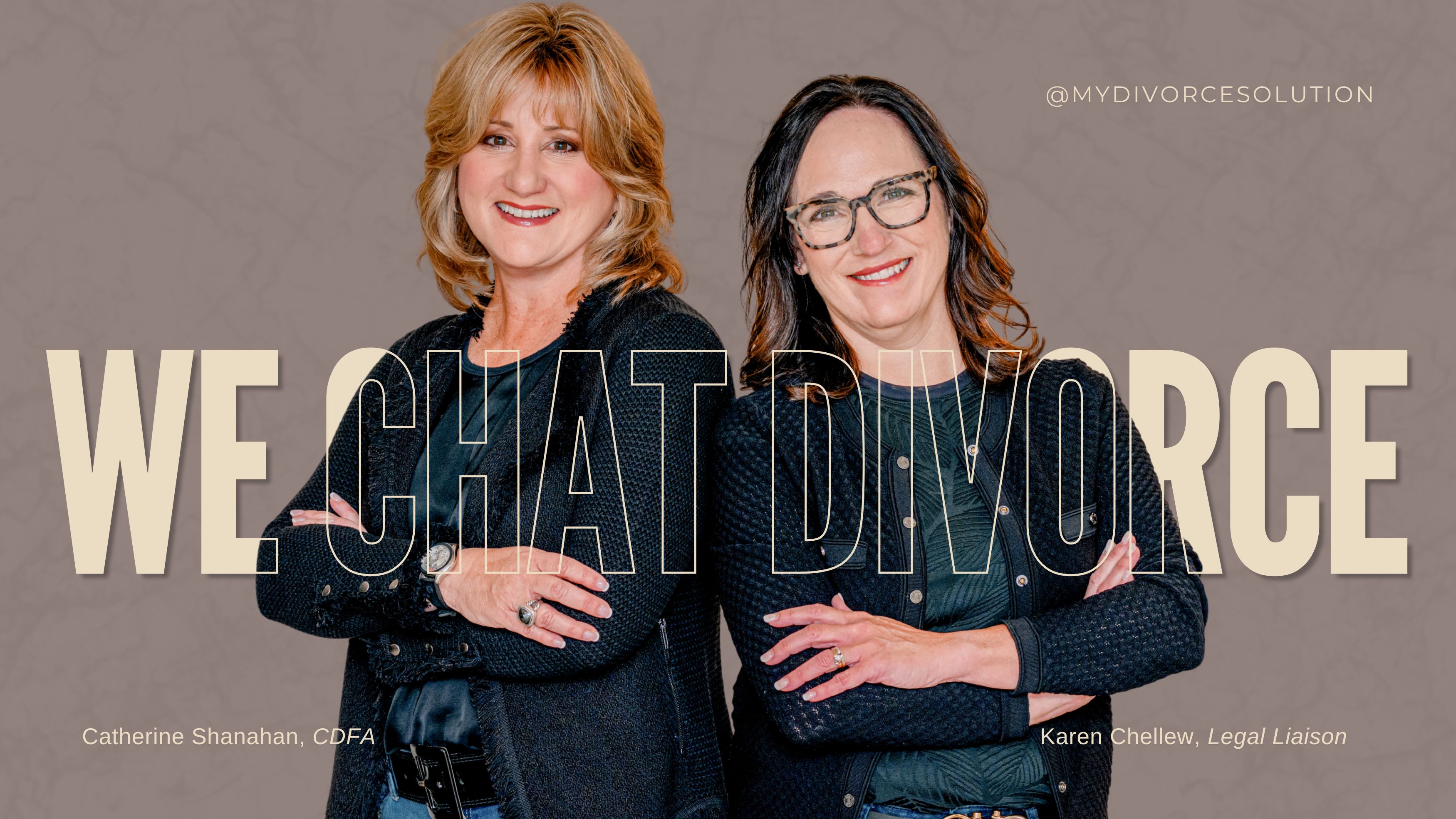
In this episode of Divorce Explored, a series within the We Chat Divorce podcast, Karen Chellew and Catherine Shanahan unpack what amicable actually means—and why emotional calm is not the same as financial clarity.
With California introducing a new joint divorce petition option in 2026, couples may be able to start the divorce process together with less initial friction. But as Karen and Catherine explain, this procedural change does not reduce the financial work required to reach a fair, sustainable settlement.
This conversation breaks down the real differences between contested vs. uncontested divorce, the hidden costs of rushing to agreement, and the financial red flags that quietly turn “easy divorces” into expensive ones.
If you’re considering an uncontested or joint filing—and want to stay amicable without sacrificing your financial future—this episode is essential listening.
What You’ll Learn
- The difference between being emotionally amicable and financially transparent
- Why agreeing quickly can be more expensive than slowing down
- What California’s 2026 joint petition option actually changes—and what it doesn’t
- Common financial “agreement killers” in uncontested divorces
- Why keeping the house without a budget often backfires
- How missing documents, unclear income, or mixed business expenses derail settlements
- Why financial clarity can prevent conflict—not create it
- What it truly means to compare assets fairly (cash vs. retirement vs. property)
Key Takeaways
- Clarity is not conflict. Asking questions does not make a divorce adversarial—it makes it informed.
- Uncontested divorce still requires full financial discovery. Skipping this step creates costly mistakes.
- Joint petitions may lower emotional tension, but they don’t reduce financial responsibility.
- Rushing creates regret. Many uncontested divorces become contested after new information emerges.
- If you can’t explain your agreement in plain English, you’re not ready to sign it.
Financial Red Flags to Slow Down
You may need more structure and support if:
- You can’t access financial statements
- Income is variable, unclear, or disputed
- Business and personal spending are mixed
- New debt or unexplained transfers appear
- One spouse is afraid to ask financial questions
- The plan relies on “it will all work out”
How My Divorce Solution Helps
At My Divorce Solution, we help individuals and couples get financially organized before legal negotiations begin—so decisions are based on verified data, realistic budgets, and long-term stability.
Our MDS Financial Portrait™ helps clients:
- Organize and verify financial documents
- Understand true cash flow and post-divorce budgets
- Model settlement scenarios before committing
- Avoid expensive renegotiations and legal waste
Learn more at azure-emu-499854.hostingersite.com/
Listen If You Are:
- Considering an uncontested or amicable divorce
- Curious about California’s 2026 joint petition option
- Afraid of making a financial mistake you can’t undo
- Trying to stay cooperative without giving away too much
- Wanting clarity before talking to attorneys
About the Podcast
We Chat Divorce is the #1 podcast for financial divorce preparation, hosted by Karen Chellew and Catherine Shanahan—co-founders of My Divorce Solution. Each episode delivers honest, grounded conversations about the financial realities of divorce so listeners can move forward with confidence, not fear.
Subscribe, share, and leave a review if this episode helped you. Clarity changes everything.
About My Divorce Solution
We Chat Divorce is produced by My Divorce Solution (MDS) — a financial divorce preparation company dedicated to helping individuals navigate divorce with clarity, confidence, and a strategic financial plan. Founded by Karen Chellew, Legal Liaison, and Catherine Shanahan, Certified Divorce Financial Analyst (CDFA), MDS was created to solve one of the most common and costly mistakes in divorce: entering the legal process without fully understanding your financial picture.
Divorce is not just a legal event — it is a financial transition that can shape your long-term security. Through the MDS Divorce Financial Portrait™, clients receive expert financial analysis, organized financial disclosures, and scenario planning to understand how different settlement decisions impact their future. This financial preparation often reduces legal fees, shortens the divorce process, and helps individuals negotiate from a position of knowledge rather than fear.
If you are considering divorce or already in the process, you can begin by taking the Free Divorce Financial Assessment to better understand your options. You can also join theMDS Community for expert guidance, educational resources, and live Q&A events designed to help you move from uncertainty to clarity.
At My Divorce Solution, the mission is simple: replace fear with knowledge so you can make informed, confident financial decisions during divorce.
Episode Transcript
0:01
Welcome to WeChat Divorce, hosted by Karen Chellew, Legal Liaison and Catherine Shanahan, CDFA.
Each episode we sit down with divorce professionals and industry experts to provide insights and frank discussions about real people, real situations, and real divorce to help you achieve your best life post divorce.
0:40
If you’re listening and thinking we’re amicable, we just want to get this done, this episode is for you.
Quick boundary before we start.
We’re not giving legal advice.
We’re talking about the financial realities that make divorce smoother or more expensive no matter what legal path you choose.
0:57
And just to be clear, contested and uncontested divorce have been long standing options in California.
What’s new in 2026 is the joint petition option, which is simply a new way for some couples to start a case together.
You’re listening to Divorce Explorer, a series within the WeChat Divorce Podcast.
1:21
I’m Karen Chellew, legal liaison and cofounder of My Divorce Solution.
We here at my divorce solution help people get financially organized for divorce so decisions are built on accurate information and realistic budgets.
I’m here with my Co founder, Catherine Shanahan.
1:37
Catherine, when a couple says we’re amicable, how we we hear that so often, right?
Especially with people who want to get financially clear, they think they just need answers to a couple questions and you know, they, their intent is just to get it done.
1:53
What do you listen for financially?
Because we’re not fighting and we can make, we can share information and make decisions together are really not the same thing.
Right.
But there’s two kinds of amicable. 1 is your emotional calm.
So everyone feels like we’re being amicable because we’re getting along.
2:11
No one’s fighting.
We’re just saying we’re going to agree to things.
And it seems like everything is status quo.
But then there’s also financially transparent.
You know, if you’re sharing numbers, are you willing to share the document to support that number?
2:26
Because if you’re being amicable, that means that you’re being transparent.
There’s also the difference between making an agreement and having an understanding.
So just because you know, your spouse may say you can keep the house because the kids will be happy there, you need to understand that you’re probably negotiating something away to keep that home.
2:43
And then you also have to remember not rushing into things because you make these one off agreements and you rush into it and then you feel like you made a mistake.
And so it can turn very expensive because now you’re starting back over again.
So you really have to make sure that you’re asking the right questions and getting the answers that you need to stay amicable and to make a good agreement.
3:03
I agree with that.
And I think a lot of people to their credit, they want to be amicable and they start negotiating off of what they know, which is typically very limited.
Even though someone may know all of the components of their marital estate or or what they think are the components, once they understand the financial impact, their decision may change and then amicable becomes a very different pathway right for.
3:27
Them, yes, and amicable doesn’t mean you’re agreeing with everything the other party’s saying.
You know you do have the right to ask questions so that you’re clear.
It doesn’t mean you’re questioning your spouse by asking a question.
It just means that you may need more information to be confident in the decision that you’re making.
3:44
So that’s why the 2026 joint petition and California option is very interesting.
Not because it changes what divorce is, but because it may lower friction at the start for couples who are truly aligned.
But the financial work doesn’t change at all.
You still need a complete picture, what you own, what you owe, what it costs to run life, what the two households will cost, and how the division will impact both spouses.
4:11
I like the petition because you’re giving both parties the the benefit of the doubt of providing the information that you need, right?
So if you haven’t gone through the process and you’re going to file, the other party gets served in the language that the attorneys need to use.
It’s really ugly.
4:27
And so couples who think they’re being amicable now one party goes and files and get served with those papers, it becomes very tension filled.
So that’s what I like about this joint petition option because it gives you the the chance to submit your information.
You don’t need 2 attorneys collecting the same data if you’re trying to work through it and get a better understanding before you go down a path of letting other people speak for you.
4:53
It also is good to know that you can work through your cash flow.
You know when you’re talking about keeping the house, not keeping the house.
If you 2 are sharing information, you can actually go through the process of learning what it costs to keep that house if you never had a handle on that before, because that’s a big decision making maker when you’re deciding what asset to keep, what asset to negotiate, negotiate for.
5:19
And that’s where MD’s financial portrait fits.
The MTS financial portrait is designed to help people get organized and financially clear.
So negotiations and joint petitions and disclosures are all built on accurate information.
And it’s my information from other attorneys we’ve spoken with that if you file a joint petition in California, you have the option to change that joint petition decision if things become more contentious.
5:48
So that is something you would want to check with your attorney about or have a consultation if you are choosing to file a joint petition.
But let’s separate the headlines from the reality.
As we’ve stated, contested versus uncontested is not new.
The the new piece is the joint petition as a way to start together.
6:07
And from a financial standpoint, starting together can reduce waste.
If cooperation is real.
And financially, here’s what a cooperative start can improve Fewer duplicated professional hours, fewer panic decisions, and fewer I didn’t know that moments.
6:25
But here’s what it cannot fix.
It cannot fix missing data, unclear income, unknown debt and unrealistic budgets.
Yeah, it may be wise to get a consult before you actually file uncontested if you’re in a support situation, because you may agree to an amount when you file that is too low or you may agree to pay something that’s too high.
6:47
So, you know, Karen, what are your thoughts about getting a consult before filing it jointly?
I think that would be very important.
Even if you are not intending to retain an attorney right away, those consults can provide you with really good information about what your options are.
7:06
What if things go South and and generally the process so that you can prepare for it and be in the know.
Knowing your options is key.
Yeah, because I do see that there’s still could be a problem, someone holding back data.
You know, if you don’t know what you don’t know, how do you know that you’re not getting every piece of data that you need and you’re going and filing?
7:27
So I like that you reminded everyone that it could change along the way.
It’s just if you file jointly doesn’t mean that you can’t change again.
You need to get some legal advice there before moving forward to do that, but that would be my one concern because I do agree that everyone should be handing in their information together.
7:44
I still do not understand why 2 attorneys have to collect the same document and why we are continually giving this information throughout the whole process that they’re not doing anything with except for billing you.
Right.
Yeah, absolutely.
And you know, that’s why so many mediations fail.
7:59
Not that we’re talking about mediation today, but it’s kind of in the same space, joint petitions, mediation, you know, having that financial clarity and having the knowns and unknowns established and both parties are committed to that.
It is so important.
8:15
Or again, it’s not going to be successful.
So let’s define this in plain English and then get into the cost.
So uncontested means you reach an agreement on the major issues.
Contested means you cannot agree on one or more major issues, and the process tends to take longer and cost more.
8:31
So financially, uncontested usually spend money on decision quality and contested spends money on the process right?
And so many, many contested cases can begin until the financial picture collapses.
Typically the agreement killers we see are missing or inconsistent statements, unknown or disputed debt, income confusion Happens all the time.
8:57
Bonuses, commissions, compensation plans, self-employment, business cash flow.
They can create so many inconsistencies and unknown variables that the parties can just become contentious because they feel that each other aren’t being clear.
9:14
But really it’s actually more complex calculation.
Taxes and liquidity surprises all the time.
Tax laws forever changing and the house decision made without a budget.
You keep the house.
Sounds great, I want the house.
OK, you keep the house.
9:32
But then sometimes the party that’s retaining the house doesn’t understand what it means to maintain the house.
Not only maintain it, but just being stuck there when somebody else gets to start anew.
Now, the emotional weight of that has a lot of people saying, gosh, I wish I would have got rid of that house when I got divorced.
9:51
Instead, I gave away a lot of my retirement money and now I don’t have as much in retirement.
So they really are fact finding measures you should take and fully think about this before you decide on that.
And remember, the complexity of your case doesn’t mean that you’re going to contest it.
10:08
It just means that you need more clarity so that you don’t contest it.
And that is not being afraid to ask for the documentation and the explanation that you need to understand a certain asset or a debt.
And many people who are not the moneyed spouse are afraid to ask those questions because they think their spouse is so smart and which they might be because they handled your finances all the time, but they might not have the patience to go over an asset with you to explain it to you because they think you should just trust them and understand that.
10:38
And so don’t fall into that trap if you’re not comfortable there.
So seek a financial advisor that you’re going to work with post divorce who will understand that asset for you and make sure you come through our process to so that you’re not afraid to ask for the documents.
You know, a lot of spouses feel that their spouse.
10:55
Is narcissistic or?
High conflict and they don’t think they’ll give us the information and most do, you know, over 95% of them give us the information because we’re not afraid to ask for it.
And there’s a reason we ask for it.
And that’s to verify data and not to question their honesty.
11:13
It is that that’s the information you need to get all the answers that you need.
But sometimes you’re just afraid to ask for it.
So I do like when our clients come through our process and then all of a sudden they’re they’re asking for everything that they want and they’re not afraid to do that any longer.
11:30
Yeah, that’s so true.
And it’s a it’s an environment where everyone, while they’re providing information and documentation, they’re also being heard.
Not that we’re divorced coaches on any level or therapist, but being Catherine, you say this often and it has such a value to it.
11:47
The emotional component to every asset and or debt is such a valuable conversation in the process because you have somewhere to go with that information.
And in our process, we could we turn it into the financial discussions.
So that’s a really great thing.
12:03
And I, I like that you say that a lot.
I want to circle back really quick to the house decision made without a budget.
The House decision also made without understanding what cash flow will be available to you and support calculations are finalized.
That’s a really, really big deal in every state, but also especially in California.
12:24
You know, you have to understand what cash flow means.
That is the money coming in less than money going out.
And if you think your spouse isn’t going to be on time paying your alimony or maintenance or your child support or what have you, you have to realize that you need a reserve there to meet those cash flow needs.
12:42
And so a lot of times people are just thinking, of course, this is all going to work out because it always did and maybe it will.
But you should have that clarity before you sign the dotted line there.
So let’s talk about the pros and cons financially Speaking of contested and uncontested.
13:01
So the pros, as we mentioned before, a lower transaction cost, less duplication, which is so it saves so much money and fewer paid hours spent hunting down documents, fewer expensive surprises because you’re working from verified information, better control over trade-offs.
13:19
You can make decisions intentionally instead of react reactively and you have faster clarity because it supports 2 real two household planning.
Now for the cons.
And to be clear, con number one is the rush discount.
13:37
People agree too quickly because they want relief and then when they get more information, they want to change their minds and that’s where mistrust starts to set in.
Information imbalances.
Also a con.
If one spouse controls the financial picture, the other can agree without understanding.
13:56
Another con is hidden complexity, as we’ve also referenced businesses, multiple properties, retirement accounts, stock compensation, uneven income.
These require modeling even in amicable cases.
And to Catherine’s point, you can be amicable and still disagree.
14:12
Amicable means you want the same resolution of agreeing to a division scenario, right?
That could be amicable.
So getting there, you know, sometimes people have not sometimes, most of the time you have to have the conversation and, and so many times it’s uncomfortable and sometimes it can be awkward and sometimes it can feel contentious, but it still can be under that umbrella of amicable.
14:42
Rushing definitely can be expensive because you make mistakes, right?
The, the short of it all is that if you cannot explain your agreement in plain English and have an understanding of the impact to that agreement, then you are just not ready to sign it.
So just make sure that you ask the questions you need to ask.
14:58
You know, when we’re on and we’re helping spouses negotiate, if it comes to that part of the process, a lot of the emotional feelings come out.
And I think the plus to that is because we have that judgement free space, you get to hear the hurt from the relationship without us being therapist.
15:16
But if somebody gets to say it to the other side, then they get to kind of exhale and say, OK, I got that out.
Like I was hurt in this moment.
Now I’m ready to make the financial decision.
Because sometimes you do just want to be heard.
And so if you’re uncontested that and you can come to an agreement together, you’re probably going to get that space that you want because you’re never going to get that justice you want in the court system.
15:39
And you never want 2 attorneys talking for you.
They’re not going to get it out either.
So I do like working through the difficult process that allows for that because it’s easier to move on past divorce if you have that space.
Good feedback, Catherine, so let’s go on to the financially prepared checklist.
15:57
If you want the smoothest and least expensive path, do the hard work upfront.
Yes, it’s tedious, yes it’s time consuming, and yes, it can even be overwhelming, but it’s key to your ability to be successful in a divorce settlement agreement.
16:13
So here’s what financially prepared actually means.
Build your inventory of documents, your balance sheets, assets and debts, and anything that’s easy to forget.
Understand your cash flow.
Baseline what you want, but what you can also settle for.
16:30
What it actually cost to run life now, and what it may actually cost to run life post divorce given the assets and debts you feel like you will be retaining.
Build 2 post divorce budgets, one for each household.
Organize the documents so the numbers can be trusted.
16:47
This is where you will save real money and then pressure test settlement scenarios before you commit.
Keep versus selling the home.
Different support assumptions, debt payoff timelines, retirement division impacts, reality check trade-offs.
17:04
Not all dollars are equal.
So many people do not understand this, especially in Community property states.
Cash is not the same as retirement dollars.
A house is not the same as a brokerage account.
Liquidity and taxes matter, and this is exactly, exactly why we built the NDS financial portrait.
17:24
It helps clients and, when appropriate, their spouses organize the data, build a clear picture so decisions are based on verified information and realistic budgets.
I’m glad you brought up comparing one asset to another.
You know, you don’t just go down the columns and say, let’s put everything 5050 most times because sometimes it’s easier to keep one account in one party’s name versus the other, or you’re reconciling the numbers and the asset that you’re keeping.
17:51
You have to, you know, give more money to the other side.
So you do have to compare what the differences are, make sure you’re comparing an apple to an apple.
So I’m glad that you mentioned those.
The other thing I love modeling it before you promising it.
So we talked often about the house, like go see where else you would live if you did not keep the home that you’re in because it’s really difficult to assume mortgages now or to refinance to get the other party’s name off.
18:14
And you have to have creative solutions to that of which you can.
There are some out there are many out there, I should say, but it’s not always feasible.
So take the exercise of going someplace else and seeing where you would live.
Drive there at night, drive there in the afternoon, in the morning to see what the neighbors would be, who the neighbors would be that you’re surrounded by.
18:32
And if you feel safe there and think it’s as exciting to start over somewhere else before you commit to keeping one of most people’s biggest asset, which is their their marital home.
So you and your spouse are headed towards divorce both.
18:50
If you want to be amicable, you really feel that you can negotiate a fair and equal settlement.
Some financial red flags need to be discussed, so slow down if any of these are true.
You cannot access statements or account information.
19:10
Income is unclear, variable or disputed.
Business and personal spending are mixed.
How many times do we see this, especially when there’s a family business so common there are unexplained transfers or new debt?
19:26
One spouse is afraid to ask basic financial questions and the plan relies on it will work out somehow because we want to be amicable it again.
It doesn’t mean you have to become adversarial, it just needs.
19:42
It just means that you need structure and support before you lock in terms.
So clarity is not conflict, and more structure can actually keep things applicable.
Again, we’re going to recap here.
Contested and uncontested have long existed in California.
19:59
The new 2026 joint petition option may help some couples start together, but it does not change the financial work underneath the divorce.
If you want an applicable approach to stay affordable, prioritize financial clarity, early inventory, cash flow documents, and scenario planning, go ahead.
20:18
I know the goal is to get divorced, but remember the goal is not just to be divorced.
The goal is to be financially stable after divorce.
So make sure that you’re clear before you make very important decisions.
If this episode helped, please share it, subscribe and leave a review, And if you want support getting financially organized so your decisions are built on accurate information and realistic budgets, my Divorce Solution can help through the MD’s financial portrait.
20:46
Thanks for joining us on another episode of WeChat Divorce.
We hope this episode was informative and supportive on your divorce journey.
If you're looking for more support for navigating divorce with confidence and clarity, head over to azure-emu-499854.hostingersite.com/ for more podcast episodes, divorce events, and resources for your divorce.
21:07
We’ll see you back here for our next episode.