


Most people would never start a cross-country trip without a map — yet that’s exactly how divorce begins for millions of people every year.
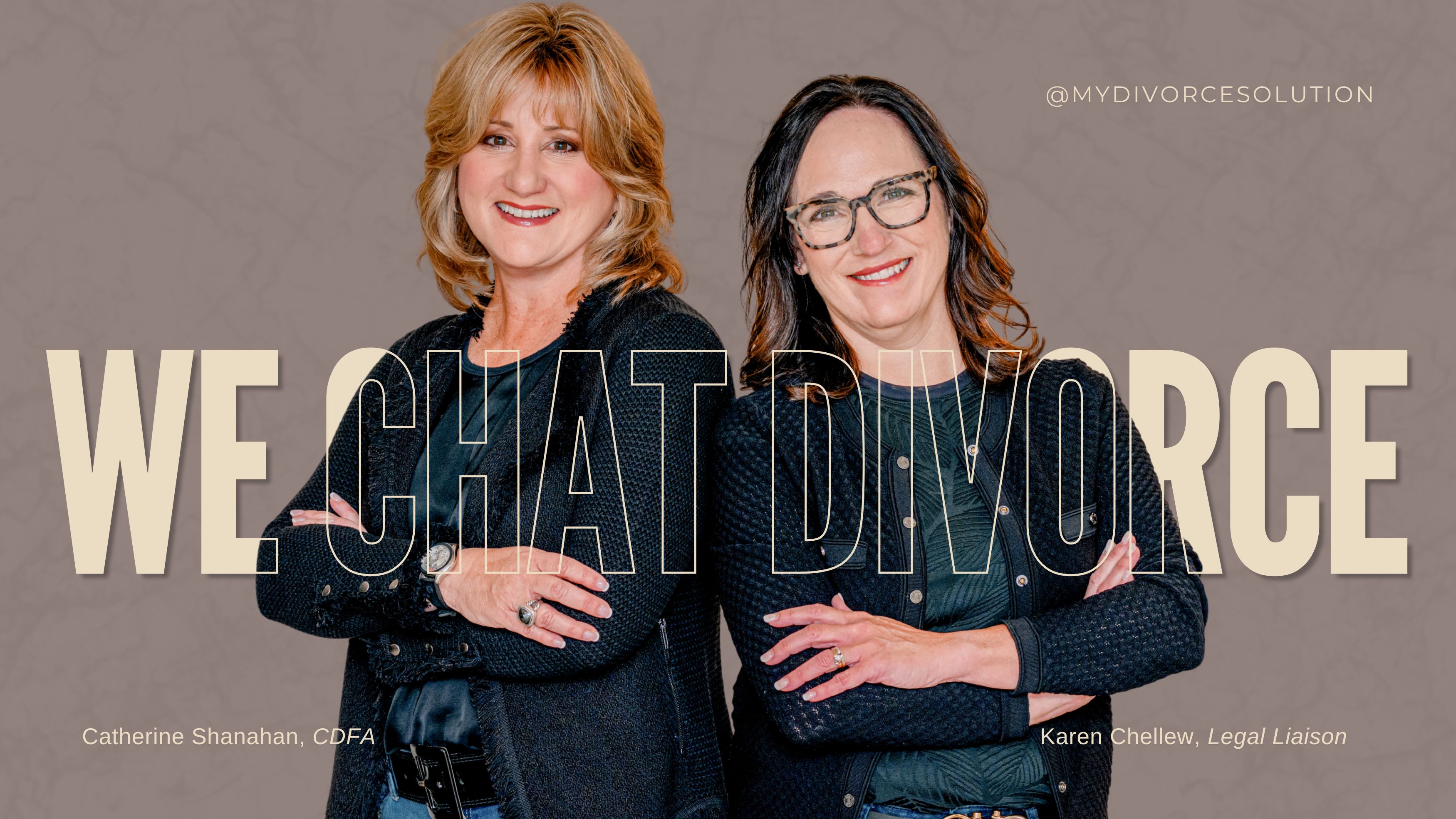
In this episode of We Chat Divorce, Karen Chellew and Catherine Shanahan break down the concept almost no one talks about early enough: the financial divorce roadmap.
Divorce is not just emotional — it is one of the largest financial transactions most people will ever make. Without a clear financial roadmap, decisions get made from fear, pressure, and incomplete information — and those decisions can cost you tens of thousands of dollars over time.
Karen and Catherine explain what a real financial roadmap looks like, how it reduces conflict and legal fees, and why clarity — not speed — leads to better outcomes.
At My Divorce Solution, we call this roadmap the MDS Financial Portrait™ — a verified, structured view of your full financial landscape before permanent decisions are made. Because fear is expensive. Clarity is not.
This episode is educational only and does not provide legal or tax advice. Always consult your professional team for guidance specific to your situation.
- Start with clarity: take the free Divorce Financial Assessment
- Share this episode with someone who’s starting divorce without realizing they need a map
Join the MDS Community for expert guidance and live Q&A support
Episode Transcript
0:01
Welcome to WeChat Divorce, hosted by Karen Chellew, Legal Liaison and Catherine Shanahan, CDFA.
Each episode we sit down with divorce professionals and industry experts to provide insights and frank discussions about real people, real situations, and real divorce to help you achieve your best life post divorce.
0:24
This episode of WeChat Divorce is brought to you by My Divorce Solution, offering divorce financial planning so clients can secure the divorce settlement they deserve.
Visit azure-emu-499854.hostingersite.com/ to request access.
Today we’re talking about the thing almost nobody has when they start a divorce, and it’s the thing they would never skip on a real trip.
0:50
A road map.
If you were flying across the country, you wouldn’t just show up at the airport with no ticket, no plan, no destination and hope it works out right?
But people do the divorce version of that every single day.
We see it all the time.
They start making financial decisions before they even know what the full financial landscape is.
1:11
So today Catherine and I are going to lay out what a real financial divorce road map looks like, why it changes outcomes, and how to start building 1 even if you feel overwhelmed.
Yeah, it’s really hard because you have to remember that divorce is really a major financial transaction.
1:29
Everyone just thinks of it as more of an emotional event, and you forget that there’s major financial transactions that are going to happen.
And so the MAT can prevent really expensive detours, unnecessary attorney time, rush decisions, and you can avoid a lot of conflict.
1:47
You know, how many times do we see our clients, Karen, where they’re just all over the place?
It’s almost as if they’re lost.
Exactly.
So let’s stay with the trip analogy for a second.
So we all know a good trip has a destination, a route, a budget, a packing list, checkpoints, so you know you’re on track.
2:08
Plan B when something changes.
Something is always changing in divorce, by the way, and divorce needs the same structure.
The problem is most people are handed the legal process and assume it automatically comes with a financial plan.
It doesn’t.
2:24
Legal steps move the case forward.
Financial clarity protects your future, and when you don’t have a map, you do what all humans do.
You follow the loudest force in the car or the fastest route, or you panic and pull over.
2:41
Yeah, And unfortunately, the loudest voice is probably fear, anger, guilt or just a spouse controlling the information, you know?
And then, you know, you’re in these relationships for so long a lot of times, and you’re used to responding to that.
So you’re not even thinking about the processes or what the end result is other than it’s just going to be a divorce.
3:02
So you’re still letting yourself get caught up in all of that response mechanism that you have developed with your spouse or even your attorney.
How many times do we have attorneys calling and saying, you know, on a Friday, we need this by end of day or a proposal that’s given to a spouse from another spouse saying if you don’t respond to this by the end of the day, you’re getting nothing.
3:24
I’ll make sure you get nothing and your life will be so difficult.
So you really want to kind of set back and set out that road map for yourself and don’t negotiate blindly, you know, and because you’re going to regret that later.
So let’s talk a little bit about some common detour mistakes, Karen, by keeping the house without really running the real cost.
3:43
And how many times do you do lifestyle analysis with with individuals and they really have no idea the cost to run that home?
So many times and they’re so focused on keeping the home for emotional reasons or as you know, parental obligations.
I owe this to my children or the fear or being overwhelmed of moving out.
4:05
What would does it look like?
Maybe their attorney tells them you can’t abandoned the household.
If we sell, what are we going to do with the proceeds?
There’s 1000 things that could impact your thought process on that.
But really at the end of the day, it’s that financial impact.
4:22
Yeah.
And, you know, you were thinking about this alimony or spousal support number that you’re receiving or will receive, but you really underestimate the costs that you have, even with taxes or liquidity needs that you have.
So you quickly just run through that money without really having a plan.
4:41
And the other thing is I want to talk about is, you know, settling before values and accounts are verified.
You know, that always gets me.
You know you have someone pushing this spreadsheet in front of you with these numbers that look good or don’t look good.
All about your perspective there and your needs.
4:57
But they’re not giving you any data documents to verify that information.
So even if you agreed to it or if it’s right, if you don’t get the documents to verify it, you’re not owning, you’re not owning the value of these accounts and what you’re going to do with it moving forward.
5:14
You have to see the documents even just for your own self-awareness moving past divorce on how you’re going to follow your accounts and are they the right accounts for you.
So if there is a lot to verifying those numbers.
Yeah.
And and Catherine, you can talk about this too.
5:30
It’s not just the balance on a statement.
There’s nuances in various accounts that impact whether it’s marital or separate, whether you know there’s a loan or not, or whether there’s been dissipation or whether money’s been rerouted somewhere else.
5:48
No, verification isn’t just about an account value.
You know, you’re absolutely right.
Again, it’s owning that information and understanding that if there is a lien against an account, you know, a lot of times you’ll see this in brokerage accounts when you have people doing day trading and so forth.
6:06
But so you’ll see, you’ll see that there’s liens against, they’re borrowing money from one account to have growth in another account.
And if you’re only looking at the account that has a huge value and you’re not looking at the other account knowing that there’s a lien against that money, you don’t have as much as you thought you did.
6:22
So you’re arguing in the courtroom over that.
And you should really have a better understanding of what is all the components of to any account.
For sure.
You know, I have a story.
And Catherine, we have stories every single day.
But I have a story from last week where one of our clients received a letter from her attorney and it was presented as great news.
6:46
Opposing counsel has reached out to me.
And if you’ll just forgive your spouse’s contempt motion, they filed A contempt motion because he hadn’t paid support, he hadn’t paid off the bills he was supposed to pay you.
If you just forgive that, he’ll agree to come to the settlement table and we can negotiate a settlement.
7:07
So that didn’t sound right to her, to her credit, because she does have a financial road map and she was absolutely right.
She said, well, doesn’t he owe me this money anyways?
Yes, he does.
And we don’t.
We even if we went to a settlement, we still don’t have the documentation.
7:24
So I don’t know what this gets me.
And I said you’re absolutely correct.
So let’s talk about what it would mean to get everybody to the settlement table or negotiation table and, and to set guidelines and village rules so that you know, you’re not stuck in a place again of let’s just get this over with.
7:47
Yeah, that’s because she was clear.
She knew what was missing.
She knew what was owed to her, and she knew that now she may have leverage here.
She took a step back and reevaluated and said no, these are my guidelines now, which is really important.
Yeah, for sure, especially since the contempt hearing isn’t for months.
8:06
For now, I said, what if he pays up and then he stops paying again?
Right.
Yeah.
It’s all kinds of things can happen like that.
So let’s define it clearly.
A financial divorce road map is not a spreadsheet.
It’s not a guess.
It’s a decision tool.
A real road map gives you a clear picture of what exists, what it’s worth or what you can reasonably rely on, what it costs to keep options for division, what your monthly life looks like after the divorce, and what needs to happen next and in what order.
8:38
And at My Divorce Solution, we call this the NDS financial portrait because it’s meant to show your full landscape before you make critical decisions.
Well, let’s talk a little further about this.
Using this map as a legend or using this as your path moving forward, our portrait has verified data, not assumptions.
9:01
There’s asset and debt inventory, a budget, a lifestyle reality.
Because you do need to know the reality of that.
And multiple division scenarios are options that are available to you.
You know, you need to know what is your A scenario, B scenario, maybe even your C scenario so that you can negotiate with confidence support calculations if it’s applicable to you disclosure, readiness and document organizations.
9:26
So you’re not reinventing the wheel.
And not only not reinventing the wheel, but having this at your access at any time carrying.
There’s so many times where we just talked about this morning where we want a document or an attorney wants a document and through our process, we find it in a matter of seconds.
9:42
And I was saying to you this morning, I can’t believe this attorney is sending US1 document at a time and it’s taken him three days to find documents that we already had, basically nothing new.
But they have no control over that.
So our process, it has it all.
9:58
They’re organized.
For yourself exactly.
And it, you know, not kidding anyone, there are many, many cases where you’re not going to get a clear valuation on a particular asset for a variety of reasons.
But you do learn to know where to spend your money on the assets that are going to have the highest impact because it is important that you’re not on a witch hunt or that you’re not chasing everything to your detriment.
10:26
And the process allows for that as well.
So when you have when you know the knowns, you can more easily assess the unknowns and, and of those unknowns, what’s important to you and your ability to negotiate a settlement.
So here’s the truth.
10:43
Most divorce fights are not really about money.
They’re about uncertainty.
A road map reduces uncertainty.
And when uncertainty drops, conflict drops.
Also, a road map is one of the only ways to stop paying tuition and legal fees for work that could have been clarified earlier.
11:04
When your dad is organized and verified, you say time reduce stress and you often save real money.
So here’s some quick examples you can use.
We thought, here’s the first one.
We thought we were fighting about the house, but we were really fighting about cash.
11:22
Flow.
Can I, you know, we’re fighting about the house and yes, it’s about cash flow.
It’s also about control because a lot of times the stay at home mom or whoever set up the home and ran the home is really attached to that house so they the other side uses that as leverage for themselves.
11:45
Yep, that’s 100% correct.
We assumed an account balance.
The statements many times tell a different story for a variety of reasons and you need to know the story these statements tell.
We negotiated support before we understood the budget.
12:04
Oh does that happen all the time?
How many times do we hear?
So I don’t want to take my stuff to the cleaners.
I can make it on this amount.
And Catherine, you have the best response always.
Let’s see what is allowable, the range that is allowable for you and negotiate what is allowable.
12:24
And then if you want to give money back about it, right?
Yeah, I always say, you know, if you get more than you were supposed to get and you want to give it back, I’ll help you write the check.
And in 10 years or 12 years, nobody has asked to write a check back to anyone but the road map again.
12:44
It’s really important because it’ll give you the confidence you need to negotiate.
It’s really hard to negotiate if you’re just negotiating off emotions.
They’ll be fewer last minute surprises at mediation.
You know, going to mediation, you think that, you know, the mediator is going to help you come to a fair agreement.
13:04
Well, they’re going to help you navigate the conversation between between you and your spouse.
And a lot of times people are going into mediation without the full picture and without a road map.
So surprises come up and you either agree to something and regret it later or you can’t come to an agreement.
13:23
So mediation fails when you’re clear on, again, the knowns and the unknowns, there are fewer emotional decisions that you’re going to be making.
You’re going to be making them based on financial clarity, which will again fare much better for you in the long run.
13:42
Well, and actually, you know, with our road map, attorneys and mediators are much more effective.
For sure, because they can take that and then it doesn’t.
So many times when people are talking with their attorneys, you know, they ask questions and invariably the attorneys say, well, it depends.
14:01
And when we’re on calls with our clients and their attorneys, we hear that ad nauseam.
Well, it depends because it does depend if you don’t know your road map, if you don’t have a clear picture.
And so that road map does take care of that.
So let’s take the travel analogy one step further, because this is where the road map really proves its value.
14:20
Trips rarely go exactly as planned.
Flights get canceled.
Storms roll in.
The rental call, the rental car falls through.
You miss a connection, you pivot.
And divorce is exactly like that.
You can have a great plan and still hit roadblocks.
14:38
Your spouse stops cooperating.
A new account shows up.
A valuation comes in higher, lower than expected.
Someone income changes?
Lose job, get a job.
Someone files something unexpected?
Mediation gets moved or breaks down.
14:56
That’s so common.
And here’s the key.
Roadblocks are not the problem.
The problem is having to pivot without a framework And a road map lets you pivot without panicking because you’re not making random decisions, you’re making decisions that still move you towards your outcome.
15:13
A pivot is only a disaster when you don’t know where you’re going.
Gosh, all of those things occur.
A road map is a decision framework.
It’s not a fixed route.
You know, when something changes, you do not restart from scratch.
You just adjust assumptions and rerun scenarios.
15:30
You know, a lot of people panic or get really frustrated because they’re being asked to submit all new documents again.
You know, you can say no to some of that by the way, but we could talk about that at another time.
You know, there’s smart pivot questions you can ask yourself and others.
15:45
What you know, what changed?
What does it do to cash flow, taxes and liquidity?
Which option best protects the outcome that you’re aiming for?
Again, it’s another reason to work through different scenarios.
A scenario B scenario C scenario, where can you settle right?
Because you are going to be asked to compromise somewhere for sure.
16:06
Some smart pivots are like that house becoming unrealistic.
You know, I like giving the scenario to go out and see where you would live if you didn’t live in that marital home.
Maybe you would rent for a year or two, drive around at night and see that you’d feel safe someplace else.
16:21
Because it is.
It is refreshing to start new a lot of times and instead of negotiating away a pension plan or most of the retirement money or any other account, just to have all your equity in a home.
Be clear that that’s really what you want.
Because a lot of times where people regret keeping the marital home because they’re left with everything to clean out for one reason or they’re just left with the problems that were never fixed before in the home.
16:46
So starting over may be your best time to do it when you’re negotiating.
So if you’re in a messy moment right now, here’s your grounding question.
What outcome am I trying to protect and what decision today best supports that outcome?
17:04
Learn to pivot.
So we’re going to move on to red flags that you are divorcing without a map.
So here are some red flags.
If any of these are happening, you’re driving without directions.
We’re negotiating but I don’t have all the statements.
17:24
I’m agreeing to keep something expensive without knowing the monthly cost of the payments and or the maintenance.
I’m relying on verbal numbers from my spouse or their advisor.
I don’t know what I need to live each month and my settlement option is basically.
17:44
I hope it work, I hope it works out and I just want to get this done.
Yeah, You know, I’m just thinking about so many scenarios here.
So if you’re feeling pressured to settle without verified data, you need to pause.
You need to just stop and pause.
18:00
It’s your right to do that.
And if professionals are giving answers based on assumptions, push for the documentation.
It’s your right to have the documentation.
And if your plan depends on perfect cooperation later, that’s fragile.
You know, we hear, you know, you could do that after your divorce.
18:18
You know, we’ll make the agreement and then we’ll reconcile the numbers of the documents.
It doesn’t seem to make sense to me.
Why wouldn’t you get the documents now, then and reconcile and then sign an agreement?
So take pause if you do not have verified information.
Yes, because the divorce is a trip most of us didn’t ask to take.
18:42
But you still get to choose whether you take it blindfolded or with a map.
A financial road map gives you clarity, leverage and options.
It’s not about being combative, it’s about being prepared.
Nothing in this episode is legal or tax advice.
18:58
It’s education and you should consult your professionals for your specific situation.
I’m Karen here with Catherine Shanahan and this was divorce explored on the WeChat Divorce podcast.
If this helped you, share it with someone who’s starting the divorce journey and doesn’t realize that they too need a MAT.
19:18
And I remember, start small, 1 document at a time.
It’s never too late to change your relationship with money.
The goal is confident decisions, not perfect decisions.
Preparation is power, especially when emotions are high.
Thanks for joining us on another episode of WeChat Divorce.
19:36
We hope this episode was informative and supportive on your divorce journey.
If you're looking for more support for navigating divorce with confidence and clarity, head over to azure-emu-499854.hostingersite.com/ for more podcast episodes, divorce events, and resources for your divorce.
19:55
We’ll see you back here for our next episode.