

Expert Divorce Advice with Susan Guthrie: Mediation, Financial Clarity & the Real Cost of Divorce

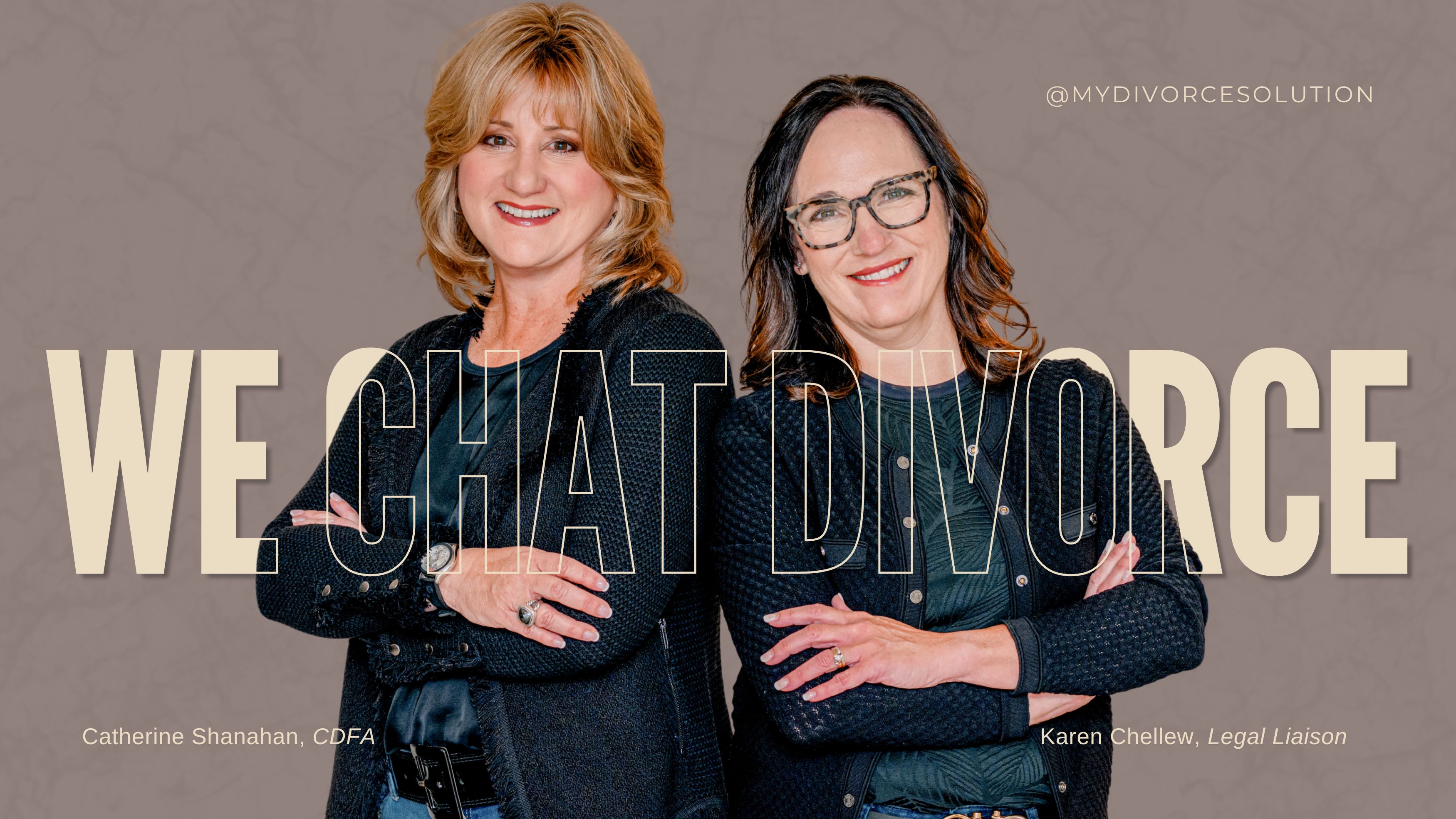
In this powerful episode of We Chat Divorce, Karen and Catherine sit down with Susan Guthrie—one of the nation’s leading family law attorneys, top divorce mediators, and a recent guest on the Oprah podcast—to break down the realities of navigating divorce in today’s turbulent economic climate.
With inflation, job uncertainty, rising debt, and shrinking safety nets affecting families across the country, divorce has become more complicated, more expensive, and more emotionally overwhelming. Susan brings 35 years of experience to this conversation and explains why fear and confusion escalate when people attempt to negotiate or compromise without verified financial information.
Together, Karen, Catherine, and Susan expose some of the biggest misconceptions surrounding mediation, financial disclosures, attorney roles, and the belief that a net-worth statement or Excel spreadsheet is “good enough.” They outline the critical need for accurate, neutral financial clarity—something the MDS Financial Portrait™ uniquely provides—to prevent stalled negotiations, runaway legal fees, and emotionally driven decisions that people regret later.
Whether you’re considering divorce, preparing for mediation, or already working with an attorney, this conversation offers the actionable guidance needed to move forward with confidence, strategy, and peace of mind.
Connect with Susan Guthrie
Explore her podcast and resources: DivorceAndBeyondPod.com Use her new AI-powered episode search tool to find topics like alimony, gray divorce, co-parenting, and more.
Resources Mentioned
- MDS Financial Portrait™ — the gold-standard tool for financial clarity in divorce
- Free Financial Assessment — learn where you stand and what steps make sense
- MDS Community — expert-led Live Q&A events and support Ready to Take the Next Step? Whether you’re just beginning the divorce process or have been stuck in uncertainty for years, financial clarity is your strongest advantage.Start with the Free Financial Assessment, explore the Divorce Financial Portrait™, and step into mediation or legal discussions with confidence—not fear.
Episode Transcript
Divorce touches every part of your life, and when the world around you feels unstable, those worries can feel twice as heavy.
0:39
Inflation, job changes, rising costs, shifting markets, all all of it adds pressure when you’re trying to plan for a separation or a divorce.
And that’s exactly why clarity matters more than ever.
And you know, at MDS, that clarity begins with the financial portrait.
0:56
That’s your complete verified picture of the marital estate.
So when everything else feels uncertain and the facts become your anchor.
And it’s it’s in today’s conversation that we’re going to explore the options available to you, especially when mediation, collaboration or technology can create a more peaceful and efficient and cost effective path forward.
1:16
Our guest today brings decades of wisdom and a perspective that families desperately need.
Susan Guthrie, who we podcasted with multiple times, is a dear friend and colleague.
And she’s not only one of the most recognized family law attorneys and mediators in the country, she’s, like I said, a trusted colleague, friend, and the host of the top ranked Divorce and Beyond podcast.
1:41
You’ve heard us on her show, and we’re thrilled to have her back with us today.
She has an extraordinary ability to make complex issues feel simple and clear, and her platform reaches thousands of individuals seeking a smarter, calmer approach to divorce.
1:57
Welcome to WeChat Divorce, hosted by Karen Chellew, Legal Liaison and Catherine Shanahan, CDFA.
Each episode we sit down with divorced professionals and industry experts to provide insights and frank discussions about real people, real situations, and real divorce to help you achieve your best life post divorce.
2:19
This episode of WeChat Divorce is brought to you by My Divorce Solution, offering divorce financial planning so clients can secure the divorce settlement they deserve.
Is it My Divorce solution.com to request access?
Welcome back to WeChat Divorce, brought to you by My Divorce Solution.
2:37
I’m Karen Shalu, Legal Liaison and Co founder of MD’s, guiding you through the various aspects of divorce with clarity and confidence.
And I’m Catherine Shanahan, Certified Divorce Financial Analyst and your partner in making informed financial decisions through every stage of the divorce process.
2:56
Today, Susan’s joining us to talk about divorce and an unstable economy, what’s changing, what families need to be thinking about, and how mediation, collaboration, and digital tools are reshaping the future of divorce.
I’m really excited to have Susan back on.
I admire her.
3:12
And you know, as you said earlier, she’s a trusted colleague and she was just on the Oprah podcast, which is very exciting.
But I like how she comes with an attorney lens and doesn’t really talk badly about attorneys, but she certainly is willing to put out there how attorneys can do better and why mediation can be really successful if you’re financially prepared.
3:35
So I’m looking forward to the conversation and actually seeing her again.
Me too.
So let’s hop into it.
Susan, welcome back to WeChat Divorce.
3:51
We are thrilled to see you again.
I am so glad to be back with you ladies.
It is always a pleasure to be in the room with you.
I swear, one day we still have to get a face to face because that’s where the real fun will begin.
We really do.
We really do.
4:06
Either you have to come to Chicago or I’ve got to get out your way because it’s always more fun in person.
So before we begin our discussion together today, let’s introduce you, Susan, to our listeners.
Susan is one of the nation’s leading family law attorneys and mediators.
4:23
Her work has helped thousands of professionals and families rethink divorce, not as a battlefield, but as a process that can be thoughtful, empowering, and transformative.
So Susan, let’s start here.
Let’s talk about what you’ve been doing recently.
4:40
We know you were on the Oprah podcast.
You really are transforming divorce for people getting divorced and also all of us professionals who are in the ring helping.
If you want to share a little bit about that.
And then we’ll go right into our topic today.
4:57
Sure, it was a wonderful experience to be on the Oprah podcast.
We were talking about Gray divorce, but you know, really talking about divorce from the perspective of it not being a war, it not having to be a horrible experience in a way that hopefully a family can restructure in a more positive way so that everyone can go better, go forward better.
5:28
And I really appreciated that Oprah wanted to put that message out.
I think for all of us, including the two of you who who do podcasts and do the work that you do financially to support people, that why we do what we do so that people don’t have the traditional horrible knock down, drag out litigation experience of divorce.
5:54
So for me, it was an absolute delight to be there with her.
I’ll tell you the number one question that I’ve gotten from everyone who said, you know, what was Oprah like is everybody wants to know what she smells like.
Apparently it’s known in the world that Oprah smells wonderful.
6:11
And I’m here to confirm that Oprah smells wonderful.
I’m not sure what it was.
It’s her hair shampoo or perfume or something, but absolutely delightful.
And I was so grateful to have that platform for all of us.
That’s awesome.
6:27
That really is awesome.
That is wonderful.
So speaking about how we’re all trying to help navigate the divorce journey, let’s start with how has the current economic client with inflation, job insecurity, shrinking safety net post pandemic, how is all of that culminated into how people are facing divorce or approaching divorce?
6:53
Yeah, great question.
And you know, so difficult.
I it’s always difficult to get divorced, but it is really hard to get divorced right now, at least in the United States.
But I would imagine pretty much anywhere because we are facing so much financial turmoil and financial uncertainty.
7:15
In fact, I did a couple of episodes about this as well on, on divorce and beyond because people are, you know, you go through divorce, what do we always say the, the top emotion is fear, right?
People are afraid of what’s to come, what their future will look like.
7:32
Finance obviously has a lot to do with that.
And then you add in the turmoil of what we’re going through right now anyway financially, put divorce on top of that where you’re starting to divide up what little money or finances or assets or debt and liability which are growing that people have.
7:51
And it’s just really adding to it.
So unfortunately for people, it is 1, putting them in that position that maybe you both saw back in the 2008, 2009 period of time where I remember being a divorce attorney at that time where so many people would come in for that consult and walk out saying we can’t afford to get divorced.
8:15
We can’t get divorced right now.
And so we’d end up doing a post snap or doing something for them to help them weather and put some guardrails on how they were going to manage the situation.
And then for 20 years we’ve almost, we’ve been OK.
8:32
And now I think we’re going back into that where people are not quite sure how they’re going to navigate both their perhaps marital or relationship issues in the face of the financial issues and uncertainties because they’re, they’re so inextricably entwined.
8:51
You know, just even if you have the simplest divorce in the world, there’s a financial cost to it because it costs money to get divorced.
Yeah, yeah, that’s really hard.
Even when people are thinking divorce and they come to our process to start getting prepared and organized and they’re in marriage counseling.
9:07
And I say to them, the best gift you can give to yourself is to both of you get a symmetry of information of the finances, get on the same page because you can’t work with a family therapist if you’re only sitting in there thinking about the financial ramifications of a divorce.
You want to work on the emotional side with your therapist.
9:22
So get financially prepared and then decide what it would look like if you got divorced before you run and file or you run and do anything.
You have to know what the impact of it is financially.
But you can always work on the emotional side because it’ll help be helpful anyway.
And the the financial leads to the emotional right?
9:41
We know that financial stress is probably the number one driver of couples into divorce because the spenders always marry the savers.
I don’t know what it is about, right?
It is a paradigm that is probably oldest time.
9:58
I don’t know how they find each other, but spenders always marry savers.
But it’s interesting what you say, Catherine, because I was just doing taping a podcast yesterday and we were talking about the financial ramifications of getting divorced later, right in life when you’re closer to retire.
10:16
But one of the things that we talked about, and I think this is really significant to what you just said for couples is most couples, and you probably see this, have that bifurcation of responsibilities in the marriage.
And one of the responsibilities is you handle the finances.
10:34
I’m going to handle some other, you know, family thing.
And so you often have a spouse.
I’ll just go general.
It’s usually the wife or the, you know, the one either who is bringing in less money or is not working, who is out of the financial picture for the family.
10:55
And again, as I just said, that drives stress within the relationship.
So if your marriage is struggling, consider something like a financial portrait, what you do as a tool to to reframe the divorce, right?
11:10
It’s a tool for helping that spouse who’s not the one who’s savvy to start understanding.
It’s a wonderful tool for that.
And, you know, there are even financial counselors or coaches who you know could take that and then help the two of you work together over that financial stress before you get to the divorce, right?
11:34
Who knows?
Oh my gosh.
And that’s exactly what I say this all day long because we’re, you know, our Cdfas are not allowed to invest money.
So you have your financial planners who do that.
We’re not attorneys, so we don’t file for it.
We don’t do that.
We’re not mediators.
We can help couples talk through division scenarios, but we’re not, you’re not hiring us to be a mediator, right?
11:53
So, but our financial portrait is exactly that, that tool, because even when I see that portrait go to mediators, they, they have all that financial data.
They know where the family’s sitting.
They know what data we weren’t able to collect because somebody want to give it to us.
So the mediator can use that as their tool to say, hey, so and so why are you not giving this information, right?
12:14
You know, because your wife wanted it or your husband wanted it.
And the same thing with the attorneys.
They’ll see what that is missing.
So they can subpoena just that data, not this whole big discovery where it’s going to cost you so much money, just 0 into that.
And for coaches, you’re going to see a spending habit.
12:30
You’re going to be able to talk to this person.
Why are you spending like this?
Like the the root of everything is your financial life, your financial structure.
You know, so to know that and to be able to just see it as a whole picture help so many people just move beyond like your divorce and beyond podcast, as we say, move beyond the divorce and and set up your life moving forward.
12:52
Yeah, I critical point because I think that people are misunderstanding sort of that role of pulling together the information, right.
They think they’re going to hire a professional lawyer, say, or their divorce coach and they’re going to pull everything together for them and go forward with it.
13:13
And really what your road map or their financial, you know, discovery really does is let’s the attorneys, let’s the mediator, let’s the the couple know what issues need to be discussed, what things need to be decided.
13:29
It’s really what sets the road map for what the agreement needs to look like, at least financially, right.
And and to a certain degree, it’ll, it’ll spill over into parenting when it comes to support for parenting and maybe some other aspects of that.
13:45
But it really drives a large part of what your ultimate agreement or subtle is going to look like.
You can’t start to build that.
I always say this to people, you can’t start to divide the financial pie until you know what’s in the pie.
14:02
And it’s never just an apple pie or a pumpkin pie, right?
We’re, we’re doing this just before Thanksgiving.
So I, I have pie on the mind, but it’s never that the pie is all apples, all pumpkins, all pecans.
It’s a mixture and it may be that one piece has more pecans and another piece has more apples, but that’s what you all do is you sort of define the pie and every couples pie looks different, but you can’t divide it up and no attorney can divide it up or help you talk about dividing it up.
14:36
No judge could look at your pie and just start dividing it.
No, no, a mediator can help you talk about it until you guys know what’s in your pie and that’s you.
You’re really the recipe.
You’re you’re is is the recipe for, for the pie.
14:52
That’s what you guys do, pull the pie together.
I I love this analogy, you know.
I do too.
And Susan, then, you know, so many people believe two things, two misnomers here.
The first one is, well, I have my network statement, I know what we have.
15:10
And I think so many people do not understand how that translates in to the divorce interpretation right over and over again.
The 2nd misnomer is believing that mediation then if you choose to go to mediation because people believe they can’t afford lawyers and frankly that should be Plan B until you get your financial clarity.
15:35
But they believe the mediation process provides this clarity, provides a verification of documents and they almost believe that a mediator is more like a consultant.
So we talked about those issues because I think that is where a lot of people start.
15:54
Well, I have my balance sheet, I have my Excel spreadsheet and we’re going to go to mediation and we are good as gold.
OK, so First off, the Excel spreadsheet.
I’m going to generalize for a minute.
Again, it’s always the husband who walks in with.
The Excel spreadsheet.
16:11
There’s and they and they’ve already, they’ve done the whole Excel spreadsheet.
They walk into the first session with whatever professional and they have already figured everything out.
It’s all written up.
And if we could just do this, it’s all going to be fair and we’re going to do that.
So I think that’s actually I tell that story because one, it’s very common that it happens and two, what people don’t understand about about their network statement is that’s all it is.
16:36
It’s their opinion they’re putting forth of what they think or say they have.
And it should be both assets and liabilities, right?
And income and debt payments.
It knows let’s see the income off, they say.
16:55
Let’s just.
Yeah, income.
That’s my income.
Why do I need to share that?
But, and I’ve had a lot of people who, well, that’s not in both our names, it’s only in my name.
So I left it off the income statement, right?
There’s all these misunderstandings that are frankly somewhat self-serving at the time of divorce, right, And don’t really fall into what the law provides.
17:20
The law provides, it’s really clear.
I don’t think there’s a state in this country that doesn’t say don’t you don’t decide what separate property and Community property or joint property.
You put it all good and bad down and disclose it all and then the process of deciding what doesn’t belong in the pie, right.
17:44
If you think it’s a separate property apple, you don’t not disclose that apple.
You disclose the apple and then there’s a discussion and decision or agreement about whether it goes in the pie or it goes outside the pie on your plate already.
And so I think that’s the first misunderstanding for people.
18:02
They think, well, I’ve put forth what I’m willing to put forth or what I think is correct and therefore I am done with my disclosures.
What they real don’t realize is they’re not done until the other side is willing to move forward on, on those disclosures.
18:19
And I, I, this is a really significant thing for people to understand.
So I’m going to go a little further on it.
If you 2 don’t agree and what by that I mean the two sides who are making decisions, you can’t start dividing up the pie because if you don’t agree on what the what the apples and oranges and everything that are in that pie are worth, then you can’t start making agreements about dividing it.
18:47
I have a really good example from when I was practicing.
I had a rather wealthy couple.
They had several homes and they had a one main residence that was near where they were getting divorced in Connecticut.
19:03
It was a big house.
It was on the water.
It was a lot of things, but it was quirky.
It was a little different.
They were they were a little different, but.
We both got.
Appraisers because we could not agree between the two of us.
So we both got appraisers to go out there.
19:19
Well, our appraiser came in and the house I think was about $2,000,000.
The wife’s appraiser came in and said it was worth $3,000,000.
So we had $1,000,000 spread.
So my client’s balance sheet said it was $2,000,000.
19:37
That’s what our appraiser said.
The wife’s balance sheet said it was $3,000,000.
We couldn’t move forward on negotiating what was going to happen with that property unless we were going to agree to sell it, because then it’s worth what it’s worth, right?
But you 2 understand we were stuck.
19:55
We were stuck because we couldn’t just, you know, make anyone agree.
So we had to, you know, do a variety.
We did it ended up doing a a private judge who make a determination on what it was worth.
Guess what?
He did split the difference it was worth.
20:11
It was worth 2 point. 5 million exactly.
But what’s worse than that, to add a layer here, is the companies that come to get organized that already divided that house because wife wants to keep the house.
So she made this agreement.
With him to keep the house?
20:27
And how do you do that when you’re not agreeing to a number, right?
Yeah.
What does it mean?
How does it offset?
How does it work?
Well, and in this case, think about my clients, you know, in that particular divorce, they spent a good, by the time we litigated, that whole thing paid.
The private judge paid the appraisers to come in.
20:44
There ended up being 1/3 appraiser who blah, blah, blah, blah, blah.
I mean, it went on and they spent, oh God, probably ten, $15,000 each litigating probably more, I hate to say it, but probably more litigating that particular issue just to come up with splitting the difference.
21:03
It’s and, and that’s not uncommon.
Oh, it’s not.
When you don’t.
Get help that will come up like you guys do with a this is what this all is.
This is what your financial picture is.
With that clarity, then you have this disparate ideas of what everybody is.
21:24
There’s no you can’t move forward.
It drags the divorce out.
It raises the conflict level.
It makes everything that much harder when you don’t have clarity on what that financial picture is.
You want to just work for us?
21:41
Because I totally agree.
It’s hey. 35 years in the business, folks, I’ve I’ve seen it and it is, it’s very expensive.
And it’s not just expensive in that it costs money as in that case.
It is expensive because everyone gets frustrated, everyone gets angry, thinks the other parties being unreasonable, you both think the other ones being unreasonable.
22:04
Face it, that’s just how it is.
And so you’re going to spend more money on attorneys, you’re going to spend more money on time.
And, you know, and then that carries over into whatever it is, the litigation, the collaborative process, or as you were talking about Karen, the mediation.
22:20
Yeah.
Well, you know a lot of.
People think that their attorneys are going to give them that financial clarity, and they don’t really realize that that’s not what attorneys are trained to do.
So can you talk a little bit about that?
That’s a good point.
Right.
We, we went to law school, we got that law degree.
It’ll hang a a nice diploma and a certificate, a license to practice law on the wall.
22:40
But we don’t make decisions.
We don’t make the the, you know, I couldn’t, I could call up the other party’s attorney ended in that case I used as an example and say, hey, we got a problem here.
Can we come to?
An agreement to split the difference.
22:57
They both take the risk that or can we agree to sell it or, you know, how can we move the stalemate forward?
And we tried to my my colleagues, you know, credit, she tried to talk to her client.
We tried to come up with ideas.
23:13
But that’s what your attorneys do.
They either negotiate on your behalf or in that case, what I ended up doing was arguing for the position that the house was worth 2 million because that’s what, by the way, my client wanted to keep the house and the other party didn’t.
23:29
And so you might see how those were skewed.
That tends to happen as well.
But yeah, so that is not your attorney’s role.
And people get very frustrated with their attorneys because again, I think there’s, you know, divorce is hard.
23:44
Divorce is tough.
It’s stressful.
You want to put it in the it’s expensive and you’re paying who do you pay the most money to?
Frankly, your lawyer.
We’re we’re outrageously expensive.
I think it’s crazy that you pay anyone hundreds and hundreds of dollars an hour to do anything, but they get an.
24:03
Awful lot of money.
You have to listen to your client and if they’re taking the position of, well, I need it to be this price for whatever reason, while you can explain to them alternatives, you have to represent them with whatever position they want to take.
24:23
And I think a lot of people don’t understand that.
And then when you’re stuck in that space of the differentiation between the appraisals, all of the other assets and debts are impacted as well because every values change on a daily basis.
24:40
So it just becomes a domino effect it it is.
Such a good point, such a good point because yes, finances are not static, right?
That is so frustrating and upsetting for people as they go through the divorce and divorce takes time is the financial picture is constantly changing, but we don’t automatically know what the changes are.
25:01
Guess what?
Somebody has to pull those together.
That costs money.
That takes time.
It’s very frustrating for people, and you make an excellent point.
You know the my business cards when I was an attorney practicing said attorney and counselor at law, and I always made sure that they said that because you do stand in two roles.
25:22
So attorney is the advocate role.
That’s the one that you’re talking about, where if my client has a position, my job ethically under the oath that you take is to go in and zealously advocate for my client’s position without making my own.
25:41
Moral.
Judgments on it.
What I think is it has nothing to do with that.
I am advocating for my client’s position, but the counselor part is that I’m there to give my client advice about these positions that they take.
So certainly I told my client, you’re better off splitting the difference or we’re coming to an agreement on the value of the house or whatever that situation might be.
26:03
But I can’t make him take that advice.
I can only give that advice.
And again, it’s, it’s the client’s life.
They make the decisions, but they’re often, as you probably realize as well, they’re often making them not from a practical perspective, they’re making them from an emotional perspective.
26:22
And that’s why it’s helpful to hear a podcast like this, to hear about that spiral that happens when they think they’re taking a position on one thing.
And then, as you just said, Karen, it really spirals into every other financial aspect that then spirals over into the parenting that then spirals over into how long it takes, etcetera.
26:42
Yeah, which?
Is even worse when they’re doing their parenting plan and trying to make financial decisions because they use the kids as pawns.
And that doesn’t even really work out at all.
You know, you just get so caught when you’re not financially clear, you really aren’t making good decisions no matter how we no matter how we look at it, you know, And when you why, why they get when people come to us who have attorneys already, they’re so frustrated with their attorneys.
27:06
But when we unpack all their financials and get them organized their their frustration came because they were using their attorneys as financial advice and the attorneys can’t give it.
They’re they’re just going to always say it depends.
Everything depends on something else, right?
So coming, that is the well.
27:23
Known attorney answer Yeah, I.
Know when I hear it I cringe because I know it’s coming.
If I’m on it’s fair though.
Because it does depend.
It does.
On a lot of things it does.
It does really bad.
Is when I’m going through a division scenario and I find myself about to say it, well, it depends on what happens here that’s going to affect what happens here, you know, And I’m like, Oh my God, don’t use that word, but it is.
27:46
Domino’s right?
And if you hit the domino that goes that way, it’s going to go that way.
And if you tilt it that way, it’ll go a completely different way and you’re going in.
There thinking the mediator is going to tell you what to do and the mediator is going to tell you this is a good deal.
They don’t realize that that’s a third party neutral that’s kind of navigating your conversation so you have but if you go financially prepared, your mediation is going to be very successful.
28:10
You know, you just have to be financially prepared.
Well, that’s.
I can’t emphasize that enough, right, what you just said, because when people come to mediation, one, you’re absolutely correct.
And I will say this is clients and attorneys who come to mediation with the incorrect sort of positioning that the attorney or that the mediator in some way is judge like or a pseudo judge.
28:37
Absolutely not.
The attorney or the mediator makes absolutely no decisions other than the process driven ones about the divorce it or about the mediation.
Is it going to take place online?
Is it going and they, we talked to the clients about that anyway, but so often the clients will come in and sort of state their positions and then turn to the mediator as if, OK, so what’s your decision?
29:02
What are we going to do make the decision for us.
It often clients would ask the mediator to make this is hard.
We can’t decide, you decide for us.
Not the role of the mediator, but very often attorneys, especially ones that are not particularly skilled in mediation, come in and act like it’s a pseudo litigation atmosphere and they will come in and make arguments zealously advocating for their clients, which is their job in litigation to the mediators if they need to convince the mediator.
29:35
And what I always try to remember people, the remind people is that you are not convincing the mediator, you are convincing your spouse.
Talk to them.
It’s their agreement that you need and to have the financial facts in front of you so that you’re making offers and counter offers and discussing things from real solid knowledge and facts.
30:03
It’s going to speed your process up so much and it’s going to make it.
People also don’t understand this aspect of it.
If you’re not certain of your facts, if you’re not feeling comfortable with that financial picture, say, it’s very hard to make agreements about it.
30:20
From an internal perspective, you can’t agree to what you don’t.
Well, I’d agree to it if that number’s right.
But I’m not.
Sure, it’s right.
And therefore I don’t think I can agree.
Right.
And where are you again?
You’re right.
You’re, you’re spinning and if you, if, if you’re financially clear and you know what data you have and you know what the division scenarios could look like and you know what data is missing, you’re able because everybody has to compromise in divorce, no matter how we look at it, you’re both compromising, but you’re not.
30:51
You’re able to compromise if you know the facts and it’s all based on the data, not your emotions, because you have to see where will I be able to compromise so I can move on with my life.
And so when you don’t have that to your point, when you don’t have any clarity, you’re just spinning you’re, and then you walk out of there signing something and you wake up with buyer’s remorse the next day.
31:12
Like what did I just agree to and how do I get out of this?
Always.
And then you know what happens with that.
The other side thinks you re nagged on a deal so now they’re furious with you because you backtracked to something that you had agreed to, but you agreed to it and you think it’s perfectly reasonable that you’ve now unagreed to it, right?
31:32
And that whole thing.
That’s why a lot of people fall out of mediation.
I would always tell people when I was mediating with them, it is better to put a pin in something and say in theory I think I can agree with that, but I need some time to review it.
31:49
I need some time to think about it.
Let’s put a pin in it and talk about it next time.
Then to say, OK, I agree and then change your mind.
The difference between those two things is so vast.
32:04
One will drive you out of the mediation room ultimately if you keep doing it.
The other one will move you forward and making good decisions because you both know your financial portrait.
It’s not like A2 pager that you know, sets out like what people have, right?
It is a complicated thing to make all the financial pieces and the rest of your lives all fit together into a good cohesive, supportive family forward agreement and so you can’t always decide everything 1 issue at a time.
32:37
It all works together.
And nor.
Should you be forced to?
Because I think a high percentage of the mediations that people go to, whether they’re court driven or private mediations, the goal is no one’s walking out of here until we have pen on paper, Yeah.
32:55
That’s, you know, that is agreement by attrition.
I, you know, I used to do a lot of private mediation where the parties would be very close to trial.
And this was their last ditch effort.
33:12
And they’d come in with their attorneys who, by the way, for the past year or two had been prepping for that trial, had been trying to negotiate something.
So everyone’s very positioned right.
And we’d get into a mediation room starting at like 9:00 in in the morning and weed.
33:28
The goal was we’re just going to be here until there’s an agreement.
And it’d be midnight, the buildings empty, the janitors going around emptying the trash bails, and we’re all still sitting at the table, exhausted and out of pure fatigue.
People would come to an agreement.
33:43
You want to talk about buyer’s remorse in those?
Cases.
I’ve been in those.
Cases as the financial expert and it’s just brutal.
It’s it’s not even fair to the person.
And I’ve seen the mediator say to the attorney, you get your client to sign or we’re starting all over and I was like mortified.
34:00
I was like, Oh my gosh, like that’s, that’s not mediation.
I mean, that’s not mediation, that’s coercion.
I’ve not had one of those where, you know, people will wake up the next day saying, and they do fall apart.
Very often they do fall apart because people wake up the next day and just say, I was, I didn’t know what I was saying.
34:19
I didn’t understand that’s what the agreement was.
And you can’t really compel that agreement to go for.
People have tried, but it can be very difficult to compel that.
And that’s not especially with mediation, that is not the goal.
Mediation.
Is a process that is centered on trying to support you and by you I mean the the spouses the couple into coming to an agreement that they both can live with and think is the best under the circumstances for their family.
34:52
And so you want people, you know, Karen, you said people are not going to, everyone’s going to compromise.
No one’s going to walk out high fiving.
Oh, we got everything we wanted.
That just isn’t how the process works.
But with mediation, the goal is supposed to be walking out with that is as good as it can be.
35:10
We worked on that together.
We both gave and we both gained and we can live with what we ended up with.
And that’s how people, I have had people walk out of the mediation room hugging and, and, you know, really feeling like I’ve had letters from people afterwards saying, Susan, you helped us, you know, establish a new type of relationship.
35:31
We’re going to be able to Co parent better going forward from this.
It’s not ideal, but it’s as good as it could have been.
Not 3:00 in the morning.
You know your attorney holding your hand up as you’re trying to sign an agreement.
Not what it’s.
35:47
Supposed to be.
We just want.
To say sign it or send me 75 5000 tomorrow, that’s what they are because we’re going to.
Trial because we’re going to trial that’s so.
True.
Not that that’s not a.
Consideration, right, You need to take into consideration that it might cost you another 75,000, but that’s just a factor, right?
36:06
It shouldn’t be a threat and and.
I, I’m a big advocate for mediation if you have our portrait, and I’m going to just say that out loud because mediate, you have to be able to advocate for yourself.
You have to know where you’re compromising, right?
And I do like the mediation where you’re all in the same room because nobody knows your marriage like you know it.
36:29
And attorneys don’t interpret what you mean in settlement, like you interpret it, right.
But if you’re, if you can interpret what you want based on the facts of the data and have some of your emotion in there, like, yes, I stayed home and I gave up this or yes, you did work all those hours and then we have this like it’s nice to be that’s what when people can compromise, you know, So if you can hear it from each other, but you’re not going on a rant based on just your emotions, you’re having this conversation based on, you know, your, your data.
37:01
It’s just, it’s just such a better way to get divorced.
Well, and I’m going to say something that, you know, my legal colleagues, my attorney colleagues won’t love, my mediator colleagues might more appreciate it.
But my favorite mediations are the ones where the attorneys aren’t even in the room and it’s just the mediator and the two parties and the two parties are talking to each other.
37:23
The mediator there is helping to guide that conversation.
But frankly, this is your lies.
You are the only two people who should be making decisions.
And the reality is your attorney can be available by text.
Your attorney can be available by phone.
37:40
You can go into another room and Zoom with them if you need or FaceTime them if you need to see their face.
Or you can put a PIN in it and come back and talk at the next meeting, right?
But your attorney is there to give you advice.
But so many people, because they’re so fearful in the divorce process or so angry or so whatever those emotions are, they feel they need the protection of having their attorney there.
38:04
And in fact, it’s really often an impediment to the two of them.
Love that you said hearing each other and hearing from each other.
So 1 tip to the people who out there are listening.
You might be thinking about trying mediation.
38:21
Do it online if you’re feeling super emotional, but you want to be able to try and be in the room, right?
I’m using my air quotes here.
But you’d be in the room together because neurobiologically, you’re going to be less stressed than you would be sitting across a conference room table from each other.
38:38
So you can manage your emotional content a little better, but you can still see each other and talk to each other.
And that’s really important.
You just said that I, you know, I have seen mediations and cases turn on a dime when someone would say something like, I really want you to understand how I feel about this or this makes me feel like this.
39:04
And the other one will say, you know, I just never saw it that way, or I didn’t realize you felt that way or I didn’t realize how important that was to you.
I have seen entire cases and that never would have happened.
I agree, I say.
That all the time, don’t I?
Karen let me hear a story about a client last week.
39:23
She’s going to mediation.
She’s financially prepared.
We’ve got everything together.
We went through a couple of scenarios.
She’s taking those scenarios to mediation, tells me a little bit about her and her spouse and the support number that they agreed to with each other, which was more than I calculated off of everything that we’ve been doing, right?
39:41
I said, well, this is what you 2 agreed, but I’m going to tell you this, the range that I was thinking is lower than that.
But if he’s agreeing to that, fantastic.
That’s the great arrangement you 2 have.
But his attorney is probably going to advise him not to do that.
So you have to look at him in mediation because they were going to do a four way together.
39:57
I said you got to look at your spouse.
Do not even look at his attorney because be prepared.
They’re going to be a little.
Aggressive and I don’t know the attorney, I’m just know the scenario and so I said just look at your spouse or get up and remove yourself say this is not what we talked about.
Sure enough, she tells me the next day, his attorney at the table starts screaming.
40:16
She said screaming at his own client.
Why would you agree to that number, blah, blah, blah, blah, blah, and giving his own, his own client.
And the guy, to his credit, said this is what we discussed and this is what we agreed to for our family.
40:32
She said I broke.
Down and she and she was so happy I prepped her for that because she went she goes I never thought an attorney would yell at their own client like that because they’re going off of the guidelines that he discussed with him so.
First off, we shouldn’t be yelling at our clients, I said.
We give them advice and counsel, not that we treat them like little children and yell at them.
40:52
That’s not our role in who they are, but that’s really important.
So you have to look at this as it is the attorney’s job for that attorney to make sure the client knows they are agreeing to a number that might be might, you don’t know what a judge is going to do, but might be above what would be ordered in court.
41:11
And the person receiving that larger number does want the spouse to know that, that it’s higher than what might have been ordered in court because they don’t want that person to say, well, I didn’t realize that and, and have that be ground.
So that’s all part of that process.
41:27
But the way that played out, right is, is in a situation where we had a non mediation friendly attorney, right, who came into that room who didn’t acknowledge that it’s the client’s decisions.
41:43
Our job is to make sure they’re well informed in making those decisions.
And nor did the attorney, it sounds like, ask maybe there was something else that played into why that made sense, why this couple thought because you said the important words, right, that this is what we agreed for our family.
42:00
Sometimes you agree to things that are a little different from what a court would do.
The court does what it is set up as a structure around most divorces because judges have to hear anything that comes in front of them.
So they have this structure that’s very somewhat rigid, but can apply to as many things as possible.
42:21
It doesn’t allow for curation, it doesn’t allow for really what works best for your family.
It’s pretty cut and dried, and that’s the beauty of.
Mediation.
Exactly.
Agree to whatever you want to agree to and I agree.
As long as you’re both informed of what your rights are then that’s great.
42:37
But it’s your divorce, it’s your family, and nobody knows it like the two of you, right?
So true.
And I, before we close, I just want to make an observation that so many people when there’s a disparity of the financial manager of the family and the person who has, who has not had the benefit of knowing the finances, they sometimes they hire the attorney who replicates the personality of their spouse.
43:04
So that’s a deterrent, but going through the process of understanding the financial impact of your marital estate and the decisions that you make gives you the ability to show up at mediation the way you 2 are discussing.
43:21
Because before that, they’re afraid to say anything.
They don’t want to piss anybody off, all of these things, but by going through the process of understanding and knowing allows you to show up at mediation, being able to have these really great conversations for yourself and your family moving forward.
43:43
It’s.
It’s a necessary part because if you have, you know, and it’s not uncommon, relationships often have one, you know, as we talked about, one partner who does the financial and the other does what something equally important to the family.
But if that person then comes to the table to discuss finances, which are so hugely important in the divorce conversation, and they’re not feeling secure enough to discuss them and make agreements, then what they do is they keep coming to the table, but they’re, they’re, they’re circling the drain.
44:14
They never pull the, the trigger on.
I’m putting a lot of metaphors together, none of which makes sense together, but right.
But they’ll, they’ll talk and talk and talk and the other party will make offer after offer after offer and explain why it’s settled.
But the person who doesn’t understand the finances never feels secure enough to say, yes, that works.
44:36
I agree to that and the frustration will rise.
I’ve seen that over and over again.
That’s why I always say, you know, and I’ll say this to my attorney and mediator friends and colleagues out there.
Have Someone Like You guys like my divorce solution on speed dial for your clients.
44:56
Put it in the like, you know, onboarding packet for clients.
Have them get in touch because we know clients hate doing the financial disclosure part of this.
I have had people rush through the door like I need to be divorced as soon as possible.
45:15
We need to get this going.
I’m ready to write that retainer check.
And then I say, oh great, here’s your financial disclosure forms.
Fill those out and we’ll get fired and ready, fired up and ready to go and crickets for six months, seven months because they don’t want to fill those forms out.
45:30
And I don’t blame them.
They’re awful.
I would never want to.
It’s a lot of work and they don’t understand it.
And you do have like, is it this value or that value or how do I find the value or all of that?
Everything would move so much more quickly and faster and smoothly, which is important smoothly with less conflict If this can just be pulled together at the beginning and what you’re right, I I have a hard time balancing my own checkbook.
46:04
I was should not be in charge of making, you know, financial decisions for clients.
I always love working with financial professionals.
That was just a key part.
It’s a lot of work.
You know, we start with their expenses, right?
And you know, because because of their disclosure, nobody wants to look at.
46:19
Those wants to look at.
Those and what’s what really people don’t understand is even if you think you’re filling it out, if you feel fill it out in incorrectly and it’s filed with the court, it’s really hard to correct that.
So we like to get him on the front end.
You know, you are a dear colleague and friend of ours and we can talk forever to you and I know we’ll be on your podcast again and we just sharing this very valuable information with people.
46:46
So if you’re to our listeners, you know that we’re talking about being financially clear so you can have successful mediation, which should be your first option, but you know, know your data and know your options and know where you can compromise to move forward.
For sure.
47:01
Susan, thank you.
Thank you for joining us today for your wisdom you brought to today’s conversation.
It’s so refreshing, as always, to explore divorce through a lens of choice, possibility, and innovation.
Can you just share with our listeners where they can find you?
47:19
Subscribe to your podcast.
Absolutely.
The best place is on the podcast website, which is Divorce and Beyond pod.com.
I actually have a brand new website if I can just mention so I have I think the episode that comes out next week will be my 400th episode.
47:38
And so we just launched a brand new I’m big.
I love my AI.
So we just created and launched a brand new episode search bot.
So you can go on the website and tell the bot what your topic is, who the guest is that you want to hear from.
47:54
Both of you have been on a couple of times.
You can find my divorce solution and listen to their episodes before they come back in the next couple of months.
But it helps you.
So if alimony is your question, put alimony into the bot.
It will give you the top 4 episodes on that particular topic.
48:10
So I’m really excited about that.
People have been really enjoying that ability to find those episodes.
So a lot of fun.
That’s how that’s.
Awesome.
I’m gonna have to.
I’m gonna have to try that.
It works great.
I created it myself.
I, it was a a lot of fun and I’m I’m starting a new another one for the blog so soon that will be up and ready to go because I have something like 400 blog articles as well, so I’ve got to keep going.
48:37
All right, what a great.
Resource And if you’re ready to take a step towards financial clarity, whether you’re just beginning the divorce process or you’ve been carrying uncertainty for years, the MD’s financial portrait is where clarity begins.
And don’t forget to.
Like and share this episode if you have a question or a topic you want us to explore.
48:55
We love hearing from you. e-mail us at any time at WeChat at ck11.net.
Until next time, take a breath, protect your peace, and let knowledge be your power.
Thanks for joining.
Us on another episode of WeChat Divorce.
49:12
We hope this episode was informative and supportive on your divorce journey.
If you're looking for more support for navigating divorce with confidence and clarity, head over to azure-emu-499854.hostingersite.com/ for more podcast episodes, divorce events, and resources for your divorce.
49:31
We’ll see you back here for our next episode.