

Rewiring Fear: Divorce, the Brain and the Path Back to Yourself with Isabelle Ulenaers

Your brain isn’t wired to make you happy — it’s wired to keep you safe. During divorce, that “safety system” often looks like fear, guilt, second-guessing, and staying stuck in situations that no longer serve you.
In this powerful episode of We Chat Divorce, Karen Chellew and Catherine Shanahan sit down with neuropsychologist and therapist Isabelle Ulenaers, creator of the UNTAMED™ Framework, to unpack how your brain and nervous system respond to divorce — and how you can rewire fear so you can move from survival mode into self-trust.
Isabelle explains why your brain treats divorce like a “lion attack,” how the amygdala, fight-flight-freeze response, and window of tolerance affect your decisions, and why so many women feel guilty for wanting to leave a relationship that “looks fine on paper.” Together, they explore silent divorce, gray divorce, burnout, numbness, and the subtle ways we abandon ourselves to keep the peace.
You’ll also hear how daily grounding practices, nervous-system regulation, and practical financial clarity can calm your brain’s alarm system so you can prepare for divorce with a clear mind — instead of letting fear, urgency, or guilt drive the process. This episode is a roadmap for anyone who feels stuck, scared, or unsure whether they’re “allowed” to want more from their life, love, and money story.
Resources Connect with Isabelle Ulenaers to learn more about her work, the UNTAMED™ Framework, and how she supports ambitious women through divorce and major life transitions.
https://www.isabelleulenaers.com/
https://www.instagram.com/isabelle.ulenaers/
About My Divorce Solution
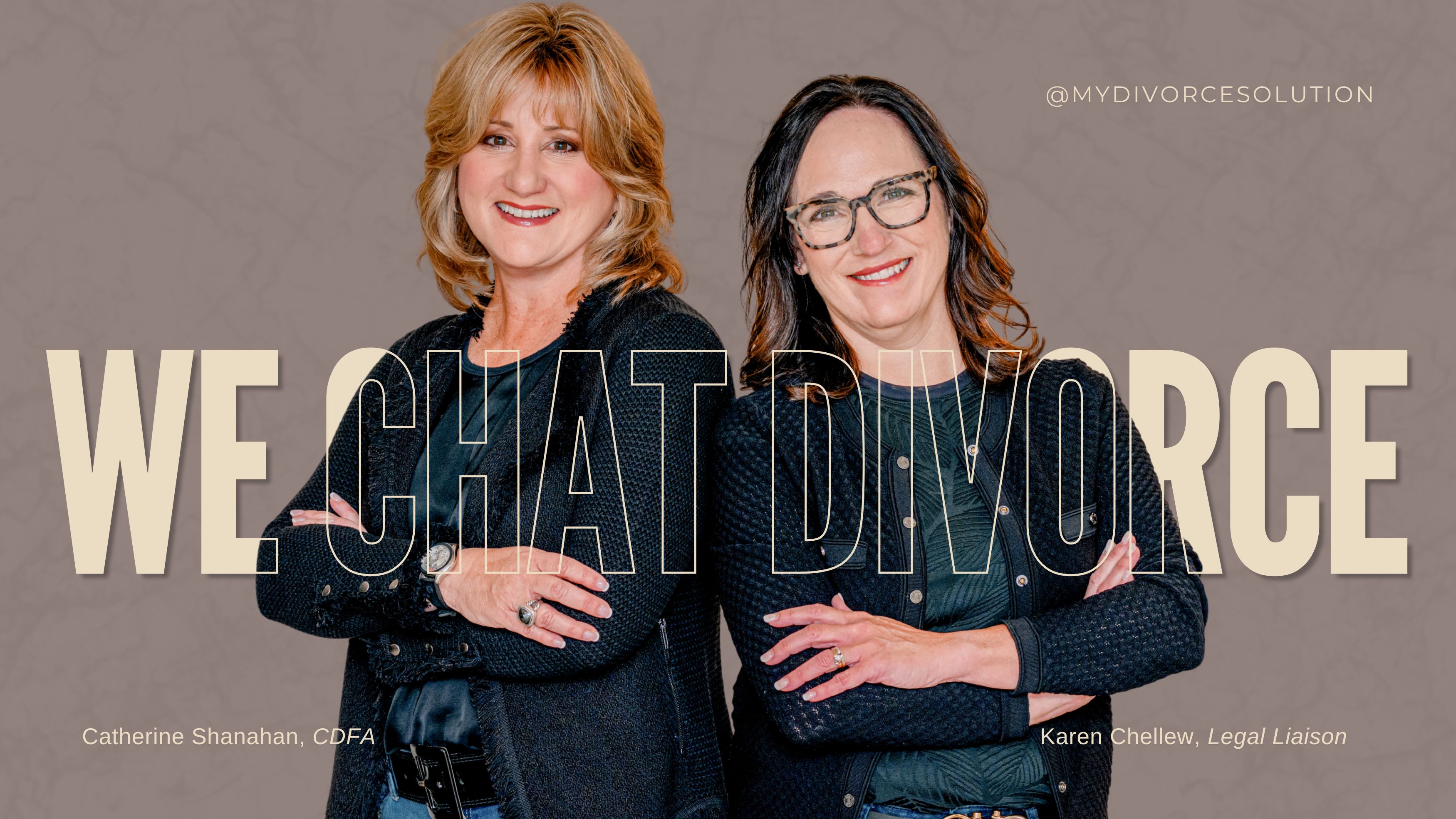
We Chat Divorce is produced by My Divorce Solution (MDS) — a financial divorce preparation company dedicated to helping individuals navigate divorce with clarity, confidence, and a strategic financial plan. Founded by Karen Chellew, Legal Liaison, and Catherine Shanahan, Certified Divorce Financial Analyst (CDFA), MDS was created to solve one of the most common and costly mistakes in divorce: entering the legal process without fully understanding your financial picture.
Divorce is not just a legal event — it is a financial transition that can shape your long-term security. Through the MDS Divorce Financial Portrait™, clients receive expert financial analysis, organized financial disclosures, and scenario planning to understand how different settlement decisions impact their future. This financial preparation often reduces legal fees, shortens the divorce process, and helps individuals negotiate from a position of knowledge rather than fear.
If you are considering divorce or already in the process, you can begin by taking the Free Divorce Financial Assessment to better understand your options. You can also join the MDS Community for expert guidance, educational resources, and live Q&A events designed to help you move from uncertainty to clarity.
At My Divorce Solution, the mission is simple: replace fear with knowledge so you can make informed, confident financial decisions during divorce.
Episode Transcript
0:00
Welcome to We Chat Divorce, hosted by Karen Chellew, Legal Liaison and Catherine Shanahan, CDFA.
Each episode we sit down with divorced professionals and industry experts to provide insights and frank discussions about real people, real situations, and real divorce to help you achieve your best life post divorce.
0:35
If you ever asked yourself, why do I feel so stuck even when you know divorce is the right decision, this episode is for you.
Because the truth is, your brain isn’t wired to make you happy.
It’s wired to make you safe.
And sometimes that safety looks like fear, guilt are staying small.
0:55
Today we’re uncovering how fear shows up in divorce, especially when it comes to money, and how understanding your brain can help you move from survival to self trust.
Welcome back to WeChat Divorce, brought to you by My Divorce Solution.
I’m Karen Chellew, Legal Liaison here to help you navigate the legal complexities of divorce with clarity and confidence.
1:17
And I’m Catherine Shanahan, Certified Divorce Financial Analyst and your partner in creating long term financial security.
At MD’s, we believe clarity isn’t just about numbers, it’s about Peace of Mind.
Our guest today brings an entirely new perspective on divorce, one that doesn’t start in the courtroom or your checkbook, but in your brain.
1:38
Isabelle, Karen, how do you say her last name?
Ulenaers.
Thank you, I love her.
I follow her on Instagram.
Is a neuropsychologist and therapist who helps ambitious women move through divorce, not just to leave a marriage, but to come back alive in their own lives, relationships and intimacy.
1:54
This was one of those conversations that make you see your path patterns differently and gives you tools to actually change them.
So let’s get into it.
Isabel, welcome to We Chat Divorce.
2:12
Thank you so much, really excited.
We’re excited too.
We’re always excited to talk to new people about new ideas and concepts that you know we can offer to our audience.
And before we dive in today, though, let me introduce you to our listeners.
2:30
Isabel Ulenaers, so hopefully I Did justice by that is a neuropsychologist, a therapist, and the creator of the Untamed Framework.
She works with ambitious women navigating divorce and major life transitions not just to cope, but to experience real rebirth.
2:52
Her work centers around this powerful truth.
Your brain is not designed to make you happy.
It’s designed to keep you safe and often that wiring keeps us stuck in fear, especially when it comes to things like money, love, and self worth.
3:09
So, Isabel, let’s just start there and talk about when you say the brain isn’t built for happiness, but for safety.
Well, often we don’t realize that our brain goes like it’s developed like way back in the time that we still live, like in cages, caves, sorry, caves.
3:32
And or it was really important that we would be safe because safe, yeah, means really survival, like life and death.
And in that time, safety was like belonging to a group, for example.
So our brain will always make sure that we are safe.
3:49
Safe means like belonging with each other, feeling loved, because if you’re loved, you will belong.
People will take care of you.
Like all those core deep things.
But here is also where the core, our wounds exist.
Like we don’t grow up in perfect lives like no one has.
4:06
We all have core wounds and we all have fears.
And the core fear will always be something like not being loved, not be loved, being abandoned, like all those things.
So we learned, like, when we grow up, how to behave, what we can do, what we can kind of do like, And this is how we are formed and shaped by life.
4:27
And our brain knows exactly what are the rules.
So we are safe, which means belonging and being loved.
But it doesn’t care about being happy because happiness is not the same as being safe.
It can be that you’re perfectly happy doing crazy stuff, so it’s not safe.
4:45
And it’s good that the brain looks out for us that we are not doing all those, like jumping out a plane without a parachute.
Like it has to keep us safe, but it doesn’t.
Yeah, really think about your happiness.
So that’s why when we are in this major life changing decision, stepping out of a marriage and especially for women, and then on top of it when he’s the good guy, then it feels so hard because our brain thinks like this is something unfamiliar, like everything is OK.
5:16
We know this.
We know the rules to play by.
We have to stay here, even if like the familiar would be like hell on earth, like the worst thing ever.
The still wants you to stay in this in this situation.
And I often tell like it’s the same like if you would be in front of a real lion, like the real African lion, the brain thinks the divorce situation is exactly the same as the lion who is in front of you wanting to eat you.
5:48
So that’s why the brain will try to do everything to keep you in there.
And then we come through those three things the brain does.
It’s like fear, the fear, Like, what if I’m lonely or like, is this the best decision?
6:06
Maybe people will judge me.
Then we have the what ifs.
What if I feel guilty?
What if this is a mistake?
What if I never find love again?
And guilt.
And those three are the main big things that the brain will, yeah, use to keep you in the familiar.
6:26
Does is it also the same thought process for why, you know, when we’re going through with clients and we want them to have financial clarity and we want them to hang in there and make sure they’re clear that before they make decisions, but they went out.
They’re like, I want to make a decision and get out of this.
Is it because they’re trying to protect themselves from either?
6:45
Brain is telling them that they need to retreat or get out.
And you mean get out of the of the divorce or like?
Being divorced, like just finish the process because.
What is?
Why is the brain telling them to just hurry up and get through it?
7:02
Because there’s like you are done in the Gray zone, like you don’t know where you are in that moment.
So you have a lot of stress.
And because you’re still in this loop and you’re still trying to figure out like, will it be this will, will I have my finances?
7:18
Will you agree on this?
Will how it is it with the house?
Like there’s so, so much unknown.
And that’s what triggers the alarm system, the inner alarm.
And this is like in the center of your head.
It’s making a lot and you can really see it like the alarm of the house.
And when this happens, also the prefrontal cortex, the human brain will be shut down a little bit.
7:38
So they can’t really think like that’s why it’s so important that you mentioned like we have to have them right grounded because otherwise they can’t think about those things.
So the, the mind is more like we have like the fight flight freeze.
And when they want to get out, it’s more like the fight, like, like, let’s get out.
7:57
Like the the you’re you’re want to run, like get get out of here.
It’s unsafe.
I just want to get out.
And that’s like the brain’s reaction.
It’s one of the three things it does to get you out of the situation.
Often when they have like more clarity on what is the outcome.
8:13
But often, yeah, we don’t have it.
But if you would have more clarity on this is the outcome, This is where I going to live.
My finances will look like this.
This will give like more safety to the brain.
Like, OK, Drew is a plan.
We know something about it and it’s important.
8:30
And like, yeah, with clients that they have, for example, like a lot of them are like, I’m going to divorce and I will not have the same finances again.
And and I can’t do this and I will have no house.
And I that you really say like, OK, but let’s take a look at it.
8:46
Like really zoom in on this.
Like how much are you earning?
Is there alimony like the house?
Will it be split?
Will it be sold?
So they have like actual numbers because fear is not the truth and that’s something people are really need to be so aware of.
9:02
Like, you can see fear is like a second you next to you always speaking into your ear.
But it’s not the truth.
It’s like far away from truth.
And when you zoom in, in those moments where they’re like, I just want to get out, like, OK, it’s the brain.
9:17
We have to calm you down.
And now we’re going to see like, take a look at the facts, then the brain.
Yeah, we’ll see.
Like, OK, there is a kind of safety here.
So I love that you say that, Isabel, because we experience that of course, in our work every day, all day, because our job is to help people get clear and prepared.
9:42
And sometimes we definitely, sometimes, most of the time I would say we feel the resistance.
I don’t even know if that’s the correct word of the clients because they’re so caught up in, you know, Oh no, I have this due.
9:58
I have that due and they’ve turned over the decision making to maybe their attorney or their accountant or even their spouse.
My spouse is mad.
So I have to do something.
And so then the getting prepared and getting cleared goes right down to the bottom of the pile until it becomes an emergency again, usually the day before mediation or a trial.
10:22
And so they get in this loop.
So how I can hear that you help your clients stay grounded in knowing that you need to get clear and know the truth.
But how do you keep them there when it’s such a new environment?
10:38
Like you said, a lion is in their face.
How do they?
How do you help them?
Yeah.
Well, that’s part of my my whole methodology I developed, but I will not zoom in on this now.
But if you have clients that are like this, it’s really important to know like when they are in this state, their alarm is going off and you have like window of tolerance and when you are above it, that’s when the alarm goes off.
11:04
Then you can’t think clear.
They can’t do like anything.
It’s like really your human brain is shutting down a little bit.
Like of course, not totally, but it is.
And when you felt stress yourself, you often notice this by when you read something and you feel like ha need to reread.
11:21
But what was it?
What I read?
I missed the page somehow.
Or you watch TV or some Netflix thing and you think like, I, I think I missed this.
I, I need to go back.
Like it’s like you can’t really capture it or you can’t find your keys or like you miss things like driving the car and then suddenly you’re daring and think like, oh, I missed the route somehow.
11:42
How do I become like, I landed here?
How so?
It’s because the brain takes over and it’s the alarm and you can really see there’s an alarm of the house.
So we have to set it off to ground.
So they have to come back to the window of tolerance because they’re the three brains work together and that’s when your clients can make decisions.
12:02
They can really take the papers, watch them, read them, and yeah, as long as they’re not in there, it doesn’t work.
So what I always learn my clients before we start with my work because of course when we do my Untamed methodology, it’s about working with the brain and see how the brain works and have real exercises for it.
12:23
You have to be grounded because otherwise you can’t.
So the first step is really easy and it’s like probably cliche, but it’s like have a routine, a morning routine and this this morning routine, it doesn’t matter what it is like I have like 7 steps that I know that are like proven working very good.
12:42
But it’s like going out in the woods, have a short walk, sitting down, having like a short sort of meditation or, or an exercise.
Or when you are like in this space, maybe it’s like going to the gym and have a great workout because you have all the adrenaline going through your body.
13:00
So it gets, it has to get out and then you will see that the body and the the system, the nervous system will calm down.
I also work with EFT and tappings to calm down the system.
So they do this daily.
And then when when they have like the nervous system is calm, then they can talk and think again.
13:20
Because then this part really opens up again.
But it’s like you need to keep doing it because if something happens or they see a text or they they have a call, then boom, they’re just back into the alarm system.
So it’s really important to stay grounded and to take time for it.
13:39
Wow.
So I know Karen has, she’s so loyal to a morning routine with her meditation, everything that she does.
And I’m always like, gosh, I wish my brain would tell me to do that because it’s hard.
How long does it take you to get into that routine and stay in that routine?
Well, it’s learning.
13:57
It’s also the rewiring of the brain, like you need to learn a new habit.
And when you are not doing this habit like a new thing, it’s like the body is addicted to what you’re doing now.
So if you never do do this and in the morning, you will have like some chemicals going through your body like whatever, and your body is addicted to it.
14:19
So when you change this habit, you will have like new chemicals.
Like for example, if you do the meditation and things like you will become more relaxed and more in these and like your thoughts are not running.
So this creates other chemicals for your body, but your body is addicted to the first one, the one that it knows.
14:39
So that’s why they always say like you have to do something for I, I don’t know, like 30 days or something to shift because you will have those news and your body has to attach to dose.
It’s really like when you stop drinking or eating sugar, you have to keep doing it because you have this immersive crave.
14:57
So when you feel like, I want to start with this morning routine, I can, I can do it once or maybe twice and then I don’t do it anymore.
It’s because your body is pulling you back to your old habits.
So it’s not just about your brain will tell you, it’s you telling yourself, I will do this.
15:15
And then it’s also building like a trust system because when you tell yourself I will do this, but you don’t do this, your whole system knows like I can’t count on you, like I can’t trust you.
And then we are in a different loop.
So it’s really about keeping the word to yourself, even if it’s 5 minutes, it doesn’t have to be like an hour of or an half an hour.
15:35
Like just start where you can.
And that’s really good to train.
Like, yeah, that’s the whole process of retraining your brain.
Wow, I’m so, I’m so, I feel so bad for my brain.
It’s just about to get a rude awakening.
You’re putting it into such terms that make such sense to me.
15:52
But how do you know when you’re in that window of tolerance that you speak to, or when you’re seeping out of it?
Well, so you have like 2 lines and then you have like the curve in between.
And in a normal situation, you can feel this.
16:08
For example, when in the morning you, you wake up and you feel a little like, OK, need to wake up a little bit.
Then you go to a meeting and you feel some adrenaline or it’s, it’s exciting.
So you’re a little bit more up when you have the lunch, you feel a little bit down, like in the evening.
16:25
It’s like, OK, now I’m done for today.
Like this is a normal evolution.
When you go up, it’s when you’re really in stress.
That’s where you really feel like maybe in extreme, like you have heartbeat going up.
You have a lot of running thoughts.
16:40
You feel tension in your body.
You can’t sleep very good.
You wait.
Like I said, you watch TV, you miss some parts when you read, you need to reread.
Like in conversations you feel like hard to to follow because like the frontal cortex is not working well.
16:57
And that’s why a lot of times you see like CEOs go to like playing golf during the day or have like this long lunches, like it’s really to bring them back and not being always on this high, high, high.
Because when you’re too long in this high, even if it’s under the line, but too long, you will get over.
17:17
So you have to do some activities to to bring the line to the more basic your current line so that the brain is not, yeah, in this red zone.
On the other hand, when you’re too long in the red zone, you will drop down.
17:33
And then it’s what people call burnout or depression.
So people with the burnout are often people who are so long in the high and they are doing it and you’re pushing it and you have so much stress and they keep going and, and then the body’s like, I can’t do this anymore.
17:49
We’re like too long in the high and then it just drops.
And then they’re like, I can’t even get out my couch.
Like I, I don’t bother.
I just leave me alone.
And that’s like harder because there you have to get like the engine get again on.
18:05
And then it’s like you have to do some little exercises, for example, something everyone probably knows.
But when you are in this down zone, it’s even hard to do maybe the dishes or like whatever.
So that you say to yourself, I have a timer for 5 minutes and I do it only 5 minutes.
18:23
And that’s how you get the engine back on.
So it depends on where you are, but these are two extreme cases.
These are great.
Tips really.
Great.
And divorce falls into the extreme cases that I’m sure we all agree with that.
18:39
So yeah.
Sometimes it also can be that you’re so long in a marriage that it’s training you that people think they have a burnout.
But often the burnout is also about like what’s going on in your personal life and that they feel like I’m so drained.
I’m a ghost of myself.
18:55
I feel numb all the time.
I don’t feel joy, I don’t feel happiness.
So that’s where the lowest and then the the highs indeed, when you go through this major change you’re always on you’re like bracing yourself.
You feel like worrying all the time You your tops don’t stop running like that.
19:13
Stand the high yes, you know we.
We, we talk a lot about the Gray divorce and the silent divorce, and it seems like you’re referencing some of this a little bit.
As a matter of fact, a couple people just mentioned it to me this week in in particular, one client I just spoke to today, you know, they’re going to they were vacillating between a post optional agreement and a divorce.
19:33
And it’s going to be a divorce.
And I asked her how has she felt?
And she said, you know, I listened to your podcast about the silent divorce and I never heard that before.
And I realized I’m already divorced.
I’ve been living this life for so long, so I’m good.
I’m ready.
19:51
Yeah.
Oh, go ahead.
I was just going to say.
So it sounds like a lot of this stuff that they’re learning to maneuver all of that or they’re afraid maybe to move forward.
Right.
They’re.
Yeah, often.
Often.
Often with like with a divorce, you already checked out long before.
20:09
It’s not an overnight decision.
It’s not like this week I think like, oh, this is not good and tomorrow I’m divorced.
Like often it’s like something that’s going on for so long because or it’s in an abusive situation and you know, like I can’t do this anymore.
I work mainly with women who know like it’s actually not bad.
20:27
And actually I think on paper I have everything, but I’m so not me.
I’m so numb.
I’m checked out long a time ago.
Like you, you don’t sleep together, you have no intimacy together.
Like you’re a great team.
You work for the kids.
Like it’s all OK, but you don’t feel it anymore.
20:43
And then it’s really hard because we never learned that this quiet or silence, divorce or quiet ending, that it’s allowed.
Like in society, there is still this big thing around.
Yeah, you have to make it work and you have to put all the effort in it.
21:02
And especially if you have a kind of religion too.
So and then when he would beat you up every day or like she like whatever your partner is like, then it seems like now I have a reason.
This is big enough.
But like the silence divorce or the I already checked out.
21:20
Often we don’t feel like it’s reason enough because society tells us.
And then we come to the part of guilt because we are women and we care.
And then it feels even harder to leave because he’s not so bad.
I love that.
21:37
You say that, Isabel, and I’m just thinking here as you’re talking that if someone goes that long, and many people do, many of our clients do go that long.
And so by the time they make that decision to take a step.
21:54
I’m not.
Sure that they realize that they need to step into a process of.
Detangling.
Right.
They want to go hire the attorney and get divorced and they think that’s what it is.
And they don’t realize that you there is a process, you do need to get prepared.
22:13
You do need to have a daily routine that’s very centric to the divorce process, which is called getting prepared.
And, and I think that step could be missed by 90% of people because they don’t realize it.
Yes.
22:30
Exactly.
So for me, divorce is something I see.
It’s more like a door.
It’s not the ending.
So I think you need to the moment that you think like, I want to divorce, it’s really important that you prepare like especially finances, because there’s a lot of stress for for women and that you really know, like it’s not just like I have the talk.
22:50
And often they will be pulled back in because then his brain starts to work and he will do everything to keep you there so that, you know, like I have my team around me.
And what I always say is like, I’m really a believer in clean divorce, like an amicable divorce.
23:08
But it doesn’t mean that you don’t have to have the team, that you don’t have to have the lawyer or the expert in finances or whatever.
Because it’s because of them that you can have the clean divorce.
Because if you stay in the process, it’s so emotional.
You are in this system together.
23:27
It’s that’s the reason why you’re getting divorced.
So you can’t untangle it.
And in the moment that you untangle, you will face each other like in the beginning, like you’re like this, then you get divorced.
It’s like this.
You need to untangle.
Everyone is pulling.
But then when you do it in a clean way, you can be next to each other again.
23:45
You can have an, an, a good relationship or like for the kids.
And This is why I do my work because I really believe like it’s the door and it’s a rebirth.
It’s it’s the chance for you to say like, OK, I don’t want to step in in my old patrons again.
24:02
I don’t want to make the same mistakes.
I don’t want to end up in the same relationship doing the same.
Like, I’m really going to work on myself and to find out like what what was I doing?
What do I, what do I learn from it?
What do I want to take with me?
But what is it something that I never want again?
24:19
And often this is about really going deeper into yourself and fighting like who is the real woman?
Like who is she?
Like under all those layers of life and marriage and shape forming and whatever, who are you?
And then it’s and I can be her.
24:35
Like I’m allowed to be her.
And that’s the work we need to do because there is the fear coming up and and like, I’m not allowed.
So I think it’s like for the practical side with what you do, it’s very important to have like your team and prepare everything so you feel safe.
24:50
But it doesn’t end there.
Then the next part is like, OK, now you’re divorced, but you don’t want to feel sad after your divorce or with guilt or like, why did I do this?
So start doing your own work too, yeah?
And the fact that you help people think about a daily process and any really event in life, including divorce is a process that just speaks to what you’re saying.
25:16
Then post divorce is a process.
And, and I just talked to a client this week where they want, they want to get divorced.
They don’t want the attorneys, they want to mediate right away, but there’s no process there.
25:31
And, and as much as you want to help them understand, a 12 hour mediation is probably not going to be your answer.
But they they want to be divorced more than they want to, to know the answer in that moment.
25:49
And so I really appreciate that you help people realize that everything is a process beginning with your day-to-day routine and then you can adapt that into essentially anything you do.
Yes, because.
26:06
The work I do this is now specific for divorce, but it’s something that is you use it for everything.
It’s like how to calm yourself down, how to, yeah, have control over your emotions, how to deal with fear and blocks and really feel confident in yourself and, and proud of the steps you take, but also in relationship to your ex or to yeah, your kids or whatever.
26:28
Like it’s like a process.
It’s not just because you walk through the door that it’s done.
And often mediation and especially when it’s too fast, it’s not the best.
And I know that a lot of people think like mediation is good because then it’s amicable.
But like I have clients too, like for 6-7 hours in mediate mediation and it’s like draining them and then they are nowhere and they don’t have the team, they don’t have the backup.
26:51
So yeah.
And then you’re just kind of lost.
It’s like you’re in a boat in open sea and you don’t know where to go and you just drift with the waves and, and that’s not, that’s not the plan because then you get exhausted like in your little boat.
So well, you know, like this is the boat.
27:08
This is the way we go.
And I have a captain and a team on my boat.
But I, I will say the direction like it’s not about fighting.
We don’t have to fight.
That’s when you feel like, OK, now it’s more smooth and maybe the, the the waves will hit me, but I have people in my boat who know what to do when the waves hit me.
27:27
And yeah, then then it’s like a more balanced process.
Boy, Isabel’s, that’s a great analogy.
That is really, that’s fantastic.
I’m all about visualization and I I can see that.
As a matter of fact, I feel like that sometimes with our clients, Like we’re all on this boat and we’re just getting smacked with waves and now we have to all stay calm, right?
27:48
So, yeah, it’s really, as a matter of fact, it was kind of like that kind of a week.
As long as you dance around, see, it’s good.
So.
Isabel, that’s why you say that you don’t do coping.
28:05
You do rebirth.
I love that.
Yeah.
Because.
Coping is like just like, yeah, if the waves hit, like we brace.
But rebirth is more like, no, I have a boat and I know how to go into the ocean.
28:21
You can drop me anywhere.
And I will save myself and I enjoy it too.
And I will enjoy the sun and and the dolphins and like I’m really have the confidence and I’m really rebuilding a life that I want.
And I think this is often miss like when you divorce, you stay in the same system.
28:39
Like it’s not because you move out of the house that the system between the two of you is changing, but also you have your own pattern.
So if you are the people pleaser or always taking care of everyone, you will still do this.
So your life will not change so much if you’re still being the one who does everything.
28:58
So the rebirth for me is in like, OK, take a look at you.
Why didn’t this work?
Of course it’s in a system with reasons, but you have like a crave and it doesn’t matter what the crave.
If there’s no crave that it’s wrong.
Someone’s adventure, someone’s just passion, someone’s a good dog.
29:14
Like it doesn’t matter, but feel into it and go look for the woman and see what you need and then believe in it that you can also create it.
And this is not like manifestation things.
This is really about like, who are you like really let that person come to bird again, like alive again and and be proud on her.
29:35
And then we’re going to make sure that the life you want is yeah, that you created, that it’s not just a vision board on the wall, but you really know, like, OK, this is what I need to do in life.
And that’s for me to rebirth.
And it’s, it’s not stopping like with the swapping of the addresses, because then nothing changes really, you know, so many.
29:56
People live with I wish I I wish I would have done something a little differently.
Should I have gotten divorced?
Oh my gosh, was this the right thing to do?
And I think it’s exactly because of what you’re just saying.
You live in that same system that you were young.
I know I was married for 23 years and you know, and it it wasn’t an it was emotionally abusive the relationship and I but I still because we were financially comfortable live and we had so many kids.
30:22
I was like, oh, should I have done this?
Should I have done this?
And then all of a sudden become an entrepreneur and started my divorce solution with Karen.
I never, I was a financial planner who became a stay at home mom.
I wasn’t going to be an entrepreneur, right?
So the fact that that even happened, it was kind of funny.
30:38
Even the kids were like, Oh my God, mom’s an entrepreneur, right?
But it, it was this new me that started and there went the whole old system of should I have stayed and just been that stay at home mom stayed with that whole thing.
So I’m really relating to what you say.
And I hear a lot of women in particular say that after the divorce, should I?
30:57
I shouldn’t have, You know, the grass isn’t greener on the other side, they always say, right?
Yeah, but it isn’t about the grass.
It’s not greener.
It’s about the grass.
Where I am now, it’s not good enough for me.
It doesn’t give me the nutrition I need.
So I will go look for my grass.
31:13
And maybe it’s not grass, maybe you need something else.
It doesn’t matter what it is, but just acknowledge for yourself and give yourself permission to say like this place is not my happy place.
It doesn’t give me what I need and to just discover.
31:29
And it’s not like it’s totally new.
I think this entrepreneur in you, she was always be in there, but due to live and how people treated you maybe or how the marriage was, you never fully let her develop or come out.
And the moment that you just feel like, OK, I’m going to give myself what I need, that’s when this, yeah, part of you finally feels like I, I can come out, I’m free.
31:55
And that’s, that’s the fun part actually.
You’re right now that you’re, I listen to you because when I was in 7th grade, I think it was, I started a little babysitting Sunday class and I had like 8 kids and I’d go pick them up with my little business that I did in the garage.
32:11
I I forgot all about that until you’re saying that.
So maybe she was really always in there.
It is.
It’s not about we are creating a new identity.
It’s not about a new identity.
It’s about really finding yourself.
And due to circumstances, we all hide little pieces of ourselves or we learn like, for example, an entrepreneur is not good to compete as a blah, blah, blah.
32:33
Like it’s not safe.
And maybe somehow, yeah, we just put it like aside, but it’s like really finding you again.
And that’s where the goal is because then your life is so aligned.
And I had one of my clients, I think she was, she’s 70.
And she said like, I don’t want to settle world on fire, but I just want to feel me again and a basic line of joy.
32:56
And now we work together.
And it’s so funny because now she’s really travelling the world and it’s like so amazing because she never knew she wanted to do this.
But due to the work we did, she was like, Oh my God, there’s so many places in the world I want to see.
And I have the finances.
33:12
So I’m just going to do this.
And it’s so beautiful to see because, yeah, she’s just feeling great.
But other clients of mine, they say, like, I always wanted to take cooking classes, like, okay.
And but like they never felt it was okay to do or they didn’t have the time for it or they didn’t make it a priority.
33:32
And they’re just enjoying it so much now and giving dinner for friends.
So it’s really about checking in like who is the real me underneath all of this?
And and yeah, then you also see it like people often say like you glow differently or what’s your makeup?
And it’s like really the positive worst glow that’s actually is a thing.
33:51
So I I mean this is.
Fantastic.
I mean, you’re bringing tears to my eyes because, you know, we get it in a different format here at MD’s.
You know, we see the particularly women, but men as well.
But mostly a lot of the women come in not secure about their finances or afraid to ask good questions or what.
34:10
They just don’t feel like they’re worthy of the information at some point.
But we see them.
And I always say, you know, they start out here and you just see them kind of moving along.
And it’s so inspiring to, I know Karen as well as myself to see that.
And it’s, it’s pretty much what you’re saying about your client who now is travelling the world.
34:28
It’s a powerful thing to see people transitioned into something really wonderful.
Yeah.
And they don’t, they learn not to not to continue to hand their power over to someone else.
It’s very easy to do in this very stressful situation.
34:45
But you know, we’ll often tell our clients when they start with us, remember this moment.
And you know, we do check insurance with them and and we help them notice their growth of, you know what I call holding space and knowing who you are and you get to make the decisions, but you but you have to own the information.
35:05
So I I everything you’re saying really relates to how we hope to help people navigate to that financial clarity.
That’s wonderful.
It is and we.
Literally could talk to you forever is about, you know, your perspective is just really refreshing, exciting.
35:24
You know, Isabel, I found follow you on Instagram and it was my first connection to you actually, and I just, you know, love your your messaging.
I love and the fact that you do that all yourself and I I just love what you have to say.
You hit so many good nerves that you know, it’s it’s it’s a it’s a pleasure to have you on here.
35:44
So I’d like to give a few takeaways if I can, because and we’re happy to have you back on.
If you leave us comments and you want Isabel to come back on, we would love it and we’d love to join your community as well.
But you said some things I love.
You know, fear is not the truth.
And that can’t be more true even when you’re getting your financial information so that you can make good decisions for yourself.
36:05
And you know, don’t let fear guide you through your life or through the decisions through this difficult transition.
And you know, you you said divorce is just an open door.
The door is opening.
It doesn’t mean it’s over, right?
You know that that was really powerful and building that system for yourself.
36:25
You know, that window of tolerance is probably something that you should always check in.
And you know, I love how you related to even people not going through divorce.
This is just the great life lesson to find when you need that 5 minute step away or you’re, you’re too high for too long and that’s why you’re going to drop to so low.
36:43
You know, and there is that there are these routines you can make for yourself and find what the routine is that would work for you, especially through this divorce process, you know, start, start to, I know I’m going to do that.
I am always trying to improve myself in some way.
So I, I, I’m going to have to try to stick to it for 30 days.
37:00
I will keep.
You comfortable for it?
I love it.
I love it.
I just think that this.
Is all just so.
Fantastic.
So thank you for sharing that with us all today.
No.
It’s my pleasure.
Thank you for having me here.
I think it’s great what you do because I see with my clients, Yeah, this is such a big thing and so important also.
37:21
Yeah, to have like, the calm system, you need to have the finances in a good order.
So yeah, I think it’s amazing.
So, Isabel.
Thanks again for joining us.
You’ve really helped our listeners understand that fear is a natural part of the process, but it doesn’t have to be the decision maker.
37:38
Can you share where our listeners can find you and learn more about the Untamed framework and follow you?
Yeah, so they can follow me on Instagram.
That’s my main communication channel, so they always can send me at the end.
I answer everything.
Still personal.
37:54
I also have a website.
It’s yeah, my full name, but I will not spell it to you.
So yeah, I also have a podcast.
They can listen there, but it’s not so big as yours.
So yeah, whatever they want to reach out to me, they can.
38:10
But I think the the best way is is my Instagram because I’m very active on that one.
That’s great.
To our listeners, we’re going to get on your podcast, so we’ll make that even bigger because these are great conversations to have and to continue to have.
38:26
So if you’re navigating divorce and you finding yourself stuck in fear or you’re finding anything that you listen to today difficult to start or to initiate for yourself, send us a comment.
Like I said, Isabel will always come back on, but we’ll definitely connect you to her.
And visit us at my Divorce solution.com to learn how the MBS financial portrait can help you turn that fear into facts.
38:47
And then you could take the next steps in your process with a lot of confidence.
And don’t forget to join the MD’s community.
A free, supportive space with trusted resources, expert tools, and people who get it will drop the link in the show notes.
39:03
Like, follow and share this episode and until next time, take a breath, protect your peace and let knowledge be your power.
Thanks for joining us on another episode of WeChat Divorce.
We hope this episode was informative and supportive on your divorce journey.
39:22
If you're looking for more support for navigating divorce with confidence and clarity, head over to azure-emu-499854.hostingersite.com/ for more podcast episodes, divorce events, and resources for your divorce.
We’ll see you back here for our next episode.