

163. The Hidden Cost of Toxic Love: How Trauma Bonds Impact Divorce with Dr. Nadine Macaluso

The Hidden Cost of Toxic Love: Why is it so hard to leave someone who hurts you? And how do trauma bonds show up in divorce — emotionally and financially?
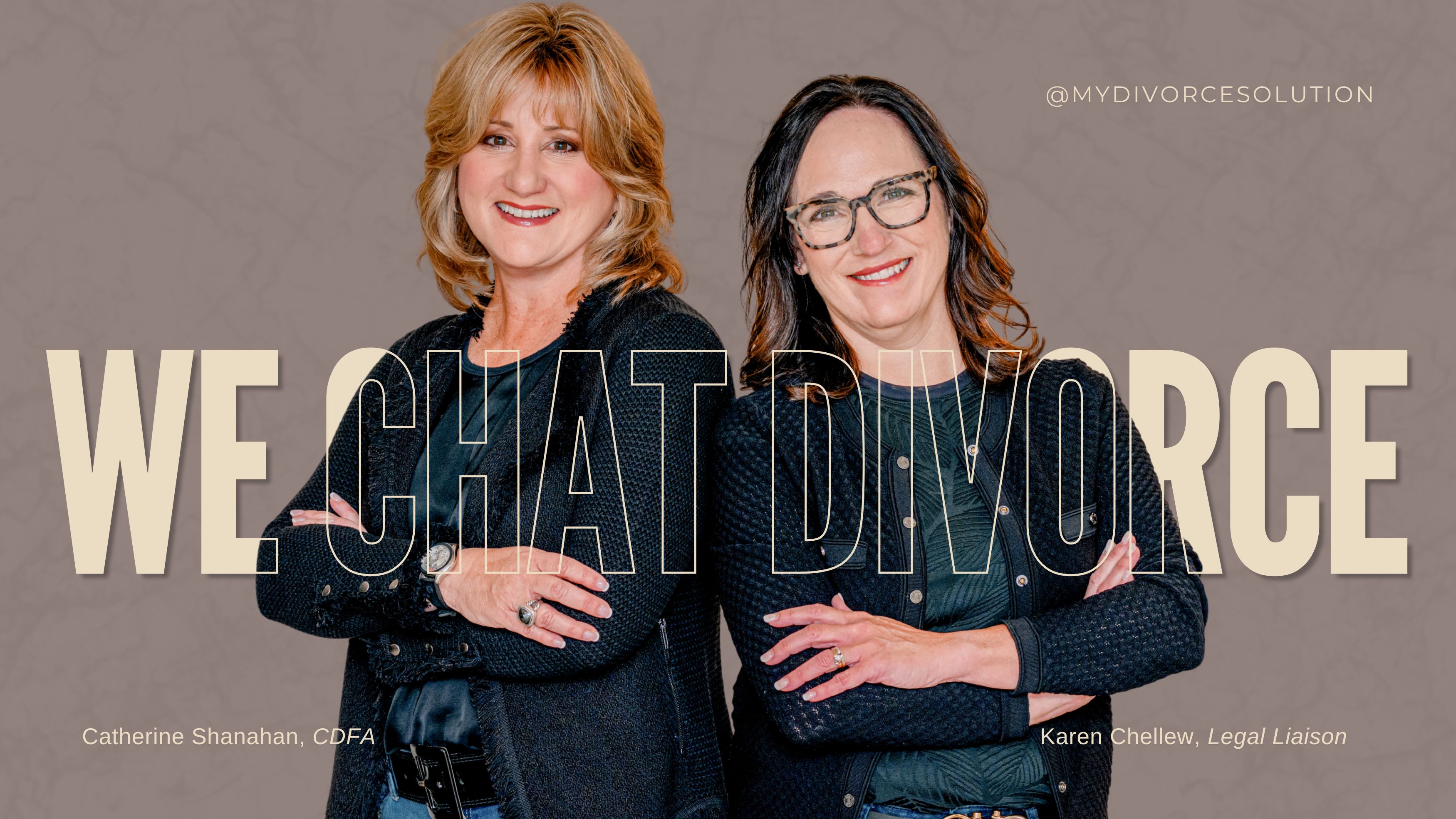
In this episode of We Chat Divorce, hosts Catherine Shanahan, CDFA® and Karen Chellew, Legal Liaison, sit down with Dr. Nadine Macaluso — therapist, author of Run Like Hell, and survivor of one of the most infamous toxic marriages in modern history. Dr. Nadine was once married to the real-life “Wolf of Wall Street,” a chapter of her life portrayed in the blockbuster film.
Together we explore:
- What a trauma bond really is (and why it’s so hard to break)
- How toxic love often comes with financial abuse and control
- Red flags to spot early in relationships
- Why leaving can feel like pulling the fire alarm
- How to protect yourself — emotionally and financially — in divorce
Dr. Nadine shares her story of survival and transformation, and how she now helps others break free from trauma bonds and reclaim their power.
Connect with Dr. Nadine:
- Website: drnae.com
- Instagram: @TheRealDrNadine
- Book: Run Like Hell
Start with clarity.
About My Divorce Solution
We Chat Divorce is produced by My Divorce Solution (MDS) — a financial divorce preparation company dedicated to helping individuals navigate divorce with clarity, confidence, and a strategic financial plan. Founded by Karen Chellew, Legal Liaison, and Catherine Shanahan, Certified Divorce Financial Analyst (CDFA), MDS was created to solve one of the most common and costly mistakes in divorce: entering the legal process without fully understanding your financial picture.
Divorce is not just a legal event — it is a financial transition that can shape your long-term security. Through the MDS Divorce Financial Portrait™, clients receive expert financial analysis, organized financial disclosures, and scenario planning to understand how different settlement decisions impact their future. This financial preparation often reduces legal fees, shortens the divorce process, and helps individuals negotiate from a position of knowledge rather than fear.
If you are considering divorce or already in the process, you can begin by taking the Free Divorce Financial Assessment to better understand your options. You can also join the MDS Community for expert guidance, educational resources, and live Q&A events designed to help you move from uncertainty to clarity.
At My Divorce Solution, the mission is simple: replace fear with knowledge so you can make informed, confident financial decisions during divorce.
Episode Transcript
0:01
Welcome to WeChat Divorce, hosted by Karen Chellew, Legal Liaison and Catherine Shanahan, CDFA.
Each episode we sit down with divorced professionals and industry experts to provide insights and frank discussions about real people, real situations, and real divorce to help you achieve your best life post divorce.
0:24
This episode of We Chat Divorce is brought to you by My Divorce Solution, offering divorce financial planning so clients can secure the divorce settlement they deserve.
Welcome back to We Chat Divorce.
0:42
I’m Catherine Shanahan, Certified Divorce Financial Analyst and your go to for creative financial clarity during one of life’s toughest transitions.
And I’m Karen Chellew, your legal liaison and wallet warrior.
If your ex antics have been draining your peace and pocketbook, you’re in the right place today.
1:01
Karen, today’s episode really hits home with me.
We often talk about financial control and divorce, but what if you never had emotional control in the 1st place?
And what if the relationship itself was toxic?
Yeah.
So.
That’s why we’re diving into today with Doctor Nadine Macaluso.
1:19
She’s not just a therapist, she has lived it.
Her story of survival and transformation is as jaw-dropping as it is empowering for sure.
She was married to, I think, the Wolf of Wall Street.
Yeah.
1:35
Yeah, that’s interesting.
I love that movie.
Maybe I won’t.
Maybe I won’t tell her that today, but I should have went back and rewatched it before meeting with her today.
But I know she’s going to be fantastic.
She just has that, well, first of all, life experience.
1:51
But her demeanor is so helpful to you if you’re going through it.
So I think our listeners are really going to resonate with her if they feel like they are experiencing this type of trauma.
So it does highlight something that we see often in our work here at MD’s when trauma bonds are involved, financial abuse and manipulation are often a part of that pattern.
2:15
And the emotional chaos isn’t just in your heart.
It shows up in the bank account and it shows up when we see our clients just gathering the documents and going through their expenses and getting a realization of what assets they have or don’t have or what debt they have that they never knew they had.
2:33
Yeah.
And if you’ve ever questioned why is it so hard to leave somebody who hurts you or how to protect your kids from repeating the cycle, you do need to hear this.
We were introduced to Doctor Nadine by a shared client and we’re so excited to have this an opportunity to interview her and continue to collaborate with her.
2:58
Yeah, and if you’re listening, I’m pretty sure I can almost guarantee you might have some aha moments because, you know, we might see the red flags or we might have been told by our friends about some of these red flags.
3:14
But when you hear somebody really talk about it from life experience, then you’re like, OK, she gets it or they get it.
And now I can start thinking about myself and getting the help that I need to make my life the best of my life moving forward.
3:29
It’s.
Great, here we go.
OK, here we go.
Doctor Nadine, welcome to WeChat Divorce.
We’re so thrilled to have you here with us today.
Oh thank you so much.
I’m so excited to have this conversation.
3:44
I’ve been waiting to do this for a while.
Yeah, we’re excited too.
Your story has been shared around the world, especially with the release of The Wolf of Wall Street.
But what many people don’t realize in the healing journey that came after.
3:59
Can you start by telling us what led you from surviving that high profile relationship to becoming a therapist who now helps break free from trauma bonds?
Yeah.
Sure.
So right, I was in the quintessential trauma bonds, you know, many moons ago unbeknownst to me, right, because nobody was using these words, narcissism trauma bonds back then.
4:21
And I moved to California because I was living in New York with my ex, and I really wanted a fresh start for my children.
And so my partner at the time lived there.
And so I picked us up and moved.
And I was actually working in the garment business, but I was meditating a lot in California.
4:38
You know, we drink green juice, we do yoga, we meditate there.
And it just came to me to go back to school because therapy, when I met my ex, the Wolf of Wall Street, I put myself into therapy.
And I believe that therapy had saved my life.
4:54
I don’t know if I’d be alive.
I don’t know if I would be the person that came out of this in one piece if I hadn’t been in therapy.
And so at 38, I went back to school to get my master’s, and then I got my doctorate.
The movie came out, The Wolf of Wall Street 2013.
5:11
And so I had a private practice in Manhattan Beach, CA and all these smart.
Bright, beautiful, kind.
Women were coming in abused, betrayed, controlled, and I’m an academic and a nerd.
So I went back to the research to write my book Run Like Hell, and now it’s become my specialty.
5:31
I love that you talk a lot about Run Like Hell, which is the name of your book, right?
Yeah.
The morning.
Signs people should be looking for, especially early in relationships because I love how you said you entered the relationship and got a therapist right away.
You know, I think.
That.
What we know about trauma bonds and what the research shows and what I’ve experienced, what I’ve experienced with the women I work with is trauma bonds usually start very fast and furious, right?
5:57
So any relationship that feels like it’s too good to be true probably is.
Can you, can you define trauma bond as you’re using it?
Yeah.
Yeah, so a trauma bond is a toxic, dysfunctional relationship between two emotionally attached people, right?
You’re not gonna have a trauma bond with the barrister of Starbucks.
6:14
You have to be attached to them.
But what makes it different is that the perpetrator or predatory person wants power and control over their partner, right?
All relationships can have fights, we can even call some toxic.
6:31
But that’s the one difference is that one of the partners wants to control the lover and it has to have two conditions.
It has to have a power and balance where, you know, one person has the power and they use and exploit that power, even if you start off as equals.
6:49
And then it has to have intermittent reinforcement.
So if you’re listening to this and you’re noticing, you know, 70% of the time my partner’s cruel, controlling, abusive, but then 30% of the time they are Romeo, they are Prince Charming.
They’re kind, generous and helpful.
7:06
That’s a sign to really look out for.
Yeah, boy, we hear a lot about, you know, because we deal with the financial world and we go through all the financials when somebody’s getting divorced without portrait.
There’s so much financial control that people just don’t realize when they’re in it.
7:25
And then when they’re exiting, they realize, Oh my gosh, was I financially controlled all these years?
Oh yeah, financial coercion is huge, right?
Because when you think about it, often the person with the most resources has the most power, right?
7:41
So that predatory perpetrator wants to keep the power.
So they want to have control over the finances and the resources, the bank accounts, the credit cards, how much is spent.
I mean, there’s so many ways people get financially controlled.
How did?
7:58
You realize it.
You know, for me, I was so young, so it was a little different because my ex was making so much money.
I was actually making a lot of money too, as a model for a, for a, for a young girl back then because I had a middle Lite commercial.
So I was successful in my own right, but he was making such big money because he was breaking the law.
8:19
So it’s easy to make a lot of money when you’re breaking the law.
And so he had, you know, I could buy whatever I want, let’s say, but he controls everything, the bank accounts.
And I think where a lot of my financial coercion came in is that I was always signing documents that I had no idea what I was signing.
8:39
Just sign this.
Just sign this.
So I had like LLCS in my name and tons of things in my name that I had no control over, but that was just used as a beard I guess.
One big red flag there, and we get that a lot ’cause people can sign their tax returns.
8:55
But you’ve mentioned something I want to not skip over is that you were a model, successful, had your own.
Did you deposit money in?
Did you give him that money to control or did you sit up?
There no, because like most trauma bonds, they want to control you.
So he was like, you don’t need to work.
9:12
I make so much money.
So what, you’re going to make $3000 in a day?
You don’t need that.
And I was like, oh, I guess he’s right, right.
So that comes across as caretaking initially to the naive mind not understanding that he wants to financially control me.
9:32
So, Doctor Nadine, you use the term pathological lover instead of narcissist.
Why?
Why is that?
And what makes those types of individuals so dangerous in relationships?
Yeah, because, you know, narcissism is thrown around, as we know, on social media and Internet.
9:51
And this pathological predatory person is much more than just a narcissist, you know.
I mean, I wish they were just a narcissist.
I wish they were just concerned with their image, exploitative and selfish.
That would be easy.
But they usually have a cluster B personality, which is narcissism, antisocial personality disorder or borderline.
10:11
But they can also have compulsive addictions, process addictions like gambling and sexual sex addiction.
They’re usually highly impulsive.
They usually have substance abuse issues.
They can have a mood disorder.
And they’re also often have elements of something called the dark tetrad, which is a person who has malevolent intentions.
10:34
And under this umbrella term is narcissism, psychopathy, Machiavellianism and sadism.
So not every single one of them has all of these traits, but they that you know, you just look at I named, I named like 7 to 10 things.
10:51
And that’s why it’s so complex because this person is very complex.
So I wish they were just a narcissist and pathological means mentally unwell.
And I believe that anybody that will use, harm, exploit and betray you to get their needs met for money, power, pleasure and status is mentally unhealthy.
11:14
You know, when if you’re in one of these kind of relationships and you’re trying to get out, to get divorced, it’s almost like you need to pull the fire alarm because it’s scary.
It’s so scary to leave.
And Even so.
Scary.
When, you know, we, I was on with a client yesterday or the day before, I can’t remember, and she started gathering documents years ago and she’s finally got courage to leave.
11:34
He’s a very abusive situation and she gathered a lot of documents and a lot of them are outdated.
But I said to her, wow, I mean, what a great job because just getting one document can see somebody like I can’t do that.
And she gathered 100 documents.
So, you know, I, she was like, wow, thank you for telling me I did a good job because she didn’t feel like that because she’s in that fight or flight mode.
11:55
I guess you know that’s.
Right, That’s right.
Yeah.
I’m working with a woman right now who’s married for 30 years and is in the same state, gathering all the documents while she’s still living with him.
And, you know, I’m, I’m supporting her the whole time as she’s, you know, direct messaging me.
12:11
This is so hard.
This is so scary.
And I’m like, I know, just keep going.
Just keep going.
But yeah, it is a big deal to be able to do that because this person instills fear into you and purpose to control you.
So to take that step to leave and divorce, it’s not like a regular divorce.
12:33
It can be extraordinarily scary because they, the perpetrators made, designed it like that.
So you don’t leave.
Yeah.
So it’s huge that you know to be able to gather your documents.
And then they always use the I’ll take care of you, you know, just this is the deal.
12:50
This is the best deal you’re going to get.
You know, you’re going to be fine.
You know, just take this.
If you’re going to get divorced, ’cause I’m not giving you a penny more.
You know, they use all their tactics.
Then when they actually do decide to mention or if there are, commit to getting divorced.
13:06
Right.
And they lie too.
I’m not going to do that to you.
Because what happens is that once you say to this person you’re going to leave, it’s like declaring war, right?
I mean, you deserve to leave because you’re what you’ve dealt with.
13:21
But to them now you become the enemy and they want to destroy you.
So that’s why manipulate, right?
Throw things at you as you just suggested to get the best deal for themselves.
So when you how long were you married for?
So I was married for eight years.
13:38
And so how did you rebuild trust in yourself to move on to it?
You know, that’s a that’s a that could take years.
People don’t understand that.
They think, you know, your friends say, oh, you’re so much better off without that a hole and you’re going to do so much better.
But yet you’re still going through, it doesn’t feel like that to you as as the person who’s getting out of the relationship.
13:57
No, no, no.
So that took time, as you say, but what happened was that when I was with my ex and I left him his, he had gotten sober and his sponsor called me up and said to me, if you don’t go to this one place called the Karen Foundation, you’re going to end up with the same exact person.
14:14
And I was like, Oh no, I called them up and I booked myself for five days there.
And there’s, they have a program there called Breakthrough.
So I, because I, I’d already been in therapy, but I wanted even deeper healing and I was just ready for it and I knew it was worth it because I never wanted to go through that pain again.
14:35
So really it’s a matter of getting very educated and learning, understanding yourself.
You know, as much as we become obsessed with naming who they are and what they do, that’s not where your healing lies.
You know, your healing lies, turning the mirror back on you.
14:52
Who are you?
How were you raised?
What are your attachment patterns?
What are your personality traits?
What are your resources, strengths, What are your weaknesses?
And really getting interested in you so that you understand yourself better than understanding anybody else.
15:10
Because the only person we can control, right, is ourselves.
And so that’s how I did it, and that’s how I do it with the women I work with.
I, I, I, I think that’s really important because I was in a relationship for 23 years, right?
And when you’re in that relationship, when can you learn to acknowledge these signs and say, let me start working on myself?
15:34
Because you’re right, you’re best advocate and your best support is always yourself.
But have somebody say, OK, I don’t need to go through the divorce process yet, but I need to actually start working on myself.
So I have the courage to do that.
That’s correct.
That’s correct.
Because when women come to me, usually by the time they get to me, they think they know, but they’re still filled with fear.
15:57
And I say to them, you’re when you want to leave, that it’s your decision and your decision alone, right?
Because they have cognitive dissonance when one day they want to leave, one day they’re afraid, right?
And so I have to hold that for them.
And through that process, empowering through them through education and validation.
16:17
So like as you’re saying, then they do feel the confidence to leave?
Yeah.
And I think people, I, I like that you focus on that because we have a majority of high net worth individuals and women who are coming and our process, we’re not attorneys, we don’t file, we don’t have deadlines.
16:35
And so it gives them that space to start getting the financial clarity, the financial knowledge that they need, whether they need to stay or go, what it’s going to look like, what it could look like.
And we’re all knowledge based, you know, we want to turn their fears into more of a focus driven data-driven response.
16:50
So I think we will work well together.
Our clientele seems to be the same, right?
I.
Think it’s understated how important that is for people to get that financial clarity.
Oh, I mean, especially if you’ve been dealing with financial coercion, right?
And you don’t even know what’s in your bank account, right?
17:08
And a lot of women I’ve worked with women who fear approaching the money, right.
So to have you guys support to do that because we can’t build resilience and isolation.
We need people.
17:24
And so the fact that they have you guys to hold their hands and and be with them through that process is really invaluable.
You know, so is.
That what your Run Like Hell book covers just all of the process and the first steps you take and to identify that they’re in that type of relationship to start with.
17:49
Correct.
Because you know when you’re in a trauma bond, you have so much denial, so much rationalization.
They minimize their abuse, you minimize it, you dismiss it because you want to stay.
So the first step is having a radical acceptance.
I’m in a trauma bond.
18:07
I’m in danger.
This isn’t going to get better.
I need to leave.
Those are you say it confidently and clearly, but if you’re listening right now, I know maybe you’re in your car by yourself and try to say it looking in the mirror.
That’s probably your best step to say it.
18:25
But that’s so scary words there.
So scary.
But what I work with my patients, I say listen.
Avoidance is the number one response to trauma.
It’s normal.
Don’t judge yourself for it, But then you have to like be your own cheerleader and and get yourself to approach little by little with someone like me, with somebody like you guys, right?
18:49
Just so, so you have support along the whole journey.
You don’t have to do it alone and you can’t, you can’t.
No, you can’t.
You can’t.
And there’s no shame in that.
None, none, none.
And I think it’s beautiful that women rely on each other.
19:06
Oh, so do I I mean, for example, for MDSI had the conversation, Karen and I always have recaps in the morning and you know, divorce is a hard industry, but I would never be trying to play trailblaze a a disruption to a industry that’s so huge if I didn’t have Karen with me, you know, and I I just couldn’t do it without her.
19:26
And you know, when we talk to entrepreneurs like yourself, it’s always like, how can we support you and how can you support us?
Because at the end of the day, we’re supporting millions of people to do it a better way, a different way, because we’ve already gone through it.
So it’s really, I mean, I love just having this conversation in itself, even for myself, right?
19:45
Yeah, yeah.
And that’s really why I started my community, which I know you guys are going to speak in, which I started in February.
It’s a trauma bomb recovery community, and I didn’t know it was going to be this good.
Honestly.
I was like, OK, I take my book, you know, put it into a course and I run into support groups in there.
20:03
And I do live.
So I have experts such as you guys come and talk To see the women supporting each other is magical.
And like I say, you can’t attack a trauma bond really just with therapy.
20:21
I wish you could, You know, we have meditations, we have journal prompts, we have community, we have lessons, we have experts, we have support groups.
Because women need women that get it.
That get it so.
Many people don’t get it so.
20:38
True.
And the court system being one of them, or if the whole industry of this particular situation, it’s not understood.
It’s not, Yeah.
It’s not Karen, Karen and I get so frustrated because we hear actually a judge just said to a client, you’re going to be totally fine.
21:01
You, you want to know how much I make like because she’s walking away with so much more than him.
I mean, they just discount women in particular.
I, I hate to say it, I mean they do it to men too, but especially women who have assets or will be walking away with assets.
21:18
That’s right.
That’s right.
Right, it’s just like they.
Have their own personal bias which they’re not supposed to put on, but they do.
And the family court system is a joke.
Honestly.
It’s kangaroo court and it’s not made to deal with pathological, predatory people.
21:37
You know.
Once they took domestic violence out of Criminal Court and I forgot the year, but I, I got to look that up.
It was in the early like 1900s and put it into family court.
That’s when that’s when everything went awry, you know, because abuse and coercion really should be criminal.
21:57
And coercion they don’t even want to hear if you don’t have on your face or pictures of abuse they don’t understand this word language abuse or whatever we want to call it trauma blah they.
They don’t understand.
I mean, you know, I, I, you know, I’m very close with Laura Richards, who, who’s part of crime analysts and she was one of the people that helped criminalize it in Great Britain.
22:21
And, you know, 8 states here in the United States do recognize it in family court.
But we have a long way to go and they really don’t pay attention to it.
Right.
Well, if it’s our experience when we’re dealing with clients in this very space, when they’re in family law litigation, they’re so disempowered for the reasons that Catherine said.
22:44
And so my experience as a legal liaison, when I’m on a call with them and their attorney or their forensic or anybody on their divorce team, but mostly their attorney, what they’re getting back from the attorney’s responses are incitement of their emotions just so they don’t have to talk about the financial transaction.
23:06
So they kind of trigger their emotions just to I guess, to continue the conversation.
I’m not exactly sure.
How to keep the to keep the to keep charging?
Yes, yeah.
And he did what?
And that happened.
23:22
Oh, no.
What do you want?
We’re gonna do that.
Oh, yes, I’m on it and they’re never on it.
I’m telling you now.
And then you they get all the way to mediation or the trial or or wherever the decision is going to be made.
And that’s where there I, I’ve seen it so many times that the, the conclusion and the result is we don’t, we don’t need to explore anymore.
23:48
There’s no more documentation we need.
You’re fine.
Let’s move on.
And the disempowerment in that moment is incredible, incredible.
It happens repeatedly and it’s it’s awful.
24:07
It’s awful.
Yeah, yeah, I know the the pathological people never sent in their discovery, right?
They never do what they’re supposed to do, and they let them do it time and time it can, and never sanction them.
And yeah, it’s so incredibly frustrating and it takes so much tenacity if you do want to go to court.
24:27
Well, they’re going to deflate you before you can get there.
But you know, that’s why if you’re listening, we have these resources now, right?
Doctor Nadine helps you go through and emotionally see what’s happening and get give you a little reality check or just to be heard and to know that you’re not crazy.
24:44
You know, you get to talk to somebody who understands it.
And for us, it’s the, it’s the financial empowerment.
And when you are financially clear on what’s missing, what’s not missing, what it could look.
Like if you settle.
Out what’s missing, what it could look like if you go forward, and all of that.
25:00
When you have a clear understanding of those two things, you’ll know where you have to go.
You’ll know.
That right, right.
And I think you bring up such an important point, Karen, right.
But when you feel disempowered or you feel overly emotional because this attorney is inciting you and you don’t have somebody like you, right, that’s when it just all goes awry because the emotions overwhelm.
25:25
They can’t see the facts.
They don’t have somebody helping them pull out the facts.
Yeah.
And then?
Focus on the most important facts right out of all of the entirety of your marital estate or Community property.
Whatever it is, these are the issues that you need to stay.
25:44
Focused on.
Focused on at all times.
Do not get distracted by anything.
And.
To your point, that is exactly the path that will have to be taken in these types of situations.
Yeah.
Now, if that’s, I mean, that’s a, it’s an incredible service that you provide and one that’s really, really needed.
26:06
Yeah.
And same with you.
I mean, I just think they go hand in hand in so many ways because when you don’t understand that you’re in a love bombing relationship and you don’t understand that or you do understand, but you feel like you don’t know where to go.
26:22
So you have nobody to talk to really who understands it.
And, and I, I, I do love your demeanor, to be honest with you.
You know, you’re straightforward, you come with a lot of knowledge, you care, you have empathy and, and you get it right.
And for us, you know, our divorce financial specialists, we don’t invest their money.
26:40
Our Cdfas are not allowed to invest our clients money.
We have no.
In the game and.
You know, our legal liaisons, they know the buzzwords, they know the process.
We know how hard it is to get yourself prepared financially.
So there’s no judgement.
It’s a judgement free space.
You know, we have people that it takes them five years to get divorced, but we have that space for them to start getting their thoughts together.
27:00
It really will change the way you go through the process.
It will.
Your first thing is not to run getting an attorney.
It’s to figure out who you’re dealing with, get yourself financially prepared, and then you know what type of an attorney you might need, you know, so.
27:17
So many of these attorneys are not educated or they’re a narcissist themselves or they’re pathological predatory people themselves, right, Because a lot of them are lawyers and surgeons.
You know, that research shows, I understand a surgeon they have to cut into you.
But you know, I mean, it’s, I see it every single day where women spent hundreds of thousands of dollars and don’ts anywhere, yes.
27:43
And Doctor Nadine, on that very specific point, would you agree or assist what you’ve experienced with your clients that so often they hire an attorney very similar to their spouse?
You know what, that’s a great point.
27:59
I hadn’t really thought about that, but now that you’re bringing it up, they do, and that what happens.
I wanna build on that is when you’ve been in a trauma bond, right?
You how you are conditioned by this pathological person to fawn, to appease, to placate, to give in to non advantageous things for yourself, right?
28:23
So now when you’re with your attorney and they’re theoretically the authority and they have the power, a lot of women fall back into that trauma response.
That’s so true.
Especially when you’re not financially.
Prepared they want actually.
28:43
So get the knowledge you need so you can help yourself move forward.
And that’s, I think what the three of us are trying to say today, yes.
We are.
We are.
And yeah, I’m so excited for you guys to come talk in my community.
We’re very excited to talk in your community because we think it’s such an important community to get notice and to have a space, like you said, a safe space where you can ask what you want to ask because we all get it right.
29:09
We all get it.
We all get it.
Yeah, so we do.
So, Doctor Nadine, thank you so much for being so open and generous with your story and your insight.
I know many of our listeners needed to hear your words today and for them or any of our listeners, how can they best find you?
29:27
Sure.
So go to my website, doctornaenae.com.
I have so many free assessments, so many free worksheets.
If you’re feeling curious, go take the trauma bonds assessment, go take the pathological lover checklist, Right?
It’s all there for free.
Then you can find me on Instagram at The Real Doctor Nadine, where I post every single day crazy educational, entertaining stuff.
29:52
And on my website you’ll find everything about my community.
If you’re interested in that, you can find my book Run Like Hell, which also has an audio version and a digital version.
Because if you’re in your trauma bond you can’t exactly have a book that says Run Like Hell next to night stands.
30:10
Good point.
To our listen listeners, if this episode helped you or resonates with you or you know, someone who feels like they’re in the dark right now and they don’t know how to prepare to run like hell, just leave us a note, a comment.
Doctor Nadine will be happy to get back on with us, I’m sure for any follow up questions or find us in her community.
30:30
And I want to leave you with something that you said, I want to leave our listeners or something that you said that I think is really very powerful.
And you said you can’t build resilience in isolation.
That is really a powerful mantra that we should all run in our heads a lot of times because it’s so true, you know?
30:52
It’s so true.
And that’s why therapy works.
That’s why your work works.
That’s why my work works.
That’s why the community works.
Because in a trauma bond, you’ve already been in isolation, right?
And you, you need to look for the helpers because they’re out there and they’re waiting to help you.
31:08
The right ones, yes.
And if you're ready to stop reacting and start preparing head on, head on over to azure-emu-499854.hostingersite.com/ because informed decisions are powerful ones.
And until next time, stay informed, stay empowered and keep chatting.
31:23
Divorce with us.
Thanks for joining us on another episode of We Chat Divorce.
We hope this episode was informative and supportive on your divorce journey.
If you're looking for more support for navigating divorce with confidence and clarity, head over to azure-emu-499854.hostingersite.com/ for more podcast episodes, divorce events, and resources for your divorce.
31:49
We’ll see you back here for our next episode.